
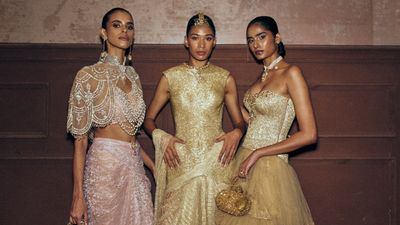
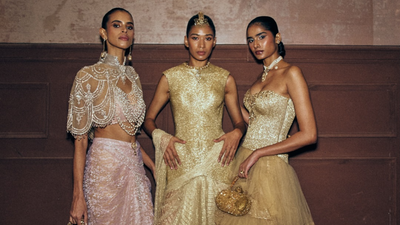
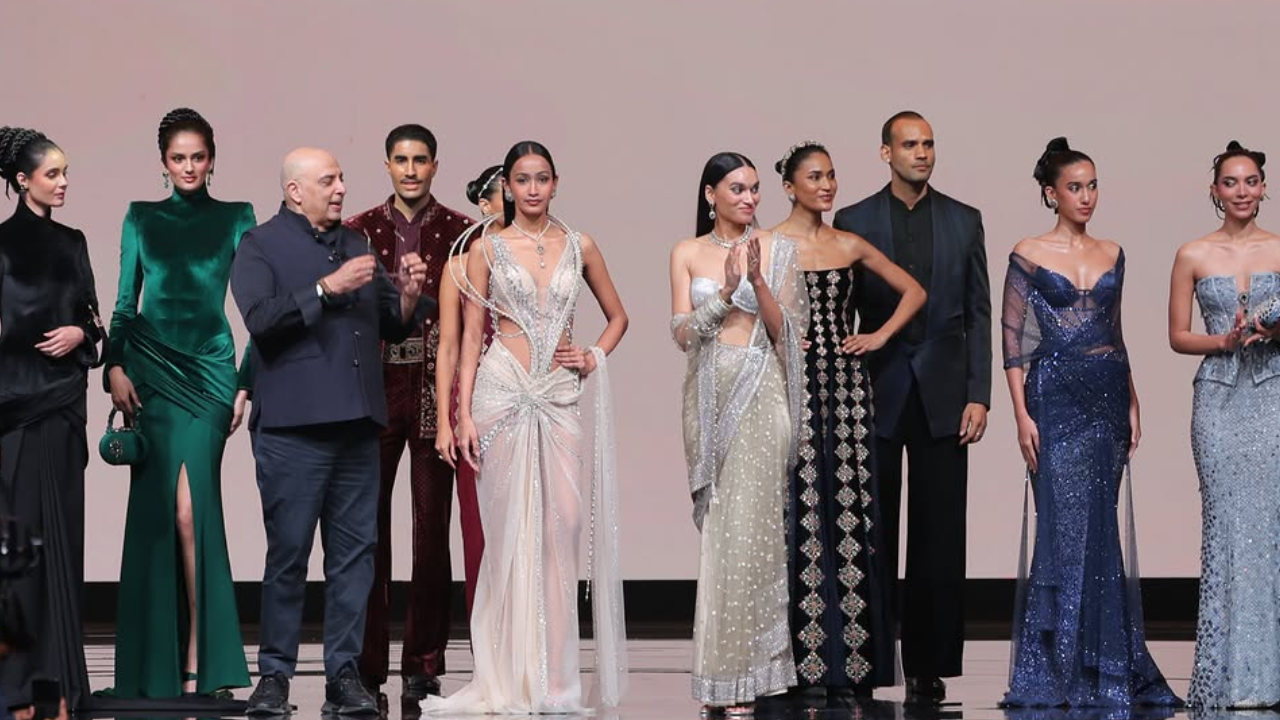
What will be the outcome when the stiff nature of corsets comes together with the fluid style of the saree? For Tarun Tahiliani, the answer lies in the overlap of architecture, mobility, and his term “India Modern”. With his latest collection, the designer mixed sculptural corsets, gravity-defying pre-draped sarees, and architectural lehengas while being inspired by visual cultures from Byzantium, rococo, Pichwai, Zubeida, impressionism, and chantilly lace.In an exclusive interview with The Times of India, the ace designer shared his approach to achieving a sane balance between structure and freedom for the body, the shift of contemporary Indian fashion away from the East-West struggle, and the relevance of old craftsmanship together with technology. He also spoke about his passion for reimagining the saree and lehenga by finding new meanings for them for contemporary women. Here are some excerpts from the interview:
(Image Credits: Instagram)
Question 1: Your design language has long focused on rigidity and flow. In what way does this dynamic present itself differently in the Autumn/Winter 2026 collection?
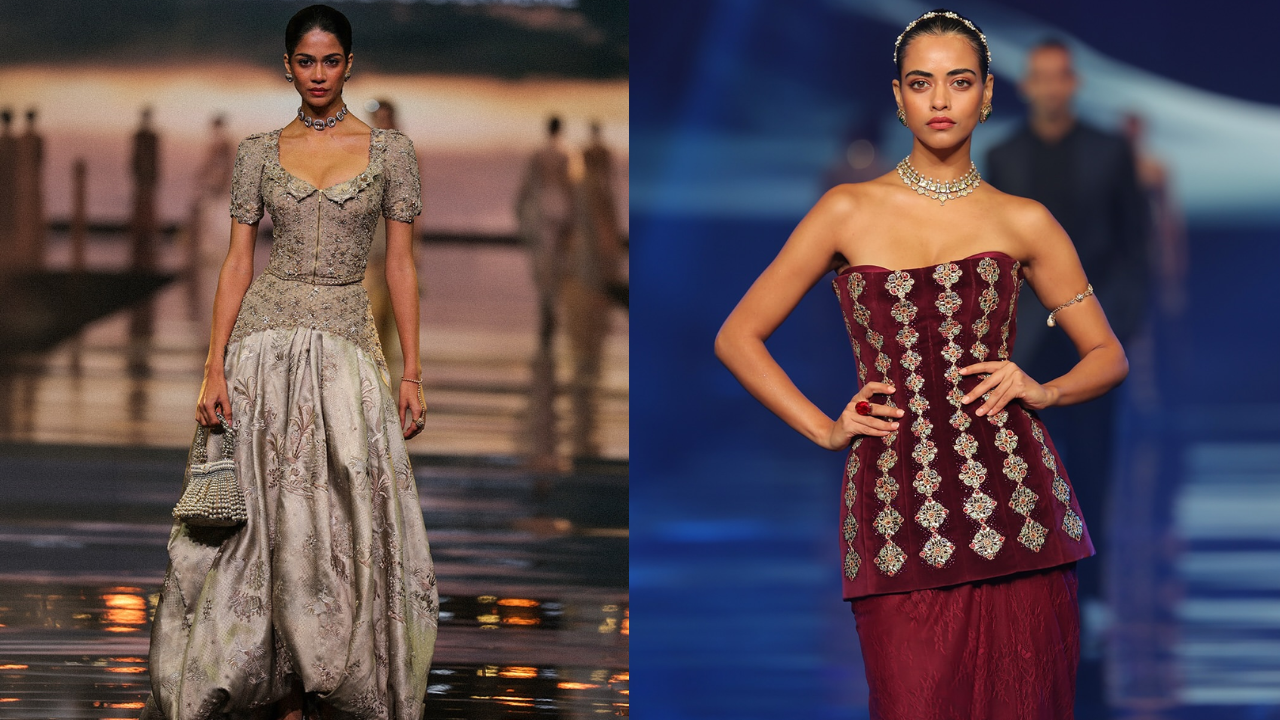
Tarun Tahiliani: What feels different this time is that we have pushed the idea of structure much further but made it far less restrictive. The bodices look rigid and sturdy, almost architectural, but they are actually soft and flexible enough for the models to bend, sit, and move freely. The structure is really creating a new relationship with the body. From that sculpted form, the drapes and sarees bring in movement and fluidity. So this time, the contrast between rigidity and flow is not just visual. You experience it in the way the garment moves with the body.
Question 2: Sculptural corsetry sits alongside weightless pre-draped sarees and architectural lehengas in the collection. What is it in this contrast that attracted you?
Tarun Tahiliani: I have always been drawn to the tension between something that is highly constructed and something that feels effortless. The corsetry gives us a sense of architecture and definition around the body, while the pre-draped sarees bring softness, movement, and ease. I find that contrast very beautiful because neither one cancels the other out. The structure gives the drape a foundation, and the drape brings life to the structure. It allows us to explore the same body through two very different sensibilities while keeping the woman comfortable and free to move.
(Image Credits: Instagram)
Question 3: The collection draws from diverse worlds- Byzantium, Rococo, Pichwai, Zubeida, Impressionism, and Chantilly Lace. How did you bring such varied visual references together without losing a cohesive design identity?
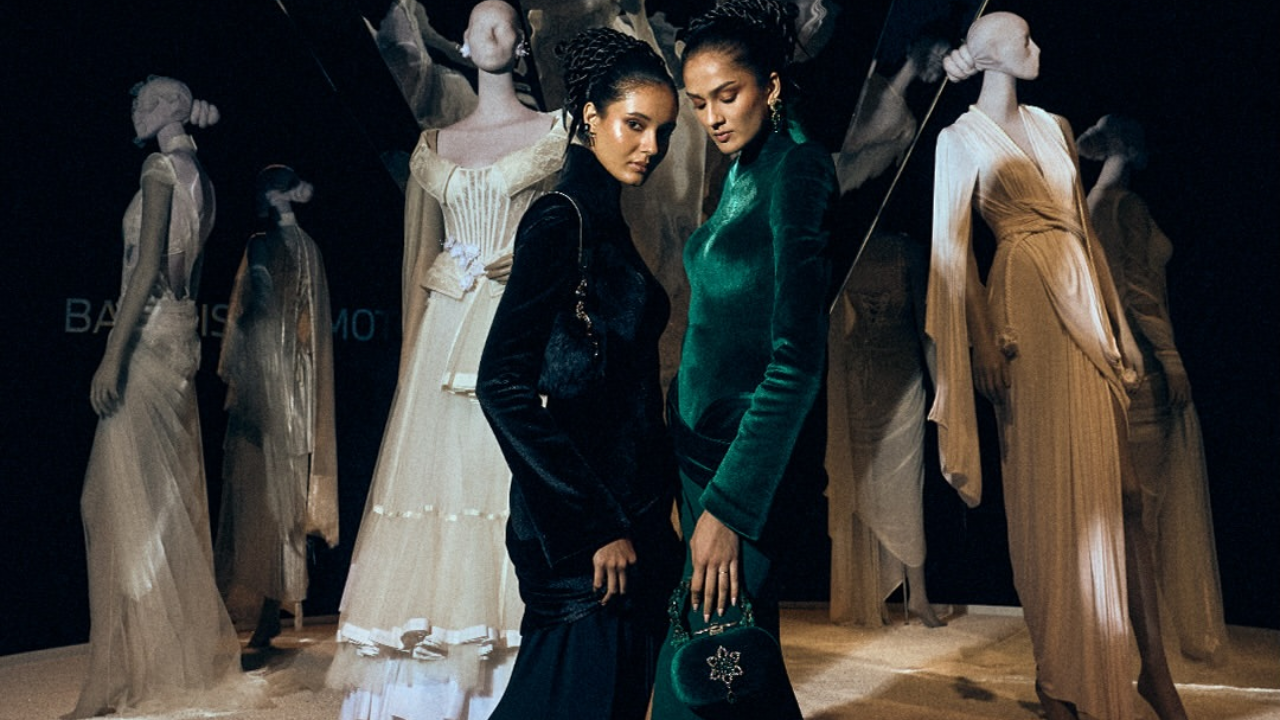
Tarun Tahiliani: For me, this is very much what India Modern is about. We live in a globalised world, and Indians today are global citizens, so it felt only natural that this collection should reflect that reality. We are constantly absorbing influences from different cultures, histories, and visual languages. And honestly, bringing these references together was not particularly difficult when you look at the diversity we ourselves come from. India has always been a meeting point of so many influences. The idea was to embrace that diversity and bring it together through our own design language.
Question 4: In a day and age where fashion is quickly evolving and becoming more and more digitally based, what significance does slow and handcrafted craft have to you?
Tarun Tahiliani: I actually feel that the more digital our world becomes, the more important handwork and craft become. There is something deeply human about the time, patience, and skill that goes into making something by hand, and that is something technology cannot replace. I am certainly not anti-technology. It is about how you use it. For this presentation, we used technology to communicate and amplify the vision we had, but the garments themselves still retain the hand, the craft, and the hours of work that go into them. The techniques may be centuries old, but how we present them can keep evolving. That, to me, is India Modern.
Question 5: Do you believe that contemporary Indian fashion is moving away from stringent definitions of traditional dressing versus Western dressing?
Tarun Tahiliani: Absolutely. I think those definitions have become much more fluid because the Indian woman herself has become much more fluid in the way she lives and dresses. We are no longer living in separate boxes of Indian and Western. We travel, we experience different cultures, we work globally, and we absorb influences from everywhere. For me, the brand philosophy of India Modern is about acknowledging that reality. You can take the precision of European corsetry and use it with an Indian drape, or reinterpret a saree for the way a woman lives today. It is about evolution rather than choosing one over the other, and that has been the essence of Tarun Tahiliani.
(Image Credits: Instagram)
Question 6: After working for decades in the field of Indian fashion and craft, what is it about redefining the saree, lehenga, and other well-known outfits that still inspires you?
Tarun Tahiliani: I think what continues to inspire me is that these garments are never really finished. Take the saree. It has existed for centuries, but today we can pre-drape it, engineer it, layer it with a corset, or give it a completely different sense of movement, while it remains recognisably a saree. The same is true of the lehenga. Every generation lives differently, so the garments have to evolve with us. I am not interested in changing them simply to make them new. I am interested in discovering what they can become for the woman of today.