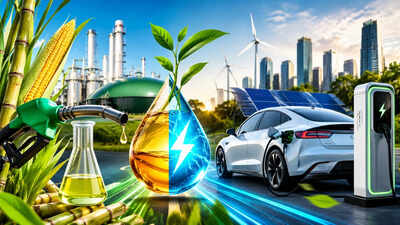
India’s shift towards cleaner mobility will require multiple technologies rather than a choice between ethanol and electric vehicles, the Indian Federation of Green Energy (IFGE) said, pointing to the continued presence of nearly 300 million internal combustion engine (ICE) vehicles on the country’s roads.The federation said that ethanol, electric vehicles, hybrids, CNG and hydrogen should form part of a diversified energy strategy. Its comments come amid concerns about the effect of E20 petrol on vehicle mileage and compatibility.“The debate should not be framed as ethanol versus EVs India needs both. E20 provides an immediate pathway to reduce crude oil dependence and strengthen energy security, while EVs, hybrids and other technologies continue to scale,” said Dilip Patil, Regional Director, IFGE-West, Pune.IFGE said the reduction in fuel efficiency associated with E20 has been estimated at 2-6 per cent compared with E10, citing studies by the Automotive Research Association of India (ARAI), Indian Oil and the Society of Indian Automobile Manufacturers (SIAM).At the same time, the industry body said testing has not indicated widespread engine damage. It added that newer vehicles are increasingly using ethanol-compatible materials, while concerns are largely linked to the transition involving older vehicles.India completed nationwide E20 deployment by April 2025 and is now expanding higher ethanol blends, flex-fuel vehicles and second-generation ethanol, according to IFGE.The ethanol blending programme has also helped reduce the country’s reliance on imported crude. The latest figures released by the Ministry of Petroleum and Natural Gas show that the programme has generated foreign-exchange savings of more than Rs 1.97 lakh crore and substituted nearly 316 lakh metric tonnes of crude oil since Ethanol Supply Year 2014-15.The government has been promoting ethanol blending as part of its efforts to cut dependence on imported crude oil and increase the use of domestically produced fuels.