
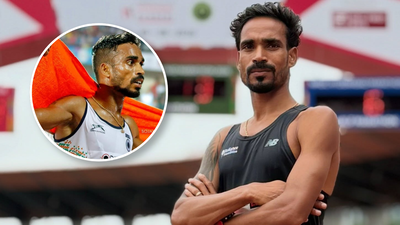
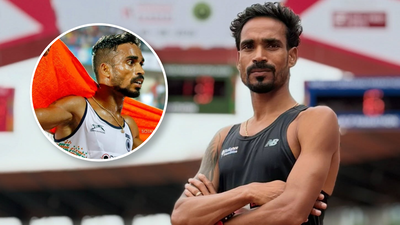
There are moments in an athlete’s career that are carefully planned, trained for and anticipated for years. And then there are moments that simply happen. For Thonakal Gopi, one of Indian athletics’ most enduring marathon runners, the road to the Olympics began with a race he was never actually supposed to finish.It was January 2016, and Gopi was in Mumbai not as a marathoner but as a pacemaker. A specialist in the 10,000 metres, he had been brought in to help his Army colleagues, particularly Nitendra Singh Rawat, maintain the pace needed to chase the Olympic qualification mark. The plan was simple: run for around 30 kilometres, do his job and step off. But Gopi kept going.He had never run a full marathon before. He had never even gone beyond 30 kilometres in training. Yet when the moment came to stop, he found that his body still had something left. So he ran another 12 kilometres. And by the time he crossed the finish line, the pacemaker had become an Olympic qualifier.
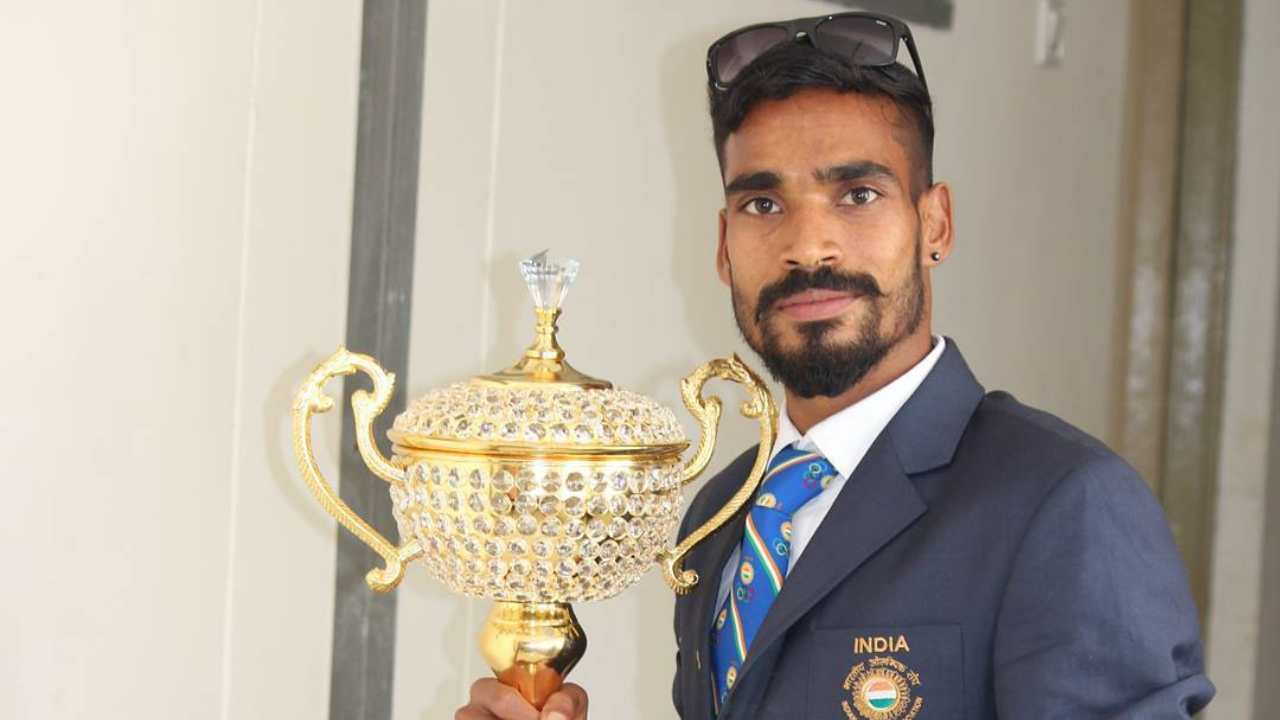
Gopi made his Olympic debut at the Rio 2016 marathon.
He was supposed to stop at 30km
Gopi’s transition from track running to the marathon was almost accidental. Until then, the Kerala-born athlete had largely built his career around the 5,000m and 10,000m events. The marathon was a different world- 42.195 kilometres of endurance, pacing and energy management.When he lined up at the 2016 Mumbai Marathon, his role was to help fellow Army runner Nitendra Singh Rawat maintain the required pace for the first 30km. Gopi had never competed over the full marathon distance before. “I wasn’t even sure if I could complete the race,” he later recalled, explaining that he had never run beyond 30km.But somewhere after the 30km mark, the race changed.Instead of slowing down, Gopi realised he still had energy in reserve. He decided to continue and eventually finished in 2 hours, 16 minutes and 15 seconds, placing 11th overall and second among the Indians. The timing was enough to put him inside the Olympic qualification standard. A runner who had arrived in Mumbai to help someone else qualify had ended up qualifying himself.
From pacer to Olympian
The story became even more remarkable because Gopi had not spent years preparing specifically for the marathon.His strength had been the 10,000m. His association with the Army Sports Institute had exposed him to high-level distance runners, and gradually he began training alongside athletes who were competing at the international level. The marathon opportunity was, in many ways, an unexpected extension of that journey. Within months, he was representing India at the Rio 2016 Olympics.And he did not merely turn up.Gopi ran 2:15:25 in Rio, finishing 25th overall and becoming the fastest Indian in the race. It was a remarkable progression from a first marathon only months earlier.For Gopi himself, however, the Olympics were not the end of the story.In an interview with ESPN after Rio, he spoke about the experience as a dream and said his target had been to break the national record. The record, set by Shivnath Singh in 1978, was already one of the longest-standing marks in Indian athletics.
Then came an Asian title
The surprise Olympic qualification was followed by something that established Gopi as more than a one-race story. In November 2017, he won the Asian Marathon Championship in Dongguan, China, clocking 2:15:48.He became the first Indian man to win the Asian Marathon Championship after the event was established as a separate championship. He edged Uzbekistan’s Andrey Petrov by just three seconds. The victory gave Gopi a place in Indian marathon history. It also showed that the Mumbai race had not been a fluke.
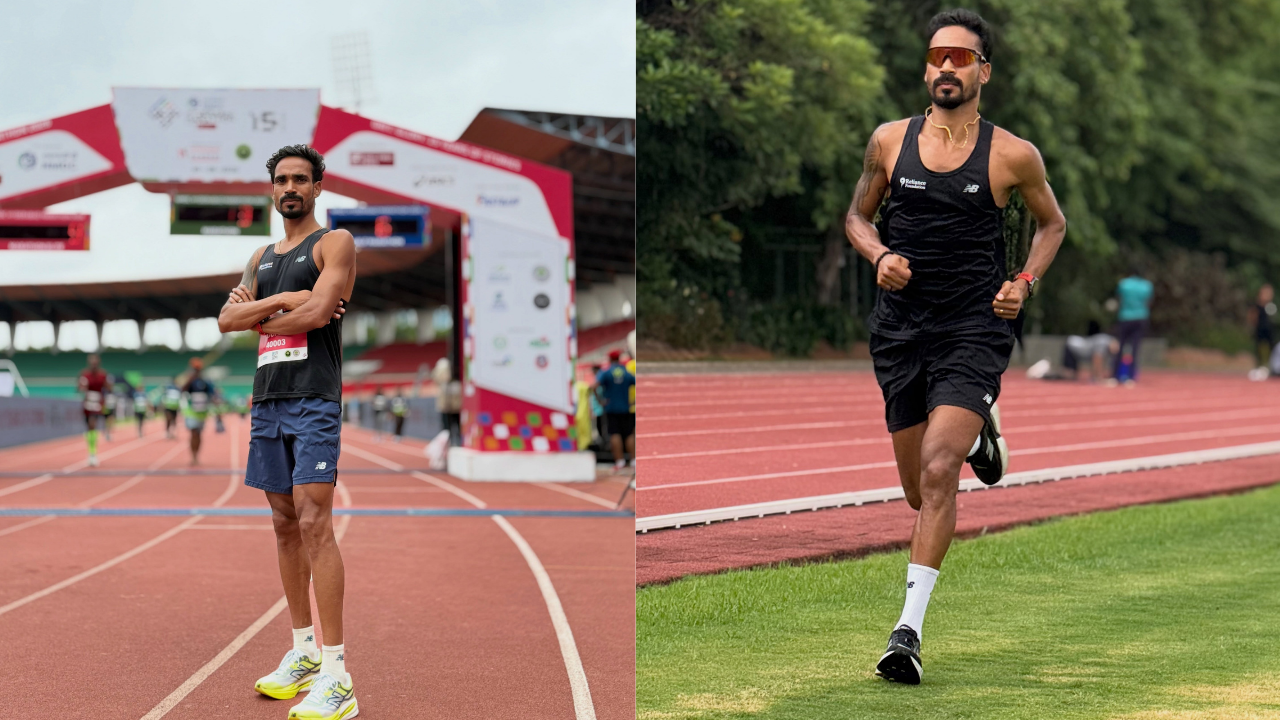
At 38, Gopi continues to compete at the highest level.
The years were not always smooth
Elite running, however, is rarely a straight line. Gopi had periods of injury and setbacks. In 2020, he underwent knee surgery, and the recovery kept him away from major competition for a prolonged period.When he returned to the Tata Mumbai Marathon in 2023, it had been roughly three years since he had competed in a major race. He finished as the fastest Indian, clocking 2:16:41, ahead of Man Singh.The comeback mattered not because of the time alone, but because of what it represented: a veteran runner still willing to rebuild. He continued competing, winning the New Delhi Marathon in 2024 in 2:14:40, before producing the performance that would redefine the latter part of his career.
At 37, he came within 23 seconds of a 47-year-old record
On December 7, 2025, Gopi lined up at the Valencia Marathon in Spain. This time, there was no accident involved. There was a clear target: run as fast as possible on one of the world’s recognised fast marathon courses. Gopi delivered the best marathon of his career. He clocked 2:12:23.That made him the second-fastest Indian marathoner ever, just 23 seconds behind Shivnath Singh’s national record of 2:12:00, set in Jalandhar in 1978. The record had survived for nearly five decades. The significance of the performance went beyond Gopi’s age or his previous best.He had been running internationally for nearly a decade. He had been an Olympian, an Asian champion, an injury comeback story and a veteran of India’s elite running circuit. And at 37, he produced the fastest marathon of his life.The Valencia race also underlined the depth now emerging in Indian distance running. Man Singh finished in 2:13:25, while AB Belliappa clocked 2:14:07, giving India three runners inside 2:15 at the same race.
A decade after that accidental marathon
Ten years after the race that unexpectedly sent him to Rio, Gopi is still competing at the highest level in India. On August 30, 2026, the 38-year-old finished fourth overall and emerged as the fastest Indian at the Hyderabad Marathon, clocking 2:21:46. Man Singh was second among the Indians in 2:23:56. His latest race time does not tell the whole story.The more interesting number is still the one he ran in Valencia: 2:12:23- a mark that currently sits second on India’s all-time marathon list and just 23 seconds outside a record that has stood since 1978. And then there is the story of how it all began. Gopi did not enter his first marathon believing he was about to become an Olympian. He entered it to help another runner reach the Olympics. He was supposed to run 30 kilometres. Instead, he discovered that he could run 42.195.A decade later, that decision to simply keep going remains one of the most remarkable turning points in Indian distance running.