
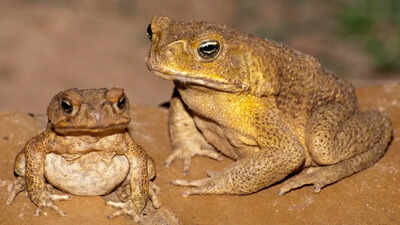
Sometimes, good intentions build the ladder to greatness. But sometimes, they pave the road to disaster, and few stories make that clearer than the saga of the cane toad in Australia. Back in 1935, officials introduced 102 cane toads from Hawaii to Queensland. Their aim sounded straightforward: the toads were supposed to eat the cane beetles chomping through sugarcane crops and, in turn, save one of Australia’s most valuable agricultural industries. It seemed logical enough: bring in a predator to clean up the problem, let nature handle the rest.But that’s not what happened. Cane toads quickly jumped off script. They hardly touched the cane beetles, instead feasting on pretty much anything else they could find. And they bred, fast and in huge numbers. Within a few decades, millions of toads were spreading across northern Australia, poisoning native wildlife, shaking up entire ecosystems, and cementing their place as one of the nation’s most notorious invaders. Even now, nearly a century later, their presence keeps conservationists and researchers busy, and the disaster is still a go-to case study in how not to meddle with Mother Nature.
Why were cane toads brought to Australia?
So, why did anyone think cane toads were a good idea in the first place?Per the National Museum of America, the backdrop was the booming sugar industry in Queensland, which faced constant attacks from native cane beetles wiping out crops and profits. At the time, biological control was having a bit of a moment, thanks to earlier wins like the cactoblastis moth wiping out invasive prickly pear cactus. That success probably made people a bit overconfident. When scientists noticed cane toads (Rhinella marina), native to Central and South America, had been used in places like Hawaii and Puerto Rico, decision-makers didn’t hesitate for long. The Bureau of Sugar Experiment Stations secured those first 102 toads, bred them up to a few thousand (2,400, to be precise), then set them loose — all without much real research into how things might play out in Australia’s very different environment.
Why did the plan fail?
Here’s why the plan was doomed from the start: it was based on shaky assumptions. Cane beetles spend most of their time up high on stalks, but cane toads stay on the ground. They just couldn’t get to their intended prey. Instead, the toads went after whatever crossed their paths (spiders, small reptiles, birds’ eggs, you name it), leaving the cane beetles free to carry on ravaging crops. Most sugar producers still had to use other pest control methods, including pesticides, to actually solve the problem. When researchers checked the numbers years later, they found no increase in sugar yields thanks to the toads. In other words, the whole experiment failed to address the original issue.Meanwhile, the cane toads themselves enjoyed conditions that suited them perfectly. No major predators and the ability to lay up to 30,000 eggs in a single go; they thrived like nowhere else. Pretty soon, they were fanned out across enormous swathes of Queensland, moving on to New South Wales, the Northern Territory, and Western Australia. Now, their numbers easily run into the hundreds of millions.
A deadly threat to native wildlife
That explosion has been disastrous for native species. Cane toads produce potent toxins from glands behind their heads. Local animals, like quolls, goannas, freshwater crocs, and many snakes, never evolved any resistance to these poisons. When they try to eat a cane toad, they often die as a result. Many Australian predators had never encountered such toxic prey before 1935 and therefore lacked evolutionary defences. In several regions, populations of native marsupials and reptiles plummeted after the toads arrived. And the damage didn’t stop there. The cane toads outcompete native frogs and reptiles for food and shelter, throwing long-established ecosystems into turmoil.However, it’s worth mentioning that there were warnings, even at the beginning. Entomologist Walter Froggatt argued before the toads were released that the risks were just too high and that the whole plan was a gamble with Australia’s ecosystems. He actually managed to suspend releases for a while, but pressure from Queensland’s sugar industry and general faith in biological control won out. By 1936, the releases resumed, and the rest is grim ecological history.
Why can’t Australia simply remove them?
Now, you might wonder why Australia doesn’t just get rid of the toads now. Turns out, that’s almost impossible. Their population is too large, and they adapt quickly to new environments. Strategies have shifted away from eradication and toward controlling the damage: protecting threatened native species, developing predator “training” programs to teach wildlife not to eat toads, creating better traps, and searching for new biocontrol options. The reality is that Australia is now working on helping local ecosystems live with cane toads, instead of hoping to wipe them out entirely.
The significance lives on
The legacy of the cane toad is more than a cautionary tale; it continues to influence how Australia and many other countries approach conservation and biosecurity. This episode highlights the risks of introducing foreign species into places where ecosystems have developed in isolation for millions of years. It’s a reminder that ambitious fixes can bring unintended consequences, often on a massive scale.Nearly 90 years on, the story is still not over. For scientists, land managers, and anyone interested in how humans interact with the natural world, the cane toad is both a biological menace and a symbol. It stands for the need to respect complexity, to rely on rigorous science, and to think carefully before unleashing change, even when you’re sure you’re helping.