
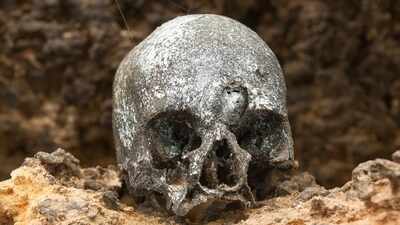
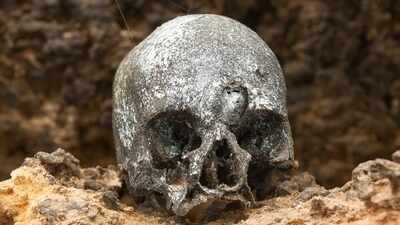
For centuries, everyone has known the story: when European colonizers arrived in the Americas, they brought with them diseases that devastated Indigenous people. Smallpox, especially, was a nightmare: it tore through communities. Historians have described its effects in grim detail. But until now, that story was missing something crucial: direct, biological evidence from the people who lived and died during those first years of European conquest.Per Live Science, that missing piece has just been found in two ancient Inca mummies from northern Chile, and it’s as dramatic as you’d expect.Researchers set out to gather DNA from old bones, expecting to learn something about the population’s origins or family ties, not pandemics. It was a routine investigation at the Camarones 9 cemetery, sifting through genetic history. Then, out of thirteen samples they tested, two, a woman and a man who lived somewhere between 1492 and 1631, turned up DNA from variola virus, the culprit behind smallpox. This was totally unexpected; there isn’t even a clear historical record of smallpox outbreaks in that particular community. Yet, here was ancient viral evidence right in the remains.
So, what does ancient smallpox DNA prove?
A lot, as it turns out.Finding smallpox in a 500-year-old Inca community, by itself, would not establish where the disease originated. The crucial evidence came from comparing the ancient viral genomes with other known Variola genomes. The researchers found that the Chilean virus belonged to an extinct lineage that split from another European strain around 1296. That’s stamp-your-passport proof: the infection wasn’t native to the Americas, but rolled in with European arrivals.“This provides the first molecular evidence of smallpox introduction to the Americas through colonisation,” Shigeki Nakagome, a geneticist at Trinity College Dublin and co-author of the study, told Live Science.Scientists have long believed this, as plenty of colonial records talk about outbreaks. Archaeologists had also found indirect hints, such as scarred remains and artifacts linked to infection. But getting actual DNA that ties the strain to Europe makes the history much more concrete. We’re not just reading letters or combing through skeletal clues; we’re seeing the disease’s family tree, preserved inside human bone.And it’s sobering. Smallpox was already notorious back in Europe, where it had killed and maimed countless people over thousands of years. By the time infected colonists stepped off their ships, the variola virus was primed for new victims, and the Indigenous peoples of the Americas had no immunity.The World Health Organization says smallpox had existed for at least 3,000 years and was fatal in up to 30% of cases. Survivors could be left with deep scars, while some suffered blindness or other complications.The results of the infection, as expected, were tragic on a massive scale. Historians estimate that smallpox, along with other epidemics, violence, and forced labor, was central in wiping out up to 90% of some Native American populations by the early 1600s. The disease alone took out millions: three to four million by some counts.The mummified DNA doesn’t just settle questions of how the virus first got here. It also gives us a rare peek into what the virus was up to as it crossed into new continents. These early American smallpox strains show evidence of genes “shutting down” those that would otherwise help the virus infect animals. That’s a clue that smallpox was evolving, getting more specialized at attacking humans alone. Stuff like that helps us understand how these old diseases operated and, by comparison, can even inform how we track or control modern viruses in the same family, like mpox.In the end, finding smallpox DNA in these Inca mummies doesn’t rewrite what we already believed, but it does put real, biological fingerprints on the story. Where before we had colonial letters and battered skeletons, now we have the virus’s own “diary,” kept in bone for half a millennium.And it also opens up new questions. If those two individuals were infected, how many more traces are lying in ancient graves all over the Americas? The answers, as researchers continue their work, could reveal even more about the course, spread, and impact of one of the deadliest pandemics the world has ever seen.Today, smallpox itself is gone; wiped out thanks to a worldwide vaccination campaign, with the World Health Organization declaring it eradicated in 1980. But its fingerprints linger, both in bones and in the scars left on entire civilizations. And now, after five hundred years, at least two voices from that time are able to add their stories to the record, one viral sequence at a time.