
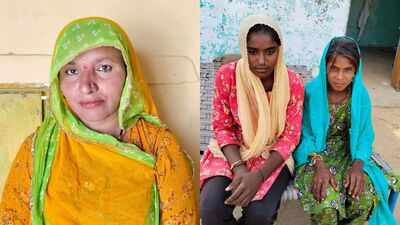
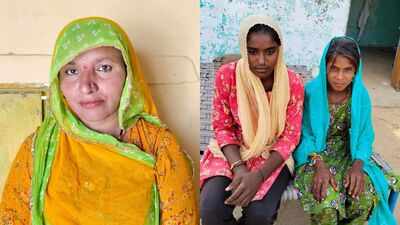
JAISALMER: For hundreds of women from Pakistan who married into families in Rajasthan’s border districts, Raksha Bandhan is no longer a festival of celebration but a painful reminder of a border that keeps them away from their brothers.With India-Pakistan relations strained and cross-border movement restricted, women living in Jaisalmer, Barmer, Jodhpur and neighbouring areas are once again unable to travel to Pakistan to tie Rakhi on their brothers’ wrists.Their brothers across the border will celebrate the festival with empty wrists.With only memories of their childhood homes, the sisters have been left with video calls. They see their brothers on mobile screens, exchange greetings and sometimes perform the Rakhi ritual while looking at them through the phone.Dilip Singh Sodha of Seemant Lok Sangathan said many women living in Rajasthan have their parental homes in Pakistan and have been unable to visit their families during festivals because of restrictions on cross-border movement.“These sisters have been longing to tie Rakhi on their brothers’ wrists for years. Earlier, when relations between the two countries were better, these women could travel to Pakistan during festivals. They could also send letters and Rakhis through post and courier services. Today, even those options are largely unavailable,” he said.Hindu Singh Sodha, president of Seemant Lok Sangathan, said women in Jaisalmer, Barmer, Jalore and Jodhpur had not been able to meet their brothers for several years.“Neither can these sisters easily go to Pakistan nor can their brothers come to India. For them, Raksha Bandhan has been reduced to a video call,” he said.Mohan Kanwar, wife of Dilip Singh Sodha and a resident of Jaisalmer, said her parental home is in Amarkot, Pakistan, where her five brothers live. She has not met them for several years and can now only see them through video calls.“It is difficult to control the emotions when Raksha Bandhan arrives. I see my brothers on the phone and perform the ritual from here,” she said.For sisters Bhagi and Shanti Od, married in Jaisalmer, the pain is equally intense. Their parental home is in Khipro tehsil of Sanghar district in Pakistan and they have been unable to tie Rakhi to their only brother for the past five years.Leelan Kanwar, whose parental home is in Pakistan’s Tharparkar district, said she celebrates the festival through a phone call, but the distance remains painful.Jaman, a Barmer resident who married in 2010, has three brothers in Roopa Fakir village in Amarkot. Unable to meet them, she ties Rakhi to her cousins in India and calls her brothers in Pakistan.“I can only call them. I cannot cross the border. I miss my brothers and family terribly, but there is nothing I can do,” she said.For these women, Raksha Bandhan is not just about a sacred thread. It is also a reminder of childhood, family and brothers separated by a border they cannot cross.