
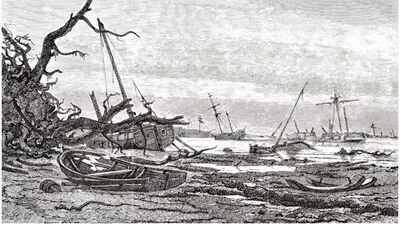
More than a thousand ancient shipwrecks could still be lying beneath the Baltic Sea off the coast of Latvia, according to estimates cited by Latvian archaeologists. The Baltic is unusually well suited to preserving wrecks because its cold, dark, brackish and oxygen-poor waters can protect wooden remains for centuries. Swedish researchers have identified about 17,000 sunken vessels across the region, while experts believe the real number could be as high as 100,000. In Latvian waters alone, calculations suggest that at least 1,000 wrecks may exist, although only about 200 ancient wrecks have been identified so far. Many others are known only from historical records. Together, these remains form an enormous underwater archive, offering clues about travel, trade, warfare, technology and everyday life that may have disappeared almost completely from the land. And human stories from the past remain hidden below.
Why could so many shipwrecks be preserved in the Baltic Sea
The Baltic Sea has an unusual combination of natural conditions that makes it particularly valuable for underwater archaeology. According to Vrak (Museum of Wrecks), there are few places in the world with as many well-preserved wooden wrecks as the Baltic seabed. Thousands of wrecks are believed to have ended up there, and many have yet to be discovered. One of the most important reasons is the absence of shipworms. These small molluscs normally damage wooden wrecks in saltier seas by eating into the timber. However, they do not thrive in the Baltic’s colder, brackish water. As a result, wooden ships can survive underwater in remarkable condition, sometimes looking much as they did when they sank hundreds of years ago.Vrak also explains that the Baltic’s cold water, darkness and low oxygen levels work together to slow the deterioration of materials. Wood, metal and other objects can survive far longer than they might at many archaeological sites on land.
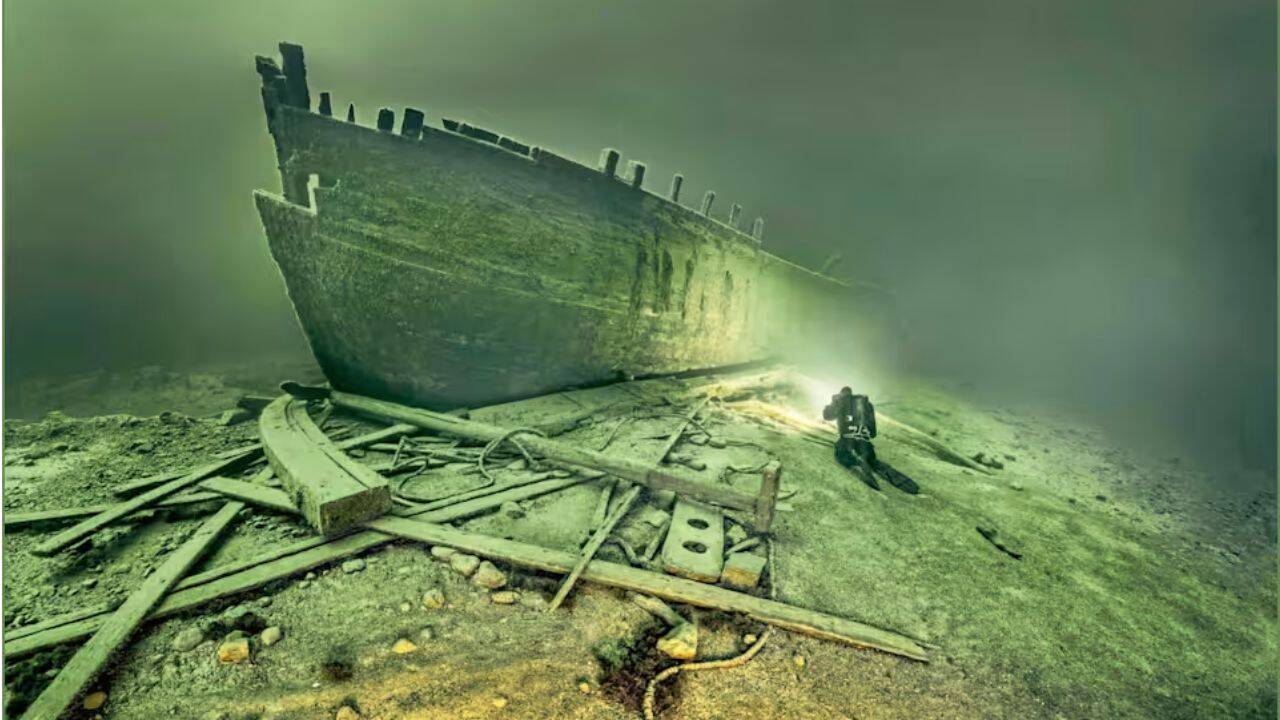
The “Glücksburg” probably sank in the 18th century. Her hull rests ghostly in the depths of the sea. Image Credit: Jonas Dahm/Voice of the Ocean
Actual number of shipwrecks hidden off the Latvia’s coast
The scale of the potential underwater archive is much larger than the number of wrecks already identified. Latvian archaeologist and National Heritage Administration specialist Kaspars Markus Molls states that researchers believe up to 100,000 sunken vessels could be scattered across the Baltic Sea. Swedish researchers have already recorded around 17,000, but experts believe this represents only a fraction of the total. The same source estimates that at least 1,000 sunken vessels could be located in the Latvian part of the Baltic. Yet archaeologists have so far identified around 200 ancient shipwrecks there. Another roughly 200 are known only through historical records and have not been comprehensively investigated.That gap is important. It means the known wrecks represent only a small part of what could be waiting beneath Latvian waters. Every newly located wreck has the potential to add another piece to a much larger picture of the region’s past.
What can these underwater shipwrecks reveal
A shipwreck is much more than the remains of a vessel. Vrak describes Baltic wrecks as time capsules that can preserve evidence of major historical events as well as the experiences of individual people. They can show how ships were constructed, what goods and tools were carried and how people travelled across the region. The underwater heritage is also broader than shipwrecks. Vrak notes that remains beneath the Baltic include Stone Age settlements, Viking and medieval ship barriers and traces of old ports and industrial activity. These discoveries provide a record of how people interacted with the water for thousands of years. For Latvia, the potential is particularly significant because the country’s underwater archaeological record remains comparatively underexplored.
What recent discoveries show about Latvia’s underwater archaeology
The search is not limited to the Baltic coastline. In August 2026, Latvia carried out its first underwater archaeological excavations at Lake Indzers, showing how researchers are beginning to investigate the country’s underwater heritage more systematically. According to Research Latvia, archaeologists excavated near Cepurīte Island as part of a project examining archaeological heritage in Latvian lakes. Divers surveyed the lakebed at a depth of about 2.5 metres and recovered important pottery fragments. Evidence of ancient human activity, including burnt and split stones, animal bones and pottery extended around 12 metres from the island’s shore.The finds appear to date mainly around the second half of the first millennium AD. A bone fishing spear discovered on the lakebed may be considerably older, dating to the Middle or Late Mesolithic, between the 9th and 6th millennia BC. Research Latvia notes that the spear may have belonged to Stone Age fishermen who used the area without necessarily living on the island. The expedition also demonstrated why underwater research can produce surprisingly well-preserved evidence. Inbox.lv reported that objects recovered from Lake Indzers were preserved significantly better than comparable finds on land.
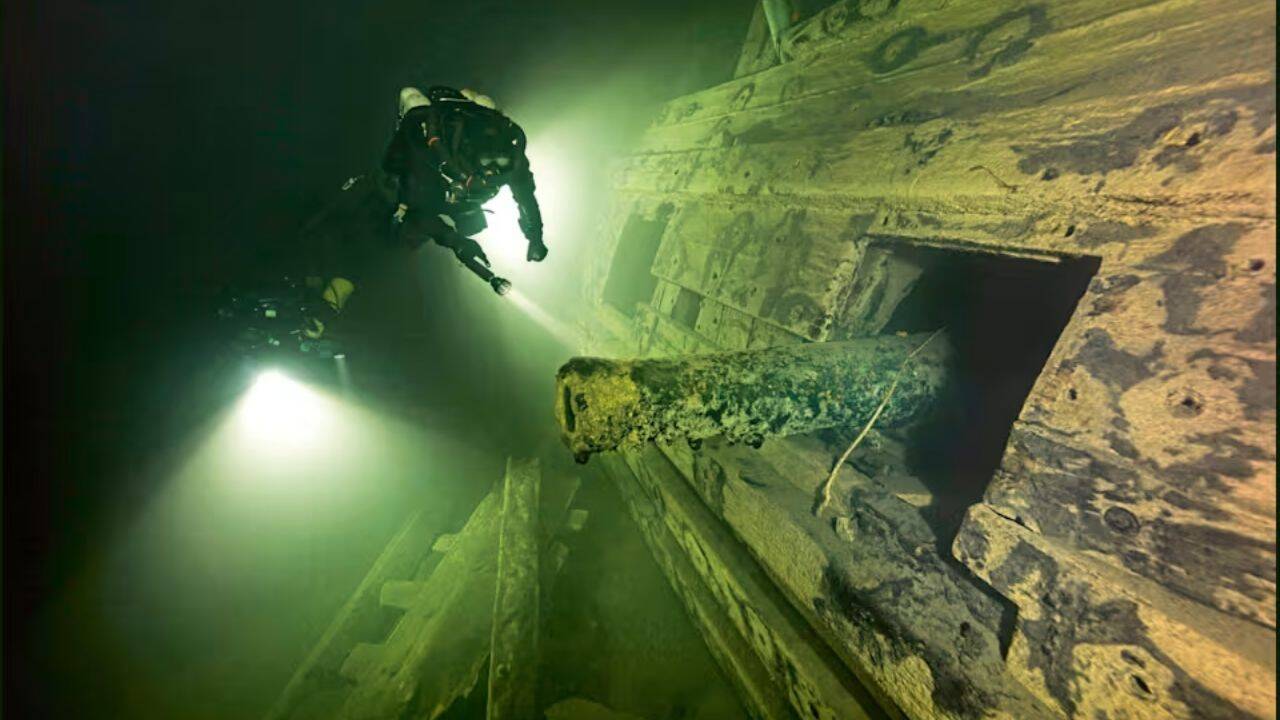
Image Credit: Jonas Dahm/Voice of the Ocean
Why has Latvia not explored more of this underwater heritage
Despite the enormous potential, underwater archaeology in Latvia is developing slowly. According to Inbox.lv, one major difficulty is the shortage of archaeologists trained in underwater research methods. Latvia has also not yet ratified the UNESCO International Convention on the Protection of Underwater Cultural Heritage. The convention could help Latvia seek international funding for investigating and protecting underwater historical sites. That could become increasingly important as more wrecks are located and the pressure to document them grows.There is another concern of ‘looting.’ Vrak identifies the theft of material from wrecks along with the general lack of knowledge about what lies beneath the water, as major threats to this heritage. For now, much of the Baltic’s archaeological story remains out of sight. Thousands of wrecks may still be waiting beneath the waves. As underwater surveys expand, each discovery could transform a simple shape on the seabed into evidence of a real journey, a forgotten community or an entire chapter of Baltic history.