


We live in a world of temporary amnesia. But latest research suggests forgetting is good for the brain. Seems like the kind of contradiction we didn’t really need in our lives today. But here we are. We have all experienced forgetting in a whole new way for the past few years. Researchers have talked about mass amnesia affecting people post the pandemic. We walk into a room and forget what we’re there for. In the midst of an animated discussion on favourite topics—books, cinema, gardening—names of flowers, characters, directors or authors completely leaves the memory centre in the brain. “Oh God, I cannot believe I cannot remember his/her/thing name. What’s wrong with me?” It’s frustrating, even infuriating. Well, now we have a scientific argument in favour of forgetting. Latest studies say it’s essential for our species to forget. In fact, forgetting is a secret superpower. Leonard Shelby would agree. And we’ll visit him soon enough. For now, let’s figure out what these scientists are talking about.Throughout our childhoods, from parents to teachers, told us good memory is a sign of intelligence. The more we store, the brighter we are. Was our whole childhood a lie? Dr Scott Small would say not necessarily, but science has advanced a lot. So has technology. Dr. Small is the director of the Alzheimer’s Disease Research Center at Columbia University. He argues that selective forgetting is a sign of a healthy brain, not a failing one. Using advanced brain imaging, his research team has shown that normal forgetfulness is quite different from the memory loss caused by diseases like Alzheimer’s. Normal forgetfulness is actually good.Dr Small’s team explained that human memory is not like a video recorder or a computer hard drive that stores information exactly as it happens. That’s not how brains work. Every time we recall an event, the brain reconstructs it. That is why our memories are constantly changing rather than remaining fixed. For eg. , if we watch a video recording of a birthday party a few years ago, we may remember it in essence, but while rewatching it years later, how our brains remembered the event will change. Certain details would be lost. Others may feel almost made up. Maybe, events didn’t happen the way you remember. Why does this happen to us? This study says it’s because biologically forgetting is not a flaw. It is an essential function that helps the brain filter out unimportant information, and make room for new learning.
Forgetting might be our superpower
Latest neurological studies have basically displayed that a large part of adapting to a changing world involves an active act by our brains to forget what is unnecessary after a point. That also makes the act of forgetting an evolutionary necessity. So we can say forgetting is a primal human instinct. Leonard Shelby in Christopher Nolan’s pathbreaking film, Memento, may have something to say about this theory. He was after all a man who was not capable of making any new memories. Forgetting was both his nemesis and superpower.
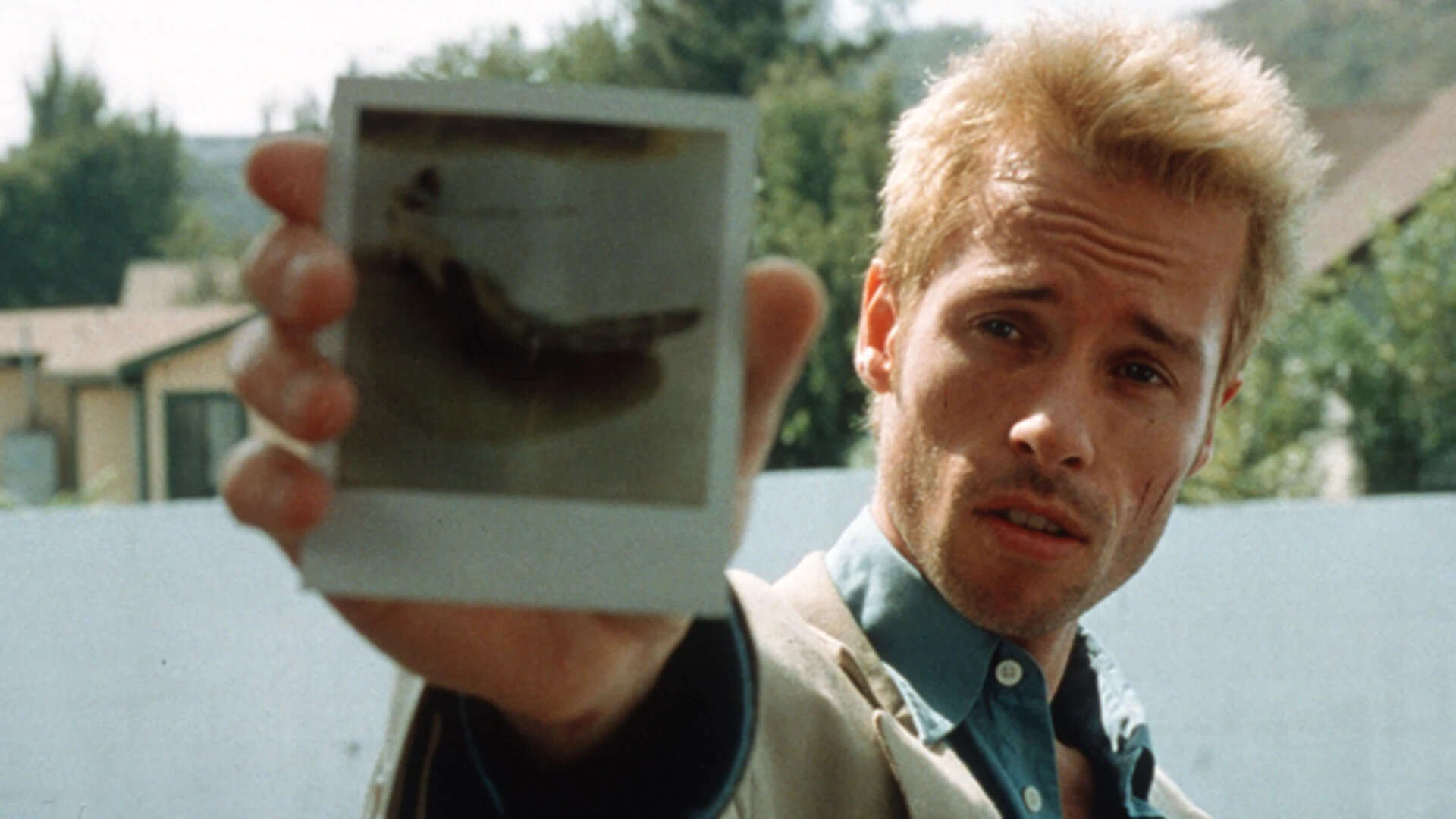
Christopher Nolan asks in Memento, can human memory be a subjective record that can be manipulated?
Shelby, played brilliantly by Australian actor Guy Pearce, suffers from severe anterograde amnesia in this film. Anterograde amnesia is the inability to form new memories. Through this film, Nolan poses an interesting question to his audiences. Is human memory an objective record? Or, is it a subjective record that can be reconstructed and manipulated by our brains depending on how we feel? It does shed light to an existential question we often ask ourselves. Does our heart guide the mind, or is it the other way round? Whichever way, one thing is certain. There is a link between how we feel, and how our mind processes those feelings, and decides which ones to keep and which ones to let go.
Forgetting serves a greater purpose
So the act of forgetting is both objective and subjective – a sort of selective amnesia. Michiko Kimura Bruno, professor of medicine at the John A Burns Medical School, at the University of Hawaii, says forgetting isn’t a failure of memory. It’s rather an act of editing our memory archive. She says forgetting actually serves a greater purpose. It allows our brains to prioritize information that helps us navigate and make sense of the world. “Imagine remembering every detail of every day with equal clarity. Every breakfast, every receipt, every conversation. Such a system would not be a gift but a burden,” says in a column in Psychology Today. So when we go to a room and forget what went there to do that may be a result of information overload. But all kinds of forgetting shouldn’t alarm us.
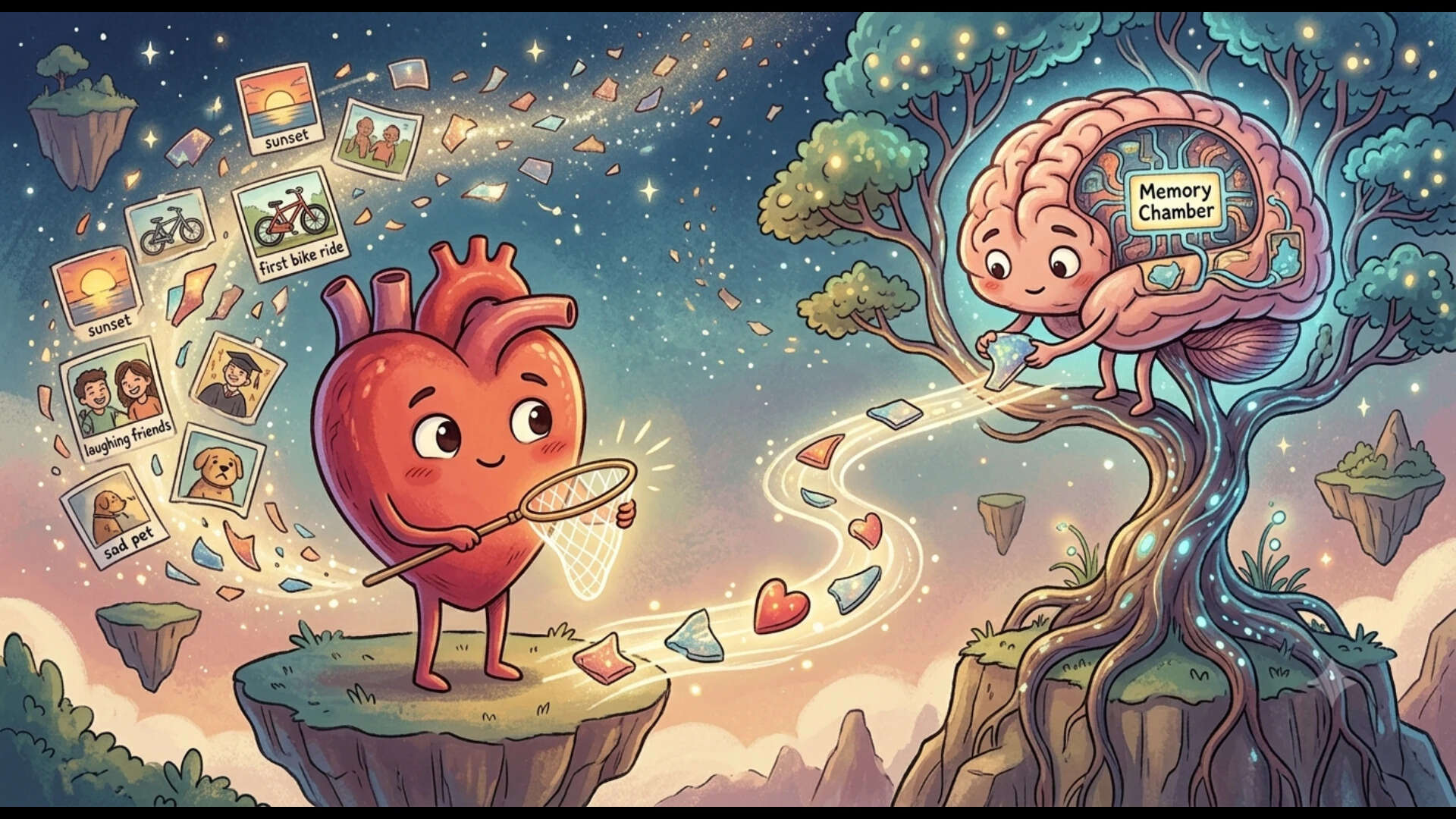
Memory is not about everything that happened to us; it is a record of what we paid attention to.
Memory is not simply a record of everything that has happened to us. It is a record of what we paid attention to. It is also a record of how we felt. Our brains right at this moment—even if we aren’t aware—are constantly deciding what deserves to be stored and what can safely fade away. This also means we have some influence over what we remember. The more attention we give to an idea, skill or experience, and the more often we revisit it, the stronger that memory becomes. Memories we rarely use gradually weaken, making space for new information.
The heart asks the mind to delete what we don’t like
Emotion plays a powerful role in this process. The hippocampus, which helps form memories, works closely with the amygdala, the brain’s emotional centre. Strong emotions such as fear, joy, shock or sadness tell the brain that an experience is important. Here, you can think of emotion as a highlighter that marks certain moments and says, “remember this.”Does that mean memory and emotion are the same thing? Research says not exactly. But here’s an interesting experiment on the results of Alzheimer’s patients. One group watched a comedy while the other watched a sad film. Later, most could not remember the plot or even that they had watched a movie. But the feelings remained. Those who had watched the comedy continued to feel happier, while those who had watched the sad film stayed sad, even though they no longer remembered why.

Emotional suffering is necessary for moral growth. That’s why we don’t forget pain.
Michael Gondry (director) and Charlie Kaufman’s (writer) Eternal Sunshine of the Spotless Mind explores the fantasy of targeted memory erasure. Heartbroken by a painful breakup, Joel Barish (Jim Carrey) and Clementine Kruczynski (Kate Winslet) employ the services of Lacuna Inc. to erase every trace of their relationship from their minds for fear of feeling sad. The film critiques the romanticized ideal of the “spotless mind” or the tabula rasa (blank slate). It shows that attempting to erase painful experiences is a form of emotional self-mutilation.In the film, as Joel’s memories are dismantled one by one, he realizes that in the process of deleting painful experiences, he has also lost precious, joyful moments that shaped his character; finally leading him to desperately fight to preserve them.The film argues what life teaches us. Or what wisdom tells us. That emotional suffering is necessary for moral growth. That lived experiences cannot be truly destroyed. At the risk of giving away spoilers, in Eternal Sunshine of the Spotless Mind, Joel and Clementine—despite having their memories thoroughly wiped—find their way back to each other, driven by subconscious and lived connections. The heart definitely has a say at what the mind decides to keep.That is possibly why emotionally charged moments stay with us so much longer than ordinary ones. We can vividly recall our wedding day, the birth of a child or the moment our favourite team won a championship, while struggling to remember what we had for lunch last Tuesday. So not all kinds of forgetting are bad. The next time we wander into a room and forget, maybe we could remind ourselves that our heart has spoken to our head. And we can’t remember a small little thing right now, because the mind is busy deleting those small things so that the really important moments of our lives stay with us forever.