
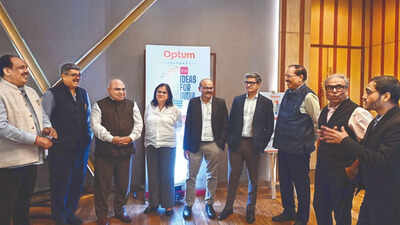
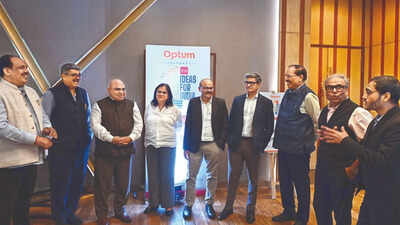
NEW DELHI: Three separate juries evaluated entries in the three categories for the award and the panel members acknowledged at the end of the day that the quality of applicants was excellent. In each of the categories, bulk of those shortlisted for evaluation by the jury were very young, either still in college or just out of it, though there were some older innovators too.Over 14,000 applications were received, which were filtered down by Techgig to 1,000 and Grant Thornton shortlisted it to 35 finalists that were split between three juries. While first was on sovereign technology for India handled 14 entries, second on Inclusive Innovation for Bharat met a dozen applications and third on Sustainable & Resilient India dealt with nine entries.The juries followed a pattern of a short presentation by the applicants, followed by questions from jury members and then a brief discussion between the members before scoring the applicant. Several jury members admitted that they were pleasantly surprised by how well thought through the presentations were, especially given the age of most applicants.Even where some aspect of the road to implementation may have not occurred to the applicants — say, a compliance issue or consent to be obtained — it was striking how eager the innovators were to learn from the experience of those who had worked in the real world for decades and knew what it takes to translate brilliant ideas into real solutions. The maturity to take hard questions as essential inputs rather than as harsh criticism was quite remarkable.

Ideas For India
The diversity of the presentations was also a striking aspect. In the technology sovereignty category, for instance, the ideas ranged from closing a felt gap in middle sized drones to faster and more efficient identification and countering of cyberattacks to dealing with ships that go ‘dark’, which may not always be for innocent reasons.
Share your thoughts in the comments
Be respectful · TOI community guidelines
But these were not just ideas. The drone entry had already done some testing in the field with army units, the dark ships idea had been explored with a port and so on.Such was the overall quality of the applicants that at least in two categories some of the jury members voiced the opinion that perhaps the awards need not be restricted to two in each category. There was, after all, no compulsion to stick to a bell curve, they pointed out. Most left the venue feeling satisfied that they had done their bit to encourage a cohort whose innovative mindset was matched by its enthusiasm to do good for society and for India.