
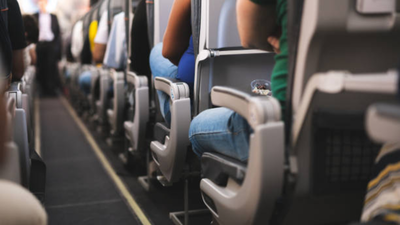
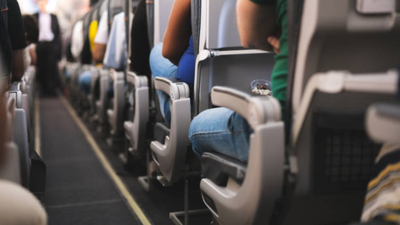
After walking into a classroom, a regular meeting room, or even your favourite café, you will notice something familiar. The same people claim the same chairs, almost without thinking. It is not a strict rule. No one assigns the seats.Yet week after week, many of us head straight for that one particular spot. Is there any particular reason behind it? Psychology has been looking at this small, everyday behaviour for years, and the reasons turn out to be deeper than simple habit.
Claiming a little piece of space
One of the strongest explanations is territoriality. As reported by Quartz, environmental psychologist Robert Gifford from the University of Victoria points out that territoriality is not mainly about aggression or defending land, but keeping peace. “Most of the time most people claim a space and others tacitly agree to it”, he said. When we return to the same seat, we are informally marking a small territory.Studies of university classrooms show this clearly. The same report talks about researcher Marco Costa’s work where he tracked students over several weeks using photographs and found that most people settled into the same seats and created tiny personal zones around them. Even when seats were free for anyone, students treated “their” chair as familiar ground. This makes the room feel more predictable and less chaotic.
Giving the brain a break
Another practical reason that can be responsible is mental energy. Our brains face countless small decisions every day: what to wear, which route to take, where to sit. Repeating the same choice turns it into an automatic habit.‘Psychology of Habit,’ a landmark review by Wendy Wood and Dennis Rünger, published in the Annual Review of Psychology in 2015 stated that habits are the brain’s way of functioning efficiently.The research by him and colleagues shows that around 43 percent of daily actions become habitual when they happen in the same setting. Once the brain learns “this is my seat,” it no longer needs to scan the room or weigh options. The decision moves from the effortful part of the mind to the automatic systems. Choosing the same chair is therefore a quiet way of reducing decision fatigue and saving attention for more important things.
Feeling safer and more in control
Familiar seats also offer a sense of control along with emotional calm. When the world feels unpredictable, if you know exactly where you will sit, it automatically creates a small island of certainty. Routine behaviours, including returning to the same place might be linked to higher feelings of safety, confidence and general well-being.In classrooms or meeting rooms, the same spot lets people regulate how close they sit to others and how much social interaction they face. This reduces vulnerability and the environment feels manageable. These little anchors often mean more to people who like order and predictability than to others.
Owning and knowing attachment
Repeated use also creates a quiet sense of psychological ownership.” The more often we sit in one place, the more it starts to feel like “ours,” even when we have no legal claim to it. This is related to the mere exposure effect, the tendency to prefer things we encounter often.Studies of longer classroom programmes found that many students began settling into the same seats within a few days, and by the end of a month more than half had claimed a fixed position. The seat becomes linked to comfort, a preferred view, or a familiar role in the group. Over time it can even strengthen a sense of belonging, because that chair quietly signals “this is where I fit.”