
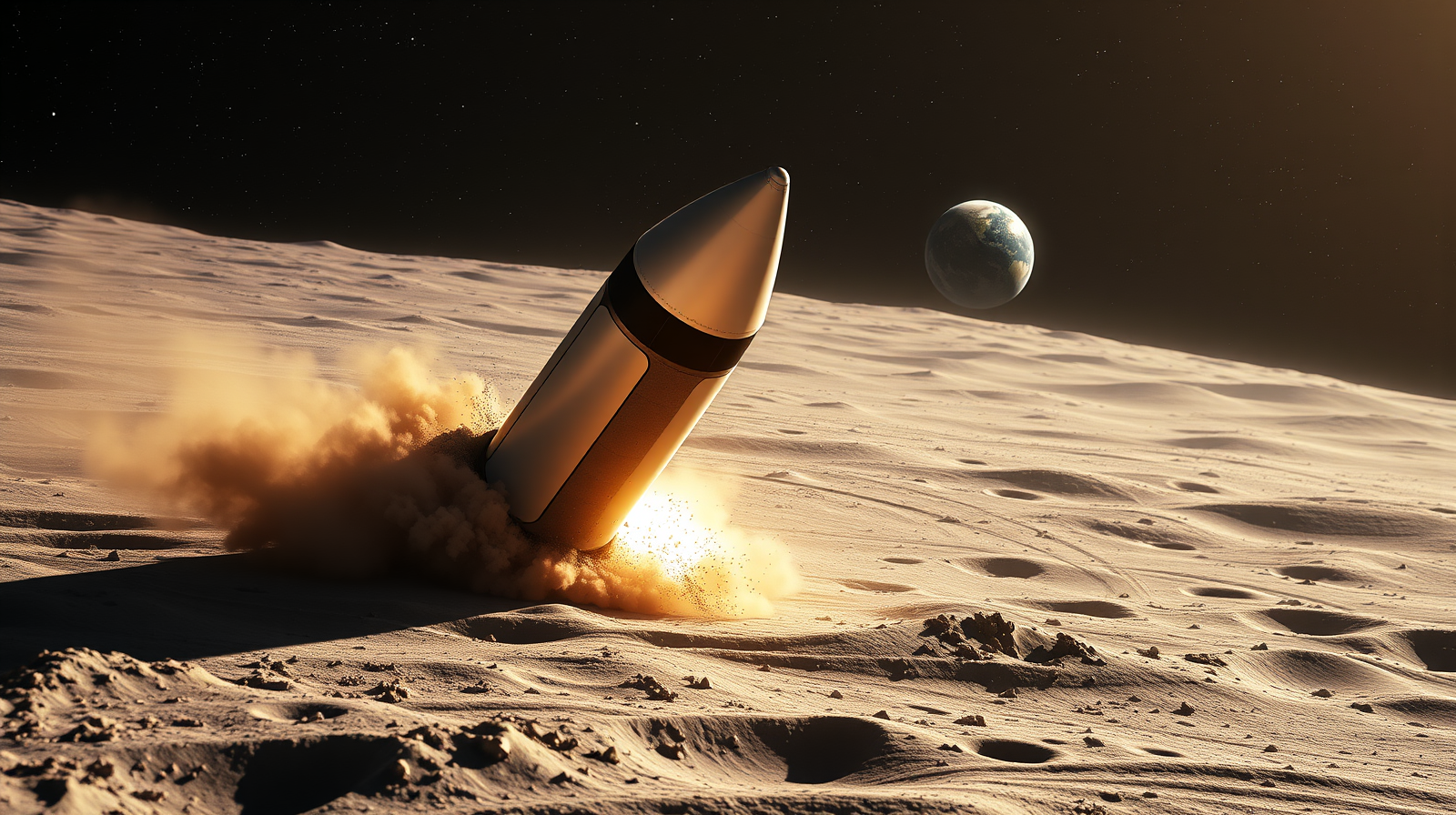
I witness Starship’s final moments impacting the lunar surface, a spectacle of power and achievement.
A piece of a SpaceX Falcon 9 rocket is expected to crash into the Moon, and it’s one of those rare space events that’s getting people talking.The rocket stage has been drifting through space since completing its mission more than a year ago. Now, it’s expected to end its journey by slamming into the lunar surface.If you’re hoping to catch it live, here’s when you should tune in.
What time is the Moon impact?
The impact is expected at around 2:35 a.m. EDT on Wednesday.For viewers in India, that’s around 12:05 p.m. IST on Wednesday.No one can predict the exact second the rocket will hit, so it’s a good idea to join the livestream a little early. The best viewing window for those in India is between 11:50 a.m. and 12:20 p.m. IST.Here’s how that translates across different time zones:IST: 11:50 a.m. – 12:20 p.m. (Wednesday)EDT: 2:20 a.m. – 2:50 a.m. (Wednesday)CDT: 1:20 a.m. – 1:50 a.m. (Wednesday)MDT: 12:20 a.m. – 12:50 a.m. (Wednesday)PDT: 11:20 p.m. – 11:50 p.m. (Tuesday)AKDT: 10:20 p.m. – 10:50 p.m. (Tuesday)HST: 8:20 p.m. – 8:50 p.m. (Tuesday)
Why is the rocket crashing into the Moon?
The object isn’t an active spacecraft.It’s the upper stage of a Falcon 9 rocket that completed its mission months ago. After separating from the payload, it continued drifting through space until its path lined up with the Moon.Space experts estimate it will hit the lunar surface at around 5,400 mph, or nearly 8,700 km/h.That might sound dramatic, but there’s no reason to worry. The impact won’t affect Earth in any way.
Where can you watch it?
If SpaceX streams the event, the broadcast is expected to be available on the company’s official X account, where it usually covers launches and other major missions.It’s worth joining a few minutes early because the timing isn’t precise, and the impact could happen anytime within the expected window.
Will the crash actually be visible?
Probably not with the naked eye.Researchers say the flash created by the impact could last for less than a second. Since it will happen on the sunlit side of the Moon, spotting it will be even harder.People using professional observatories or powerful telescopes have the best chance of recording it. If you’re watching from home with a basic telescope, don’t expect to see a huge explosion.
Is there any danger?
No.NASA has already said the impact poses no threat to Earth. It’s simply the final chapter in the journey of a spent rocket stage that’s been travelling through space for months.Even if the flash is over in an instant, it’s still an unusual event. That’s why so many space enthusiasts will be watching when the countdown reaches zero.Thumb image: AI generated