
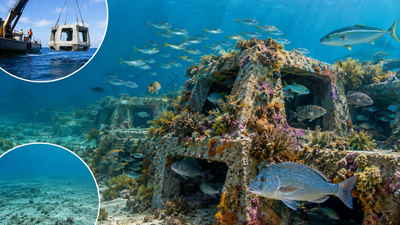
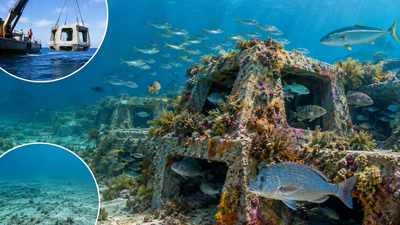
A barren stretch of seafloor can look empty from above, but dropping the right structures onto it can quickly change what lives beneath the surface. That is what happened off Western Australia’s south-west coast after purpose-built artificial reefs were installed at Bunbury and Dunsborough in 2013. The projects used 30 concrete “Fish Boxes” at each reef, with every module weighing 10 tonnes and designed to create shelter, water movement and feeding habitat. According to Recfishwest, Western Australia’s recreational fishing representative body that helped deliver the artificial reef programme, only about a dozen fish species had been identified at the sites before deployment; three years later, more than 60 species had been recorded using the reefs.
Turning bare seafloor into fish habitat
The two reefs were part of Western Australia’s first purpose-built artificial reef trial. Deployed in January 2013 off Bunbury and Dunsborough, they were intended to increase habitat for important fish species and create new opportunities for recreational fishing. Each reef initially consisted of 30 concrete modules arranged in six clusters of five. The modules were not simply blocks dropped onto the seabed. Their hollow, structured design was intended to create different spaces where fish could shelter while also changing the movement of water around the reef.The modules measured about 3 metres and weighed 10 tonnes each. Their shape was designed to create upwelling, bringing nutrient-rich water from the seafloor towards the surface. That process can support phytoplankton and zooplankton, which form the foundation of food chains that eventually support larger fish. The reefs were also placed relatively close to shore. The Bunbury reef is in about 17 metres of water, while the Dunsborough reef is in about 27 metres, making both accessible to recreational fishers using smaller boats.
From 12 fish species to more than 60
The most striking change was biological. Before the artificial reefs were installed, only about a dozen fish species had been identified at the deployment locations. Three years later, more than 60 species had made the reefs their home, according to Recfishwest. The transformation did not happen all at once. Within two months of deployment, pelagic species including Samson fish and skippy were being observed around the structures, while baitfish were also gathering within the modules.By around six months, algae had established across much of the concrete surfaces and demersal species such as dhufish were being seen around the reef. After a little more than a year, organisms including coralline algae, sponges and bryozoans had begun colonising the structures. That progression matters because an artificial reef becomes more than its physical structures as marine life establishes itself. Algae and invertebrates create additional food and shelter, helping develop a more complex underwater community.
Why the concrete structures attract marine life
Natural reefs provide a mixture of cracks, cavities, vertical surfaces and changes in depth. Artificial reef modules attempt to reproduce some of those characteristics in areas where the seafloor has relatively little structure. Recfishwest describes artificial reefs as purpose-built structures intended to create, restore or enhance aquatic habitat. Their complexity can provide shelter, feeding opportunities and changes in the water column. Once algae, corals and invertebrates establish themselves, they can contribute additional biomass to the food chain.The Fish Boxes therefore serve several functions at once. Small fish can use the structures as shelter, while larger predatory species are attracted by the concentration of prey. The structures can also create areas where different species occupy different parts of the reef. Among the species recorded around the south-west reefs have been pink snapper, Samson fish and other species sought by recreational fishers. The growing diversity also demonstrated that the structures were supporting a broader marine community rather than simply attracting a few target fish.
The reefs continued to evolve
The original structures were later expanded. At Bunbury, 90 additional smaller concrete modules were added in 2019, increasing the reef’s fishable area by 50%. The additional modules were designed to link the existing clusters and create even more complex habitat. Monitoring subsequently continued. A Recfishwest scientific programme used baited remote underwater video cameras to assess the Bunbury reef. In 2020, monitoring data showed 58 fish species on the expanded reef, including Samson fish, yellowtail kingfish, pink snapper, dhufish and mulloway.The monitoring is important because artificial reefs are not simply judged by how many fish appear around them. Researchers and managers also want to understand how the structures develop over time and whether they create productive habitat rather than merely concentrating fish that would otherwise live elsewhere.
A growing network beneath Western Australia’s waters
The success of the early south-west reefs helped establish a wider artificial reef programme across Western Australia. Since 2013, Recfishwest says it has helped deliver nine artificial reefs along the state’s coast, involving more than 1,000 reef modules and almost 3,000 tonnes of new fish habitat across about 40 hectares of seafloor. The designs have also become more varied. Later projects have included large steel fish towers, mixed concrete structures and integrated reefs combining different types of modules. The aim remains similar: create physical complexity in areas where natural structure is limited and allow marine life to establish around it.The reefs can also have benefits beyond the water. By creating new fishing locations, they can spread recreational fishing activity and support businesses connected to boating, tourism and fishing.
More than a fishing destination
What began with 10-tonne concrete modules on relatively featureless seabed has developed into a much broader experiment in creating marine habitat. The increase from roughly 12 identified fish species to more than 60 within three years showed how quickly a new structure can become part of a functioning underwater ecosystem.For Western Australia, the project demonstrates that artificial reefs can serve several purposes at once: providing habitat, supporting biodiversity, creating recreational fishing opportunities and contributing to coastal communities. What looked like a collection of concrete boxes on the seafloor ultimately became a foundation for a much richer marine environment.