
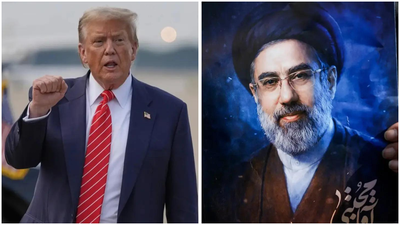
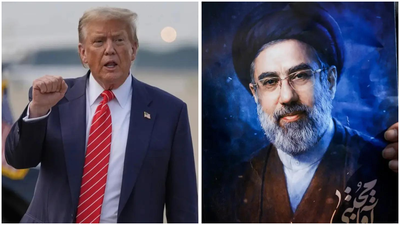
The United States and Iran are close to signing a proposed agreement that would extend the current ceasefire for 60 days, reopen the Strait of Hormuz and allow Iran to resume oil exports while negotiations continue on Tehran’s nuclear programme, as per US media outlet Axios.According to the report, the draft memorandum of understanding (MOU) would allow ships to pass through the Strait of Hormuz without tolls during the 60-day period, while Iran would clear mines deployed in the waterway to restore shipping traffic.In return, the US would lift its blockade on Iranian ports and issue sanctions waivers enabling Iran to sell oil freely, Axios reported, citing a US official.The proposed deal would include talks on curbing Iran’s nuclear activities.
Key points of the proposed deal
- A 60-day ceasefire extension between the US and Iran
- Reopening of the Strait of Hormuz with no tolls for ships
- Iran to clear mines deployed in the strategic waterway
- US to lift blockade on Iranian ports
- Sanctions waivers to allow Iran to freely sell oil
- Iran to commit to never pursuing nuclear weapons
- Negotiations on suspending uranium enrichment
- Talks on removing Iran’s stockpile of highly enriched uranium
- US and Iran to negotiate over lifting sanctions and unfreezing Iranian funds
- US forces to remain in the region during the 60-day period
- Draft deal also seeks to end the Israel-Hezbollah conflict in Lebanon, as per Axios
Nuclear talks remain central
The proposed agreement reportedly includes commitments from Iran that it would never pursue nuclear weapons and would negotiate over suspending uranium enrichment and removing its stockpile of highly enriched uranium.As per Axios, Iran has already provided verbal commitments through mediators regarding the concessions it may be willing to make on enrichment and nuclear material.The development comes after The New York Times reported that one key element of the proposed agreement is an “apparent commitment” by Tehran to give up its stockpile of highly enriched uranium, citing two US officials.According to the report, details on how Iran would surrender the uranium stockpile would be discussed in a later round of nuclear negotiations. Iran currently possesses around 970 pounds of uranium enriched to 60%, according to the International Atomic Energy Agency.Iranian officials had earlier resisted including the uranium issue in the initial phase of talks and wanted it delayed to later negotiations.
Trump says deal close, Iran cautious
US President Donald Trump said on Saturday that a “largely negotiated” peace memorandum was nearing completion and claimed the Strait of Hormuz would reopen under the deal.“Final aspects and details of the Deal are currently being discussed, and will be announced shortly,” Trump wrote on Truth Social.However, Iran’s Fars news agency disputed Trump’s claim regarding the Strait, saying Iran would continue to manage the waterway and describing Trump’s remarks as “inconsistent with reality”.Iranian foreign ministry spokesperson Esmail Baghaei said “there are still issues that need to be discussed through mediators,” while stressing that Tehran’s priority remained ending threats of renewed US attacks and addressing the conflict in Lebanon.
Pakistan-led mediation effort
Pakistan has emerged as a key mediator in the talks. Pakistan Army chief Asim Munir recently met senior Iranian leaders, including top negotiator Mohammad Baqer Qalibaf and Foreign Minister Abbas Araqchi, in Tehran.Leaders from Saudi Arabia, Qatar, the UAE, Egypt, Turkey and Pakistan backed the emerging framework during a conference call with Trump on Saturday.The proposed framework is expected to unfold in stages, beginning with formally ending the war, reopening the Strait of Hormuz and launching a 30-day negotiation window for a broader nuclear agreement.Axios further reported that US forces mobilised in the region would remain deployed during the 60-day period and would withdraw only if a final agreement is reached.
Concerns from Israel, global oil markets
Israeli Prime Minister Benjamin Netanyahu reportedly raised concerns over parts of the proposed agreement during a call with Trump, particularly provisions linked to ending the Israel-Hezbollah conflict in Lebanon, according to Axios.The agreement is being closely watched globally because the Strait of Hormuz handles a major share of global oil shipments. The closure of the waterway since the start of the war had severely disrupted global energy markets.Oil prices and shipping routes have remained volatile amid uncertainty surrounding the conflict and negotiations.Iran has demanded an end to the US blockade on its shipping and sanctions relief as part of the talks.