
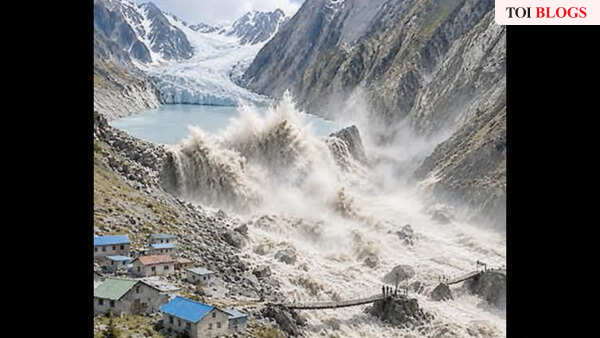
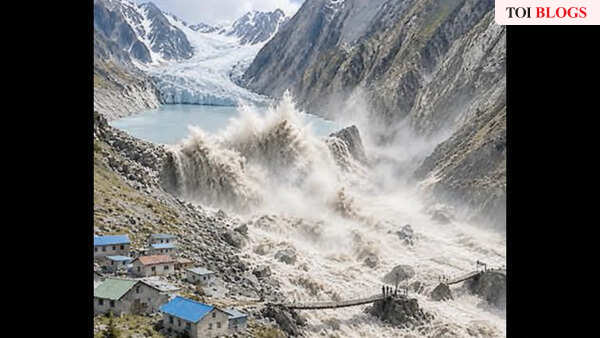
Scientists are still not completely sure what caused Wednesday’s terrible flash flood on the Nepal-Tibet border. It may have been caused by a glacier breaking apart or by a huge slide of ice and rocks. But one thing is becoming clearer: global warming is making such disasters more likely.Floods caused by glaciers have happened before. For example, the Chong Kumdan glacier in Ladakh caused floods in 1835, 1926 and 1929. But such events are now happening more often. Between 1900 and 2000, there were 135 glacial lake outburst floods, or GLOFs, in the Himalayas and Karakoram. This century has already seen 85.The danger could grow because the Himalayas and Karakoram have a lot of glaciers. The Himalayas alone have about 22,800 sq km of glaciers. These mountains are also warming much faster than the world as a whole. As temperatures rise, glaciers melt faster and more lakes form near them. If too much water collects, a lake can suddenly burst and send a huge amount of water downhill. This is why these floods are most common during the rainy months of June, July and August.Scientists expect much more glacier melting in the future. Some estimates say that 65% of the region’s ice could disappear by 2100.We cannot easily reverse this problem. Much of the carbon dioxide already released into the atmosphere will remain there for thousands of years. So we must learn to live more safely with this growing danger.Governments should move people away from narrow river valleys and avoid building projects that can weaken mountain slopes. They should also be careful about building too much infrastructure in fragile mountain areas.Early-warning systems can save many lives. Satellites can help scientists watch glaciers and lakes and warn people when a flood may be coming. Countries such as India, China, Pakistan, Nepal and Bhutan should also work together because rivers and glaciers do not stop at national borders.There are other things that can help too. In Bhutan, for example, engineers lowered the water level of a dangerous glacial lake by building a spillway. This reduced the risk of flooding and helped protect farms and natural habitats.We may not be able to stop glaciers from melting quickly. But better planning, early warnings and cooperation can prevent a natural disaster from becoming a human tragedy.
Disclaimer: Views expressed above are the author’s own.