
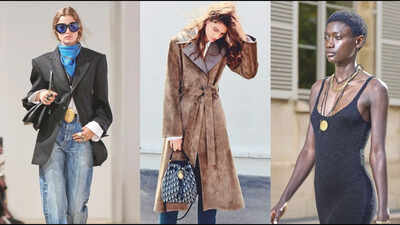
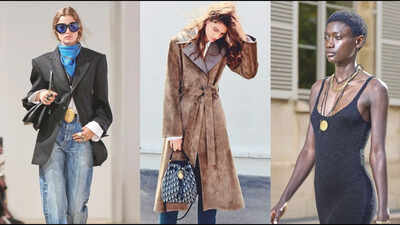
Suddenly, the medallion is everywhere — from jewellery pieces to make-up boxes and holiday treats. A recent example is Zendaya’s controversial 3,000-year-old gold medallion plaque earrings she wore at a London promotion event for The Odyssey film in July 2026. They were believed to have originally been found in northwestern Iran.Independent designers and established fashion houses have also been incorporating the medallion into their collections in varied ways for quite some time now. Dior, for instance, has been using its iconic Dior Médaillon in beauty product packaging, holiday campaigns featuring medallion-shaped tree ornaments and gingerbread biscuits, and bag and belt buckles.Other fashion houses, including Celine, Gabriela Hearst, Missoni, Vivetta and Nina Ricci, have explored the motif through medallion belts, long-chain necklaces, earrings and statement belt buckles in their Spring/Summer 2026-27 collections.The motif has also found favour with high jewellery maisons such as De Beers, Van Cleef & Arpels and Chanel, which have incorporated this architectural form into their 2025 and 2026 collections.
A medallion is a round, flat ornament
It is a historical motif that held significant value for ancient civilisations and was used as military honours, political currency, religious relics and artistic objects. Biren Vaidya, jewellery designer, managing director and creative head, The Rose Group of Companies, tells us, “From ancient Indian coins to Greek and Roman medallions, these objects have traditionally represented power, faith, prosperity and remembrance. They often featured portraits of rulers and deities, or symbols that held particular significance for those who wore them.”Today, it has evolved into jewellery, belt buckles, keychains, hair clips, decorative bag clasps and more.
Choose a medallion that you feel naturally drawn to. It could be the symbolism or the craftsmanship. Consider its proportion, wearability, weight, length and style of the chain. Prioritise craftsmanship on both sides. A beautifully finished reverse indicates the attention invested in the piece
Biren Vaidya, jewellery designer, creative head of a luxury jewellery house
Wide scope for experimentation
The beauty of a medallion lies in the freedom it offers a designer, says Vaidya. When it comes to metal and materials used to make the medallion, he says, “Gold will always have a special place in this kind of jewellery for engraving, embossing and intricate relief work, allowing the craftsmanship to become an integral part of the design.” However, the medallion also offers the opportunity to introduce other materials and textures. “Diamonds, coloured gemstones, enamel and ornamental stones offer wonderful possibilities.”
What makes it appealing
The medallion is not just a piece of jewellery. Madhuri Singh, a celebrity fashion stylist, believes it reflects individuality. “People are moving beyond choosing jewellery purely for its decorative appeal. The medallion’s resurgence reflects a larger shift towards jewellery that has character, meaning and a story to tell.”Timelessness too makes it special. Vaidya highlights, “It is one of those rare forms of jewellery that has remained relevant across centuries, despite changing fashions and tastes. Much of that enduring appeal comes from its ability to hold meaning. Over time, its significance often extends beyond the metal and craftsmanship and gets associated with memories and relationships.”The artwork is also central to the identity of a medallion. Akanksha Arora, CEO, Tribe Amrapali, tells us, “A medallion offers a canvas for storytelling. The motif gives the piece its personality and can make it meaningful to the wearer beyond its aesthetic appeal. We are seeing an interesting mix of interpretations, from traditional floral and architectural references to celestial symbols, spiritual motifs and more contemporary graphic designs. Personalisation is also adding another dimension, with people gravitating towards symbols that reflect their beliefs, memories or individual identities.”What makes it particularly relevant today is its versatility. “A medallion,” says Arora, “can be worn as a standalone statement with contemporary clothing, layered with finer chains for a more relaxed look, or paired with traditional jewellery for festive and occasion dressing.”
The medallion has remained relevant across generations because it is rooted in something more enduring than fashion trends. It brings together history, personal expression and contemporary design in a form that can remain meaningful well beyond a particular trend
Akanksha Arora, CEO of a luxury jewellery brand
India has been making its medallions for centuries
India has a rich tradition of medallion and coin-style jewellery. According to Vaidya, many of the forms we associate with contemporary medallion jewellery have existed in India for centuries. “The Kasu Mala of South India, with its distinctive gold coin motifs, is a wonderful example. Temple jewellery also features beautifully rendered circular pendants depicting deities, while gold mohurs or seals and taweez worn across different communities are other interesting examples. Contemporary medallion jewellery is, in many ways, a continuation of these traditional pieces, interpreted through a more modern design language.”
How to wear your medallion
- Besides just a neck chain, a medallion can be explored through statement earrings, oversized rings, cuffs, bracelets and brooches
- Experiment with layered chains featuring medallions of different sizes or use a statement brooch or belt buckle to incorporate the motif more subtly
- Treat the medallion as a focal point and not as just another accessory. A simple T-shirt, a plain dress or a minimal silhouette is often all you need to let the jewellery do the talking.
- For occasion wear, you can experiment with oversized medallions and sculptural designs. Try an oversized medallion reinterpreted as a bra top or even a sculpted corset. It becomes wearable art rather than just an accessory
- A medallion can look particularly interesting with an open-neck shirt, a sheer shirt or even a slightly unbuttoned, relaxed silhouette, where the jewellery becomes visible against the skin
(As suggested by Madhuri Singh, celebrity fashion stylist)