
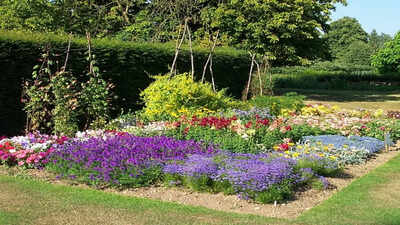
How to stop a sunny garden border from looking washed out by late summer? Image credit – Wikimedia
A beautiful garden with bright colours in the spring and early summer can start looking dull and lifeless in late July because of the heat or intense sunlight. However, according to gardening experts, the lack of proper planning can be the underlying reason. While a garden bed with blooms that flower simultaneously can make an impressive visual statement, it will soon lose its vibrancy and structural integrity after the initial period of beauty has passed. The absence of sturdy leaves, repetition of forms, and plants blooming in the late season make the border appear dull during the summer months when it is extremely hot. As per Penn State Extension, the key to successful plant growth in full sun lies in choosing plants that withstand heat, thrive in the right soil type, and perform well in seasonal succession.Why do sunny beds fade quicker than anticipated?The sun-facing garden beds receive a lot of stress than people think. It includes exposure to afternoon sun, reflected heat from concrete pathways or driveways, and dry soil, which can affect plants’ well-being in midsummer. Moreover, some flowers have short flowering periods. Once those flowers are gone, a lot of visual interest could be lost if the rest of the foliage does not provide texture or structure. That is more evident in front-yard beds because they remain in plain sight all the time. A flower-filled border in June may look washed up only weeks later.A trick used by landscape architects to overcome this situation is to emphasise form over flowers, which means they start by using shrubs, ornamental grasses, and foliage plants that tolerate heat to ensure shape despite the limited number of flowers.Why foliage is as important as flowersIt is a common misconception that sunny beds are designed based on flower colours. According to experts, it hardly ever results in successful designs throughout the year. Foliage has more resilience to heat than flowers do. It could help tone down the hot colours and give a garden border an appearance of calmness without being dull or harsh.Foliage plants will contribute to a garden border’s structure once the flowers fade. University of Minnesota Extension indicates that robust perennial plants with dependable foliage have the potential to provide structure even under hot weather conditions.

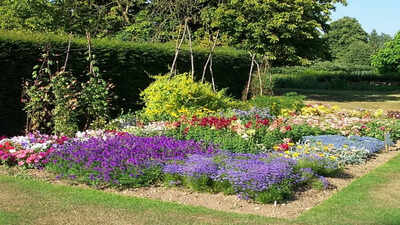
Why some sunny garden beds stay beautiful all summer, and others collapse? Image credit – Wikimedia
The significance of bloom timingOne of the most common errors made in sunny gardens is depending heavily on early bloomers. When plants bloom simultaneously at the end of spring or the beginning of summer, there is usually a period when the border looks visually dull. Garden planners generally blend early, midseason, and late-summer flowering plants in one border so that there is no abrupt change but a gradual one instead.For instance, some varieties of daylilies and phlox keep blooming throughout the summer months to give the garden colour after the spring flowers have faded. The tall garden phlox is commonly planted in sunny borders since it helps create height and interest in the late season.University of Minnesota Extension advises selecting disease-resistant phlox cultivars to give better midseason performance.How to renew a tired sunny garden bedA declining front garden bed does not need an entire redesigning process. Most of the time, small adjustments make a huge impact. Gardeners can start by selecting which plants have stopped performing after early summer. If there are weak plants in their garden, they should consider relocating, dividing, or replacing them with more vigorous foliage plants or other late bloomers.Using a number of the same forms in the garden bed will give the planting unity through consistency. For example, one can repeat a shrub form, a grass shape, or a perennial mound.Deeper watering and mulching of sunny borders will help the plants withstand hot weather without suffering from it.Why a simple planting usually works betterAccording to experts, planting beds that include too many unrelated flowers may age rather poorly by midsummer. Simple planting schemes can work longer since one can still appreciate the design of the border despite the lack of flower colour.What makes for the best sunny front yards? First of all, the yard should have one backbone that would keep the whole design in place and some repeated motifs. These motifs could be evergreen shrubs, edgings, or foliage forms. This doesn’t mean that such garden beds would be brighter than others. On the contrary, it will create a healthy-looking border.