
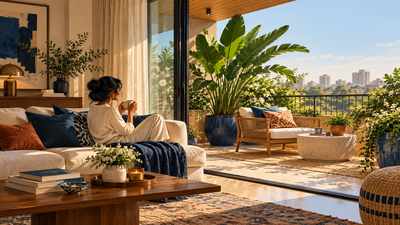
There is a simple design trick that can make a home feel bigger without moving a single wall. Look at the balcony not as a separate outdoor space, but as a continuation of the room it is attached to. The idea is straightforward: take the colours, materials and textures of the living room and carry some of them outside.If the living room has warm wood, beige upholstery and plenty of green, let those elements continue into the balcony. If the interiors are built around stone, cane and earthy neutrals, repeat those materials outside. Put one or two large plants close to the balcony doors rather than pushing all the greenery towards the railing. When the doors are open, the eye moves from the sofa to the plants and beyond without encountering a hard visual stop.The balcony begins to feel less like an attached outdoor space and more like another part of the room.
The trick is continuity, not matching
Do not take “indoor-outdoor continuity” too literally. This isn’t about buying the same furniture for both spaces or creating a balcony that looks like a second living room. Too much matching can make a home feel overly coordinated. OCD much?No. What works is repetition.If there is a particular shade of green in the living room, pick it up through plants or a cushion outside. If wood is a dominant material indoors, a wooden chair, bench or side table can echo it on the balcony. A stone coffee table inside might find its outdoor counterpart in a stone planter or side table. Similar textures can create the connection even when the objects themselves are completely different.The eye is remarkably good at recognising these relationships. The floor can be particularly effective. Where practical, using the same flooring inside and outside can make the threshold almost disappear. If that isn’t possible, choose outdoor flooring in a similar tone or material family. Even a visual continuation of colour can make the two areas feel connected.
Bring the garden towards you
Plants are the easiest way to soften the transition. Rather than creating a green wall at the far end of the balcony, bring some of the greenery towards the house. A tall palm, ficus, bird of paradise or another large architectural plant placed beside the balcony doors can create a visual bridge between the interior and exterior.From the sofa, the plant becomes part of the room’s landscape. This works particularly well with large-leaved plants because their scale allows them to register from a distance. A cluster of tiny pots may be charming up close, but it tends to disappear from the living room.The plants also soften the meeting point between the controlled environment of the home and the outdoors. A trailing plant can create the reverse effect, with foliage spilling down from a balcony shelf or hanging planter. The aim is movement, not obstruction.
Give the balcony a purpose
A comfortable chair can turn it into a reading corner. A small café table can make it the place for morning coffee. Two chairs can create a private spot for conversation. If the balcony is large enough, a compact outdoor sofa can extend the living room’s social space.The furniture doesn’t have to match what is inside. It simply needs to speak the same design language.A contemporary living room can accommodate a sculptural outdoor chair. A home filled with natural textures might work beautifully with cane or rattan. A minimalist interior may need little more than a wooden bench and one exceptional plant.
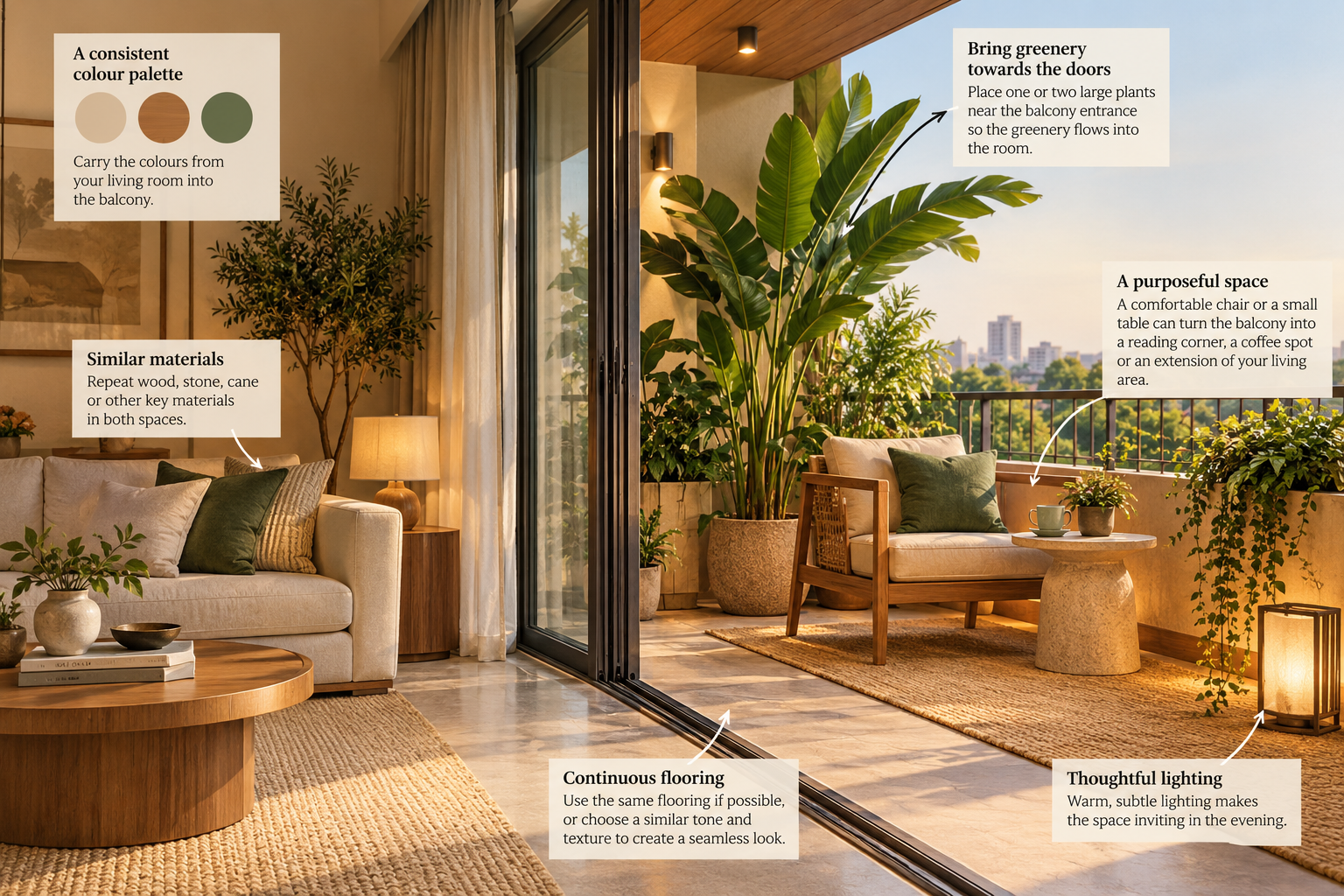
A visual continuation of colour can make the two areas feel connected. (AI generated)
The extra-room illusion
A small balcony may add only a few feet to the physical footprint of a home, but visually it can add much more. When flooring, colours, materials and greenery flow from one space to the next, the eye doesn’t stop as abruptly at the threshold.The living room appears to stretch outside. This is great for urban apartments where every square foot matters.There is another benefit: even when the doors are closed, the outdoor space becomes part of the room’s visual experience. A thoughtfully designed balcony is a view. From the sofa, the plants, chair and lighting become almost like a living picture beyond the glass.At night, this can be especially effective. A few warm, carefully positioned lights can create a gentle glow that draws the eye towards the balcony without turning it into a brightly lit stage.
Resist the urge to overdo it
Once you begin thinking of the balcony as part of the living room, it is tempting to furnish it like one.Don’t. The goal isn’t to erase the distinction between indoors and outdoors. It is to make the transition feel effortless.
Let the view do some of the work
Perhaps the most useful way to think about this approach is to stop treating the balcony as a destination that needs to be decorated from scratch. Start with the room.Look towards the balcony from the sofa. What do you see? Is the first thing visible a clutter of pots? A mismatched chair? An empty wall? Or could that view become part of the room’s composition?Move the largest plant into the sightline. Repeat a colour. Replace one discordant piece of furniture. Add a warm light for the evening.Small changes can be enough.