
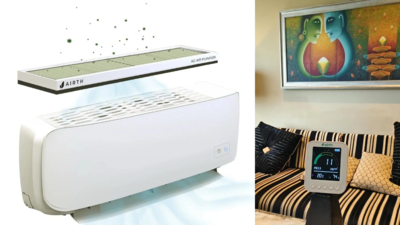
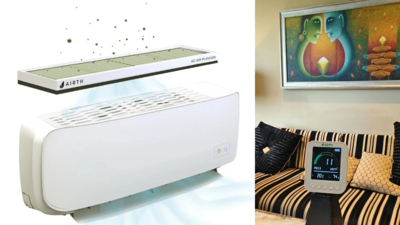
BENGALURU: An idea that took shape in an IISc laboratory during the Covid-19 pandemic has travelled a long way. The antimicrobial air-filtration technology developed by researchers at the institute has found applications in homes, hospitals, diagnostic laboratories and commercial buildings, including central air-conditioning systems.Its latest deployment is at more than 150 rooms, including the Presidential Suite, at Taj Palace, New Delhi. The research was prompted by a concern with conventional air filters. While these filters capture dust, particles and microorganisms, the microbes trapped on their surfaces may remain viable. Under certain conditions, filters can potentially become reservoirs of microbial contamination.The IISc team wanted to address this limitation by developing a filter that would not just capture microorganisms but also deactivate them. Led by Prof Suryasarathi Bose and Prof Kaushik Chatterjee, the researchers developed a specialised antimicrobial coating incorporating polyphenols and polycationic polymers.Polyphenols are naturally occurring compounds found in plants, including green tea, while polycationic polymers carry a positive charge that helps them interact with microbial cell surfaces. The combination was designed to disrupt microorganisms, including viruses and bacteria, on contact.The technology was tested at an NABL-accredited laboratory, where the coated filters demonstrated 99.24% efficiency in deactivating the Delta variant of SARS-CoV-2 — the virus causing Covid-19.“During Covid-19, the need to improve indoor air quality and make air-conditioning systems safer became increasingly important. This prompted us at IISc to develop an antimicrobial coating for AC filters with antiviral properties, aimed at helping reduce the risk of microbial transmission through air circulation,” Bose said.The technology’s journey beyond IISc began when Ravi Kaushik, founder and CEO of AIRTH, came across the research. “A Dec 2022 report in TOI helped bring the innovation to the firm’s attention,” Bose said.Kaushik recognised its potential for application in existing air-conditioning systems and air purifiers. AIRTH subsequently licensed the technology from IISc and took on the task of translating the laboratory innovation into a commercially viable product.This involved engineering and optimising the filters, testing their performance and ensuring that the antimicrobial coating could work alongside conventional filtration without compromising airflow and cooling performance.“What began as a research initiative to address an urgent societal need has since evolved into a successful technology translation journey, demonstrating how academic research can be transformed into impactful, real-world solutions,” Bose said.The distinction between developing the science and commercialising it was important. IISc provided the scientific foundation and demonstrated the technology’s efficacy. AIRTH worked on product development, manufacturing and market adoption.The department of science and technology, too, highlighted the technology as an example of research moving towards commercialisation after its transfer to AIRTH.Kaushik, an aerosol scientist, said he founded AIRTH with the belief that cleaner air should not require another appliance. “When I first began working on AIRTH, I could only imagine how far this idea might go. Today, seeing our technology selected for nearly 150 rooms at Taj Palace, New Delhi, including the Presidential Suite, is a moment I will always cherish,” Kaushik said.Stating that this was not just a milestone but the beginning of something much bigger, Kaushik said: “To see an idea that began with scientific curiosity earning the trust of one of India’s most iconic hotels makes the years of work worthwhile.”