
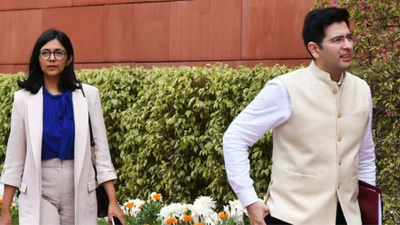
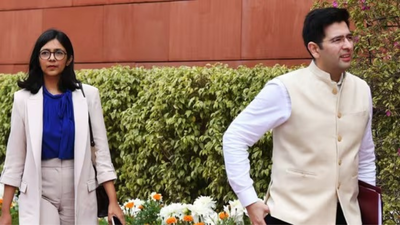
NEW DELHI: Swati Maliwal, once among Arvind Kejriwal’s closest confidantes, has now joined the BJP in the biggest rebellion within the Aam Aadmi Party, backing a mass shift of MPs after years of bitter fallout with her former party.Maliwal is among the seven AAP Rajya Sabha MPs who, led by Raghav Chadha, announced their decision to merge with the BJP, citing “deviation from core ideology” and a breakdown of internal democracy. But for Maliwal, the move is being seen as more than just political—it is the culmination of a deeply personal and public rupture.Once a trusted insider who headed the Delhi Commission for Women and defended AAP through multiple crises, Maliwal’s relationship with the leadership began fraying years ago. The breaking point came in 2024, when she accused Kejriwal’s close aide Bibhav Kumar of assaulting her at the chief minister’s residence—an episode after which she claimed the party abandoned her and turned hostile.From then on, Maliwal’s dissent grew sharper. She openly criticised the leadership, attacked key decisions, and refused to step down despite pressure from within. Her opposition peaked when she slammed the appointment of Atishi as Delhi chief minister, calling it a “dummy” arrangement and questioning the party’s direction.On the day the split became public, Maliwal posted a striking image referencing the disrobing of Draupadi from the Mahabharata—a loaded metaphor for betrayal and vengeance. The symbolism echoed her long-standing claim: that she was wronged, isolated, and ultimately forced to fight alone.Her journey—from AAP loyalist to its fiercest internal critic, and now part of a bloc exiting the party—mirrors a wider pattern within AAP, where several early leaders who questioned the high command eventually found themselves sidelined.With her decision to back the merger, Maliwal is no longer just a dissenter on the margins—she has become central to a political moment that could redefine AAP’s future in Parliament.