
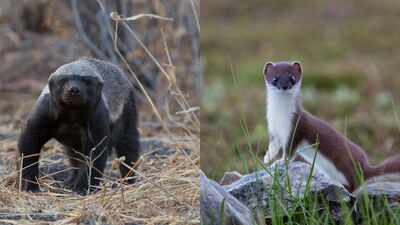
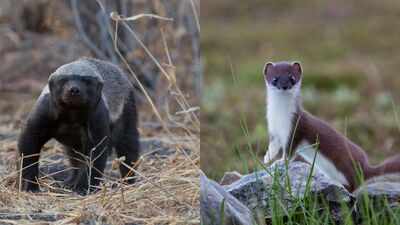
For most of us, small animals are simply just cute, but are all small animals actually cute and harmless? Well, the answer is a simple ‘No’! Especially in the wild, wherein these animals are small but are ferocious, and this is because of their evolution and adaptation. In fact, across ecosystems ranging from rainforest floors to sub-zero soils, evolution has equipped several compact species with lethal tools, ferocious hunting habits, or near-indestructible survival strategies. Here are some common small animals and what makes them so unique.The Honey BadgerStanding only 9 to 11 inches tall at the shoulder and weighing between 13 and 30 pounds, the honey badger (Mellivora capensis) holds a reputation out of all proportion to its size. Native to sub-Saharan Africa, the Middle East, and the Indian subcontinent, this member of the mustelid family routinely fends off predators like lions, hyenas, and leopards. Their resilience stems from specific physical adaptations. Rubber-like hide nearly a quarter-inch thick protects against claws, bites, and bee stings, while its looseness allows the badger to twist around inside its own skin to bite back when grabbed. In fact, a research published in Toxicon by Dr. Danielle H. Drabeck et al. (2015) shows that honey badgers have evolved nicotinic acetylcholine receptor mutations that neutralize neurotoxins found in cobra and mamba venom, enabling them to survive bites that would kill most mammals.The StoatWeighing between 5 and 15 ounces and measuring under a foot long, the stoat (Mustela erminea), which is also known as the short-tailed weasel, is a hyper-energetic carnivore capable of taking down prey up to ten times its own weight, including adult European rabbits. Observations documented by the Wildlife Trusts show that stoats must consume up to 25% to 30% of their body weight daily to survive, forcing them into a state of near-constant hunting. When approaching larger targets, stoats frequently engage in an erratic combination of leaps, twists, and rolls along the ground. Biologists note this strange behavior appears to distract or mesmerize prey until the stoat moves within striking distance to deliver a fatal bite to the base of the skull.The Golden Poison FrogEndemic to the humid rainforests of Colombia’s Pacific coast, the golden poison frog (Phyllobates terribilis) measures just 1 to 2 inches long. Despite having no teeth, claws, or physical biting capacity, it ranks among the most toxic organisms on the planet. A single wild frog carries an estimated 1 milligram of batrachotoxin stored in its cutaneous skin glands. According to studies archived by the American Museum of Natural History (AMNH), this reserve is sufficient to cause cardiac arrest in up to ten adult humans or roughly 20,000 mice. Research published by the Proceedings of the National Academy of Sciences (PNAS) shows that the frogs do not manufacture the toxin internally but instead sequester and concentrate lethal alkaloids directly from their wild diet of small beetles and invertebrate prey.The Army AntIndividual workers of the Neotropical army ant species Eciton burchellii measure between 3 and 12 millimeters, but they hunt as a unified colony of up to 500,000 individuals. They do not build permanent nests, operating instead through nomadic bivouacs and daily foraging raids across the forest floor. Research published in the Journal of Animal Ecology by Rettenmeyer et al. demonstrates that a single Eciton burchellii colony can capture and consume upwards of 30,000 insect, arachnid, and small vertebrate prey items in a single day’s raid. Large worker castes feature elongated, hook-shaped mandibles that lock onto prey, which combined with painful stings allows the swarm to overpower targets rapidly through sheer force of numbers.The TardigradeMeasuring between 0.1 and 1.5 millimeters long, tardigrades (commonly known as water bears) represent a different kind of ferocity: absolute environmental resilience. While tardigrades actively hunt rotifers and nematodes with sharp piercing stylets tardigrades main distinction is that tardigrades refuse to succumb to physical extremes. When exposed to stress tardigrades expel nearly all cellular water and contract into a dehydrated state called a “tun,” where tardigrades metabolic activity drops to less than 0.01% of normal levels. Studies published in Nature Communications and testing by the European Space Agency (ESA) confirm that tardigrades in this state can survive temperatures as low as -272°C (-457°F) and as high as 150°C (302°F) pressures six times greater than the deepest ocean trench, solar radiation, and direct exposure to the vacuum of space.