
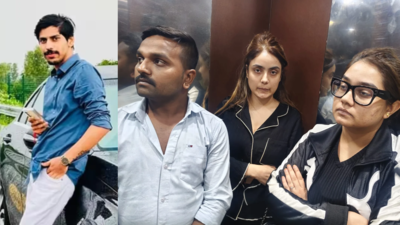
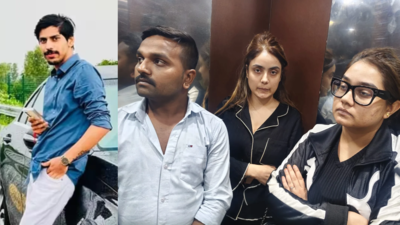
LUCKNOW: The three accused in the death of Lucknow restaurant owner Shiva Sharma, including social media influencer and model Shraddha Dubey, adopted professional-style evasion tactics to evade arrest, frequently changing locations, concealing their identities and maintaining a lead of 10 to 12 hours over police teams pursuing them, Additional Director General of Police (Law and Order) Amitabh Yash said on Tuesday.Shraddha, her sister Rashmi Dubey and their driver, Tanveer Ali alias Danish, were arrested in Nagpur following an extended pursuit by the Lucknow Police.Describing the methods adopted by the accused while on the run, Yash said their movements and attempts to stay ahead of investigators were similar to those of professional criminals.According to Yash, the accused had carefully planned their movements to make it difficult for the police to establish their whereabouts. They did not remain at any location for long and repeatedly shifted from one place to another, ensuring that police teams reaching a location would often find that they had already left.“Their methods of evading arrest were almost like those of professional criminals,” Yash said, explaining that the accused were consistently managing to remain ahead of the police during the pursuit.Nepal trip intended to mislead investigatorsYash said Shraddha initially travelled to Nepal in an apparent attempt to divert the investigation and create the impression that she was hiding outside India. She subsequently re-entered Uttar Pradesh, a move that, according to the ADG, was intended to leave investigators under the impression that she might still be in Nepal.After returning to Lucknow, Shraddha gave an interview to a news channel. However, she left Uttar Pradesh again soon afterwards, Yash said.The sequence of movements added to the difficulty of tracking her, as investigators had to establish whether she was still in Nepal, had returned to Uttar Pradesh or had moved to another state.Burqa used to conceal identityOne of the principal tactics adopted by Shraddha was the use of a burqa while travelling, Yash said. She consistently used the garment to conceal her identity and make visual identification more difficult.The accused also stayed in small hotels, where, according to the ADG, they faced fewer difficulties in avoiding the disclosure of their identities. They avoided drawing attention to themselves and limited their use of communication devices, further complicating the task of tracking their movements.Yash said the accused were careful not to remain at any location for an extended period. Their frequent movement meant that investigators had to keep tracing their possible routes while attempting to determine where they had gone next.Maintained a lead of 10 to 12 hours over policeHighlighting the challenge faced by the police, Yash said the accused repeatedly managed to leave locations well before pursuing teams could reach them.“The accused were consistently maintaining a lead of around 10 to 12 hours over the police,” he said.According to the ADG, whenever police teams reached a location where the accused were suspected to be staying, they had generally left approximately 10 to 12 hours earlier. This repeated pattern delayed the operation and forced investigators to continue tracking their movements across locations.Their ability to remain ahead of the police was aided by frequent changes of location, concealed identities and the limited use of communication channels, Yash said.Changed vehicles during journey to NagpurThe accused also used multiple modes of transport to make their movements harder to trace, according to Yash.He said they travelled by taxi while moving towards Nagpur but would abandon one vehicle and switch to another during their journey. Such changes were intended to prevent investigators from following a single, continuous trail and to help the accused move further away before the police could establish their location.Despite these measures, the Lucknow Police eventually succeeded in tracking down the three accused in Nagpur and arresting them on Tuesday evening, Yash said.The ADG’s account highlighted the extent of the effort required to trace the accused, who allegedly used concealment, frequent movement and changes in transport to remain beyond the reach of investigators. Their arrest in Nagpur brought the extended pursuit to a breakthrough, with further investigation expected to establish the details of their movements while on the run.