
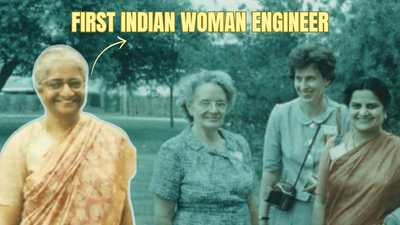
A woman in a simple saree walked up to the podium and began her speech with a sentence that made the audience stop and listen. Speaking at the 1964 International Conference of Women Engineers and Scientists in New York, she said, “If I had been born 150 years ago in my country, I would have been burned at the funeral pyre (a large stack of wood built to burn a dead body) with my husband’s body,” as per ‘Roots and Wings: Inspiring Stories of Indian Women in Engineering’, a book by Shantha Mohan.The woman was A Lalitha (Ayyalasomayajula Lalitha), and she was speaking from a place few women in India had reached before her. She later became the country’s first woman engineer.
13 Jul 2026 | 13:11
What’s one stereotype about women that you’re tired of hearing?
But Lalitha’s story was not simply about becoming an engineer. It began much earlier, with a 15-year-old girl whose education was expected to end with marriage, and continued with an 18-year-old widow who had a four-month-old daughter to raise.
Married at 15, widowed at 18
According to the Hindu and various media, Lalitha was born on August 27, 1919, in Madras (now Chennai). She was the fifth of seven children in a middle-class Telugu family. Her father, Pappu Subbarao, was a professor of electrical engineering at the College of Engineering, Guindy (CEG), and her brothers went on to become engineers.Like many girls of her time, Lalitha’s education was not expected to go very far. She completed her SSLC and was married in 1934, when she was just 15. Her father, however, believed marriage should not come in the way of education. He insisted that she continue studying and ensured that she completed Class 10.In September 1937, Lalitha gave birth to her daughter, Syamala. She was only 18. Four months later, her husband died. Suddenly, Lalitha was a young widow and a single mother. She returned to her parents’ home with her infant daughter. It was a difficult time, but Lalitha did not see widowhood as the end of her life. She wanted an education and, more importantly, she wanted to be financially independent.With the support of her family, she enrolled at Queen Mary’s College in Madras and cleared her intermediate examination.
Why she chose engineering over medicine
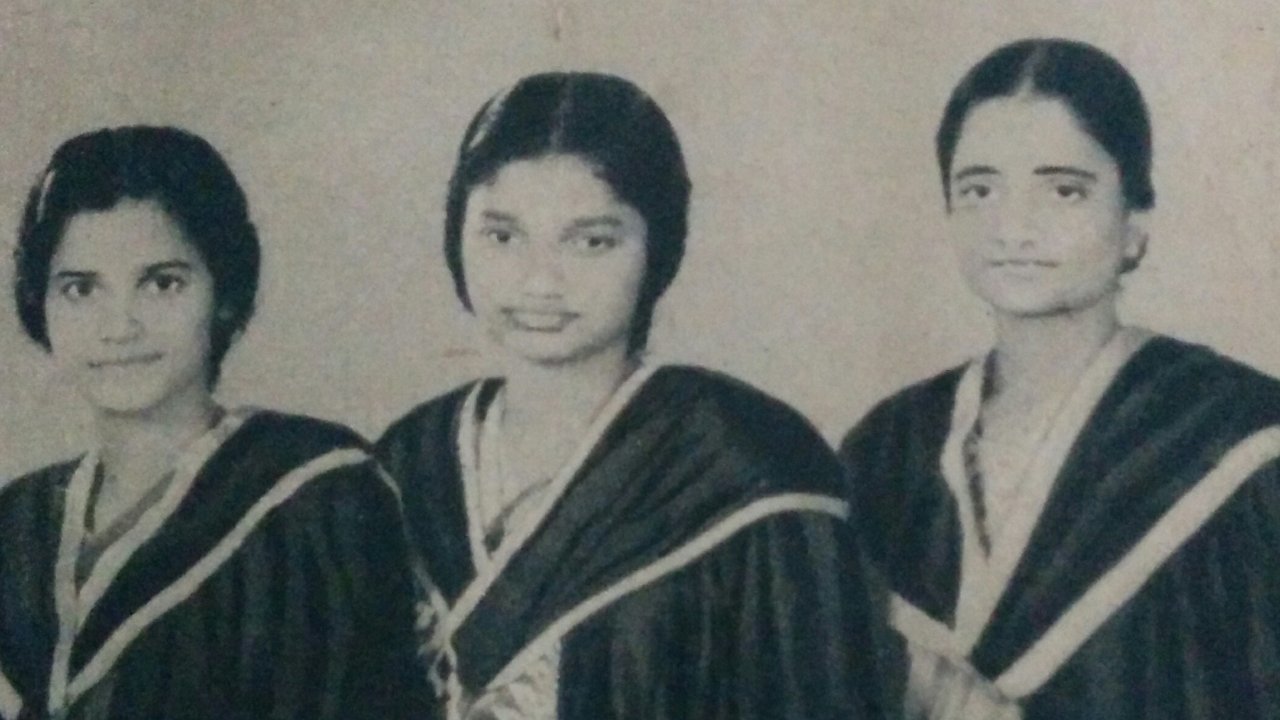
A. Lalitha in the right. (Photo credit: South First)
As per the South First and various media, Medicine was a more familiar professional choice for women at the time. Lalitha was interested in it too. But she also knew that becoming a doctor would demand long hours and, potentially, being available at any time.As a young mother, she wanted a profession that would allow her to earn a respectable living while still giving her time to care for Syamala. Engineering offered that possibility. So Lalitha decided to follow in the footsteps of her father and brothers and study electrical engineering.There was just one problem: no woman had enrolled in an engineering course at College of Engineering, Guindy (CEG) before. Her father refused to accept that as a reason to stop his daughter. Pappu Subbarao approached CEG Principal Dr KC Chacko and requested that Lalitha be allowed to join the engineering course. Chacko, unsure about the unprecedented request, referred it to Sir RM Statham, the then Director of Public Instruction.Statham was more open to the idea and gave Lalitha permission to enroll. In 1940, Lalitha entered the College of Engineering, Guindy, to study electrical engineering.
Once the only woman among hundreds of men
Lalitha was the only woman student in the college. Her father, however, did not want her to feel that she had to walk that path alone. When she told him that she was comfortable in college but lonely in the hostel, he saw an opportunity to change the situation.He placed an advertisement inviting women to join engineering courses at CEG. It worked. PK Thresia and Leelamma George joined the college to study civil engineering. Lalitha continued with electrical engineering.According to Lalitha’s daughter Syamala, the atmosphere at the college was also more supportive than one might expect today. “Contrary to what people might think, the students at amma’s college were extremely supportive. She was the only girl in a college with hundreds of boys but no one ever made her feel uncomfortable and we need to give credit to this. The authorities arranged for a separate hostel for her too. I used to live with my uncle while Amma was completing college and she would visit me every weekend,” Syamala told The Better India.Lalitha excelled in her studies and completed her engineering degree with honours in September 1943, becoming India’s first woman engineer.Her achievement was so unprecedented that even the college’s paperwork had to catch up with her. The printed degree certificate had the word “He” crossed out and “She” written in its place.
From a young widow to a working engineer
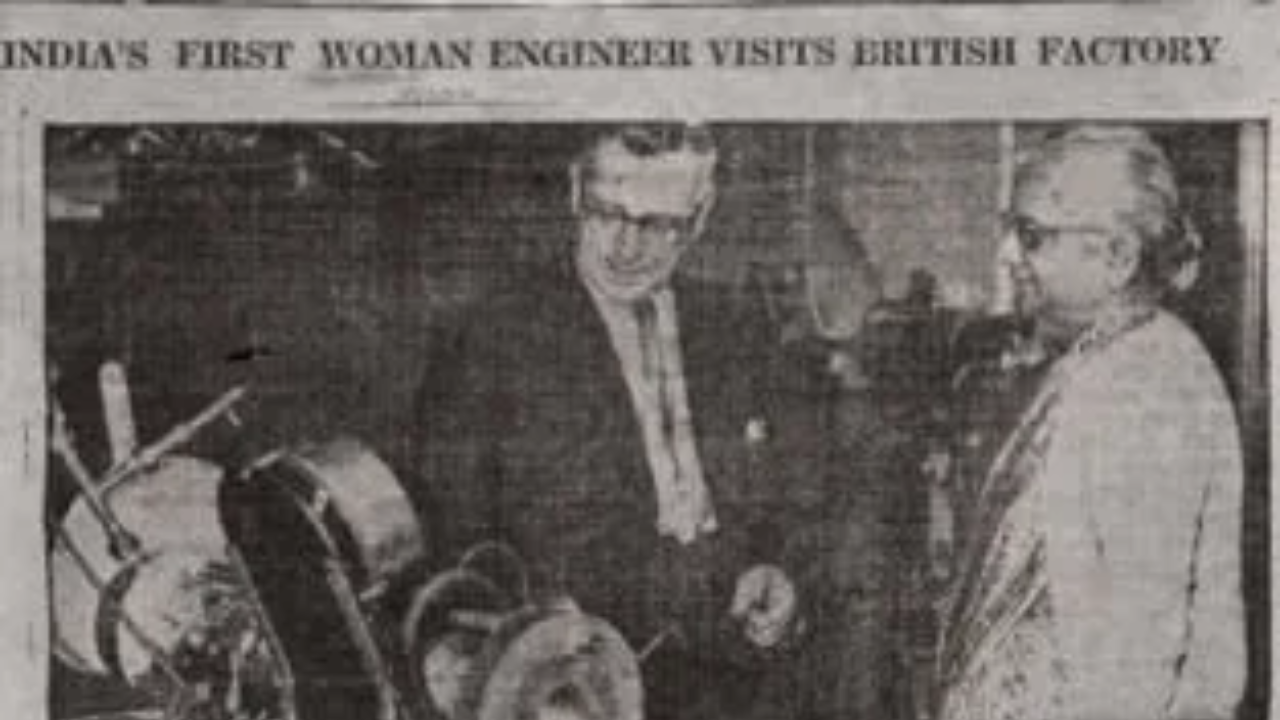
Hitavada news article, August 1964. (Photo credit: All Together)
Becoming an engineer was only the beginning for Lalitha. Under the regulations of the time, electrical engineering students had to complete practical training after their academic studies. Lalitha underwent a one-year apprenticeship at the Jamalpur Railway Workshop.In 1944, she joined the Central Standards Organisation in Shimla as a research assistant. The job was also a practical choice: it allowed her to raise Syamala with the help of her sister-in-law who lived there.She later returned to Madras and spent some time assisting her father with his electrical engineering research. Her father himself was known for his innovations, including the Jelectromonium, an electrical musical instrument, an electric flame producer and smokeless ovens. Lalitha assisted him in this work.In 1948, she joined Associated Electrical Industries in Calcutta. Her work took her into major engineering projects, including the Bhakra Nangal Dam project.
She took India’s women engineers to the world
Lalitha’s work eventually took her beyond India too. In June 1964, she was invited to the first International Conference of Women Engineers and Scientists (ICWES) in New York. She attended in her personal capacity and spoke about the need to increase women’s participation in science and engineering.In 1967, she helped five Indian women engineers attend the second International Conference of Women Engineers and Scientists in Cambridge. She retired in 1977. After retirement, Lalitha travelled extensively with her sister, pursuing a passion she had little opportunity to indulge in during her working years. She died in 1979, aged 60.
The daughter who grew up knowing only one thing
Lalitha’s achievement becomes even more remarkable when viewed through the life she was trying to build alongside it. She was not only studying for an engineering degree. She was raising a child after losing her husband at just 18.Her daughter Syamala, now settled in the US, later spoke about the difficulties her mother faced as a young widow. In an interview with The Better India, she recalled that Lalitha’s mother-in-law had herself lost her 16th child and took out her grief and frustration on the young widow.“When my father passed away, mom had to suffer more than she should have. Her mother-in-law had lost her 16th child and took out that frustration on the young widow. It was a coping mechanism and today, I understand what she was going through. However, my mother decided not to succumb to societal pressures. She would educate herself and earn a respectable job,” Syamala said.Lalitha also made practical choices around motherhood. Medicine may have interested her, but she did not want a profession that could require her to leave her baby in the middle of the night. She wanted a career that would give her some control over her time.That decision shaped not just her career, but the way she raised Syamala. While Lalitha worked in Calcutta, Syamala stayed with her aunt and cousin. “My aunt lived in Kolkata and had a son about my age. We were very close and so, amma used to go to work leaving me with my cousin and aunt. That’s how I grew up. Although, today, I can understand how important my mother is in the history of women’s education in India as well as in the history of engineering, back then, all I knew was that my mom is an engineer,” Syamala told The Better India.That may be one of the most telling descriptions of Lalitha’s life. To the world, she was a pioneer. To her daughter, she was simply her mother. She never remarried and, according to Syamala, never made her daughter feel that she was missing a father.“She never remarried and never made me feel the absence of a father in my life. But when my husband asked her, she replied, ‘To take care of an old man again? No, thank you!’”