
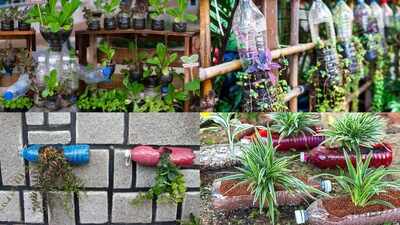
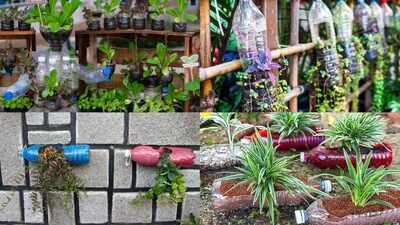
Every household ends up with a steady stream of empty plastic bottles, and most of them go straight into the recycling pile without a second thought. Before they do, it’s worth knowing just how useful a clean, empty bottle actually is in a garden, turning into planters, irrigation systems, and protective covers with nothing more than a pair of scissors and a bit of imagination. For anyone gardening on a balcony or in a small courtyard specifically, these ideas do double duty, cutting down on waste while adding genuinely functional growing space. Here are five worth trying.
A wall or fence-mounted vertical garden
For anyone short on floor space, mounting bottles directly onto a wall or fence turns unused vertical surface into real growing area. Cut off the top of a bottle to create an open trough, laying it on its side rather than standing upright, then secure it horizontally using cable ties, garden wire, or simple brackets fixed to the wall. A row of these, filled with potting mix and planted with trailing herbs or small leafy greens, gradually grows into a genuine green wall, with the bushier growth eventually hiding the bottles themselves entirely.
A protective cloche for young seedlings
Young, delicate seedlings are vulnerable to intense sun, sudden cold snaps, and hungry pests in their first few weeks, and a plastic bottle solves all three at once. Cut the bottom off a clean bottle and place it directly over a seedling like a small dome, pushing it slightly into the soil to hold it in place. Keeping the cap on traps in warmth and humidity like a mini greenhouse, while removing it during warmer, sunnier stretches lets excess heat escape. Once the plant has grown large enough to touch the sides, it’s time to remove the cloche for good.
A buried bottle for direct drip irrigation
This is one of the more genuinely practical uses on this list, especially for anyone who travels often or gardens in a hot, dry climate. Poke several small holes into the cap or the lower sides of a bottle, then bury it upright near a plant’s root zone with just the neck poking above the soil. Filling it with water lets moisture seep out slowly and directly to the roots over the following days, delivering a steady trickle rather than a single, heavy soak that runs off before it’s absorbed. A little diluted liquid fertiliser added to the water turns the same setup into a slow-release feeding system too.
A hanging garden column
For a genuinely eye-catching vertical feature, several bottles stacked and strung together create a hanging garden column that uses overhead space a balcony rarely gets credit for. Cut a rectangular opening into the side of each bottle opposite a row of small drainage holes, thread a sturdy rope or wire down through the centre of each one, and knot them at even intervals so each bottle sits securely in place. Fill with potting soil and plant trailing herbs or small flowering plants, and hang the whole column from a railing, hook, or overhang with good light exposure.
A row of herb pots for a windowsill or step
For the simplest option on this list, cutting a two-litre bottle cleanly in half and puncturing a few drainage holes in the base turns the bottom half into a genuinely sturdy little pot. Lined up in a row along a sunny windowsill, a narrow balcony ledge, or the edge of an outdoor step, a handful of these makes for an easy, tidy herb garden, with each bottle holding a single culinary herb like basil, mint, or coriander close at hand for cooking.
Waste turned into growing space
None of these five projects need anything beyond bottles you were already going to throw out, a sharp pair of scissors, and a bit of soil. Whether it ends up as a wall of trailing herbs or a single row of pots on a windowsill, giving a plastic bottle one more job before it’s recycled is a small, genuinely useful habit that adds up over an entire gardening season.
Disclaimer:
This article is intended for general informational purposes only. Use caution when cutting plastic bottles with scissors or a craft knife, and ensure edges are smooth or covered with tape to avoid injury. Always wash bottles thoroughly before reuse.