
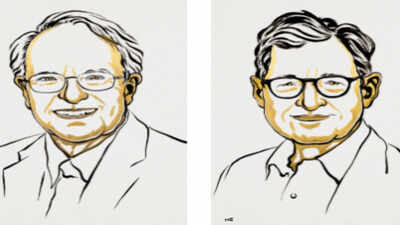
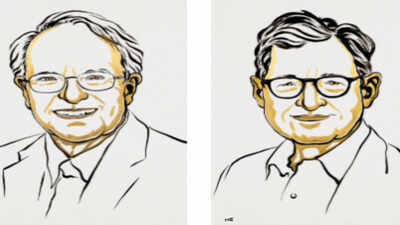
The Nobel Prize in Economics 2026 has been awarded to American economists Robert E Hall of Stanford University and Michael Woodford of Columbia University for their work on the microeconomic foundations of macroeconomic stabilisation, which has helped shape the theoretical models used by central banks and governments to manage economic shocks.The Royal Swedish Academy of Sciences announced the laureates in Stockholm on October 12, 2026. Their work provides a theoretical framework for understanding how economic decisions made by households and businesses influence the wider economy and how policymakers can respond to disruptions.John Hassler, chair of the Committee for the Prize in Economic Sciences, said the economists had established a stable theoretical foundation for models now used by central banks and governments across the world.
How their work helps policymakers respond to economic shocks
Macroeconomic stabilisation refers to measures taken by governments and central banks to limit fluctuations in economic activity, control inflation and support employment and growth. Such interventions become particularly important when economies face sudden disruptions, including sharp increases in energy prices, changes in consumer spending or a decline in business investment.The challenge for policymakers is to understand how these developments affect the decisions of individual households and firms and how those decisions, in turn, influence aggregate economic outcomes.The microeconomic foundations of macroeconomic stabilisation seek to connect these individual decisions with broader economic developments. This approach helps economists construct models that explain how people and businesses respond to changes in prices, interest rates, income and policy measures.These models can help central banks assess the likely consequences of monetary policy decisions, while governments can use economic analysis to evaluate measures intended to cushion the impact of downturns and other disruptions.The recognition of Hall and Woodford highlights the importance of linking individual economic behaviour with the wider mechanisms that determine economic stability.
Who are Robert E Hall and Michael Woodford?
Robert E Hall is affiliated with Stanford University in California, while Michael Woodford is affiliated with Columbia University in New York. Both are American economists whose work has contributed to the study of macroeconomic theory and the role of policy in managing economic fluctuations.Their recognition reflects the importance of theoretical research in shaping the analytical tools used by policymakers. Economic models cannot eliminate uncertainty or prevent every crisis, but they can help governments and central banks understand how different policy choices may influence economic activity.The award also draws attention to the relationship between household behaviour, business decisions and the effectiveness of measures designed to maintain economic stability.