


A microphone, a tailored suit and a sharply-delivered monologue. The crowd bursts into cheers. Night after night, the American audience tuned in for this ritual. The hosts delivered biting socio-political commentary with a sprinkle of humour, all the while turning themselves into familiar personalities families gathered around their living rooms for.With popular host Stephen Colbert making an exit, the conversation around the uncertain future of late-night television has regained momentum online.Closer home, actor Shekhar Suman was one of the first to experiment with the late-night format with his show, Movers & Shakers (1997). The host spoke about the socio-political landscape, cracked jokes and interviewed everyone, from megastar Shah Rukh Khan to former IPS officer and Lieutenant Governor of Puducherry, Kiran Bedi. Suman is back hosting, having recently launched Shekhar Tonite, on YouTube.But despite the Indian audience’s appetite for television and no dearth of charismatic personalities, the country never fully built a late-night show format.Elaborating on why the host-led talk show culture couldn’t thrive here, former television host Mini Mathur says, “Every single network has done a pilot episode with me in an Oprah afternoon-styled, habit-forming talk show. It never took off, because these channels used to think that could be done only with a film star.”India loves stars, not hostsIn India, the celebrity always remained bigger than the host. At a time when stars were still a distant enigma, viewers tuned in to see glamour and to get access to industry gossip.We have always had personality-driven hosts. From Tabassum’s Phool Khile Hain Gulshan Gulshan (India’s first talk show which debuted in 1972) to Simi Garewal‘s Rendezvous with Simi Garewal (2001), to Farooq Sheikh’s Jeena Issi Ka Naam Hai (2002), to Karan Johar‘s Koffee With Karan (2004).Actors became hosts. Their fame was never a by-product of these shows. Whereas in America, the hosts earned their celebrityhood by functioning as the cultural bridges of their society.Before he began hosting in 1993, Conan O’Brien was a sketch comedy writer for Saturday Night Live (SNL) and contributed as a writer for the iconic animated show, The Simpsons. Jimmy Kimmel started his career as a writer for Fox announcers and promotions before transitioning into a full-time late-night host. And David Letterman was a quick-talking weatherman in Indianapolis.
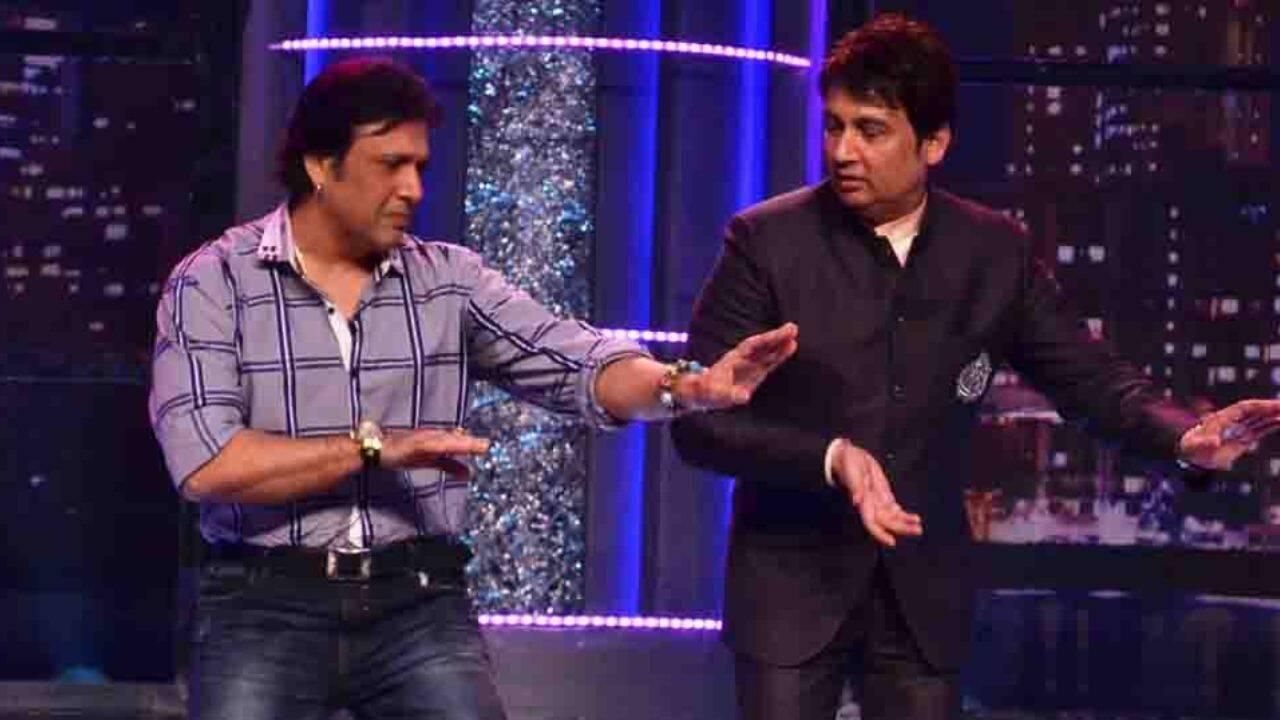
Govinda and Shekhar Suman on an episode of Movers and Shakers
Commenting on why the Indian TV couldn’t fully commit to a late-night talk show format despite previous attempts, co-founder of a leading TV production company, Ranjeet Thakur says, “Mr Bachchan, when he was cast as the host of KBC in 2000, changed the game. After that, it became a thing. You had to be a star to sell a show. The formula can be broken by taking a lesser-known but talented guy. But he won’t get you the eyeballs.““The bottomline is that even though people like us — the producers, or even the content creators — are up for riskier and edgier content, the channel has to back you up. They should be willing to show that kind of content. Because who gets attacked first is always the channel. And once they agree to it, then also there is a certain amount of resilience that is required to stay with it till the end,” he adds.Giving historical context about why Movers & Shakers tried the format, Thakur shares, “Movers & Shakers was the only show that flirted with the late-night concept. Because the maker of the show, Sailesh Dave, had come in from the US. He was there for the longest time, and when he came back to the country, he asked, ‘Why can’t we have this?’ And of course, Shekhar Suman was the right choice at that time — he had a flair for comedy and saying political things.“The risk of political humourPolitical satire has been a mainstay of late-night American TV. Hosts were expected to be abreast of the news and offer insights in their inimitable styles during the monologues.Indian television couldn’t explore that terrain fully, despite a previous honest attempt.Comedian, satirist, and podcast host Cyrus Broacha blames the economics. Broacha had previously hosted the satirical series, The Week that Wasn’t.
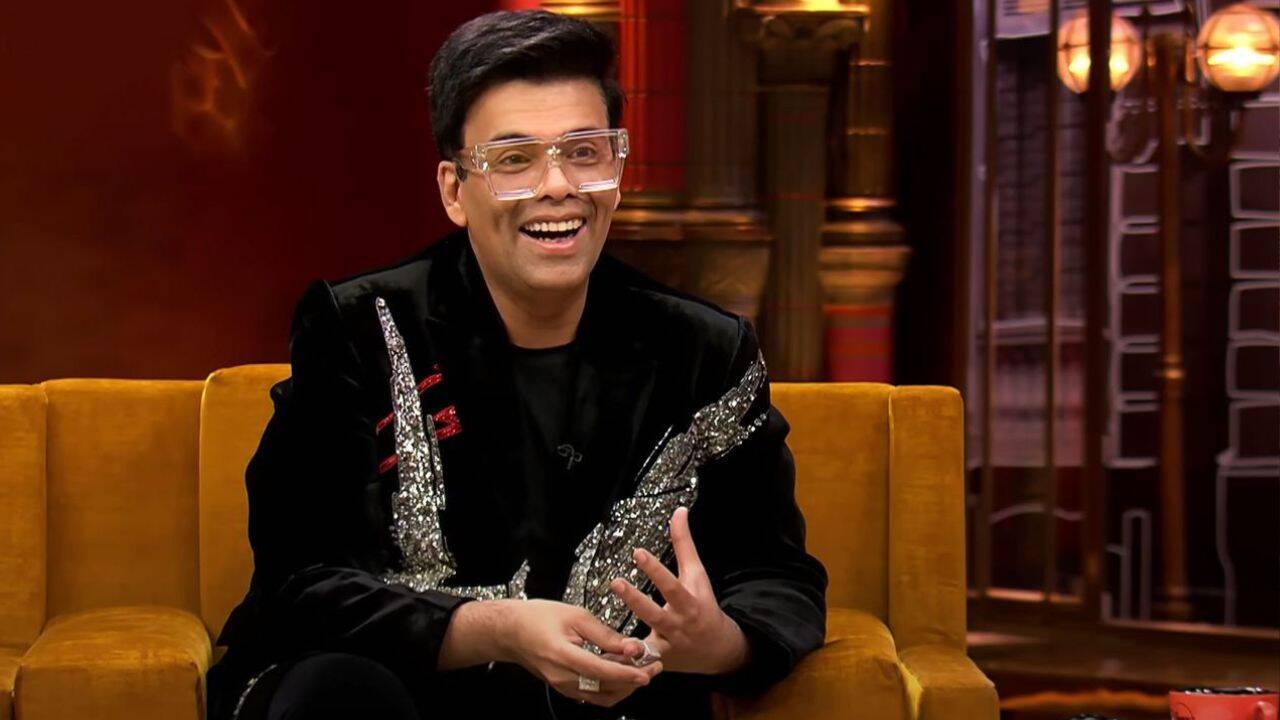
Karan Johar has been hosting his talk show, Koffee With Karan, since 2004
“Sustaining the political satire was not a problem. For 16 years, we ran this show. People kept asking me, ‘how did you get away with it, especially after 2014? The government doesn’t have a sense of humour.’ But we were fine. If you are attacking policies more than the people, it is okay. It is no big deal,” says Broacha.Broacha is still trying to get the backing of a TV channel — “The sponsors don’t want to touch anything that is unsafe in their mind. The problem is not the audience, we can get people interested. I think there is a market for this, but the commercial side of it needs to be courageous. The Internet is more free. Television is still very rule-oriented. There is just a risk-to-reward issue, in my opinion.”The Internet takes overIndian television may have never fully developed the late-night show framework, but the audience’s hunger for intimate and insightful conversations did not die. It simply changed mediums. Now those interactions take place on hour-long podcasts and free-flowing YouTube interviews.These podcasts have brought back the warmth and familiarity of traditional TV.Speaking about the transition, former host Mini Mathur says, “Hosting is an underrated skill, especially in our country. When I was working, the shows were led by the personality of the VJ. But outside of that space, everyone was so struck by Bollywood. For us, true stardom only meant agar aap film hero ho toh.”“And then what happened in the middle was people started using TV hosting as a stepping stone to bigger and better things,” she adds.“The industry didn’t give those kinds of people enough space to survive,” Mathur says, referring to career TV hosts. “TV missed that evolution and now the podcasts have taken over.”The hosts never disappeared, they just didn’t have the infrastructure needed to support them.— Anvita Singh