
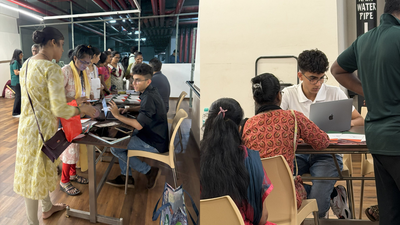
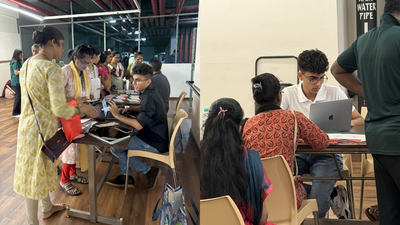
Every day, thousands of domestic workers enter apartment buildings across Mumbai to cook, clean and take care of household chores. Yet, while the families they work for may have health insurance, savings and other financial safeguards, many of these workers have little or no access to such security. For 17-year-old Ayaan Wadhwa, the disparity became difficult to ignore after an incident involving a woman who worked at his home. What followed was an initiative that has now helped more than 750 unorganised-sector workers register for government welfare schemes.The idea did not begin with a large campaign or an ambitious social project. It started with a question that stayed with him.
A request for financial help that made him think
The turning point came when a woman working in the Wadhwa household needed money because her mother was unwell. With no savings or insurance to fall back on, she approached Ayaan’s mother, Pinky Panjwani, for a loan.While such situations are not uncommon in many households, the incident prompted Ayaan to think about what would happen to workers who had nobody to turn to.“I just kept thinking if we didn’t give it to her, what would she have done?” he recalled in an interview with d2d Youth Story.He began comparing the financial security available to people around him with the circumstances of domestic workers.“People around me have medical insurance, and that’s when I realised that most workers don’t have access to something that basic,” he says.Ayaan started researching government welfare provisions for workers in the unorganised sector. During this process, he came across the e-Shram portal, a government initiative aimed at registering unorganised-sector workers and connecting them with social security benefits.What surprised him was that the woman who had worked in his household for years had never heard of these provisions.For Ayaan, the problem was not simply the absence of welfare schemes. It was also the lack of awareness about how to access them.
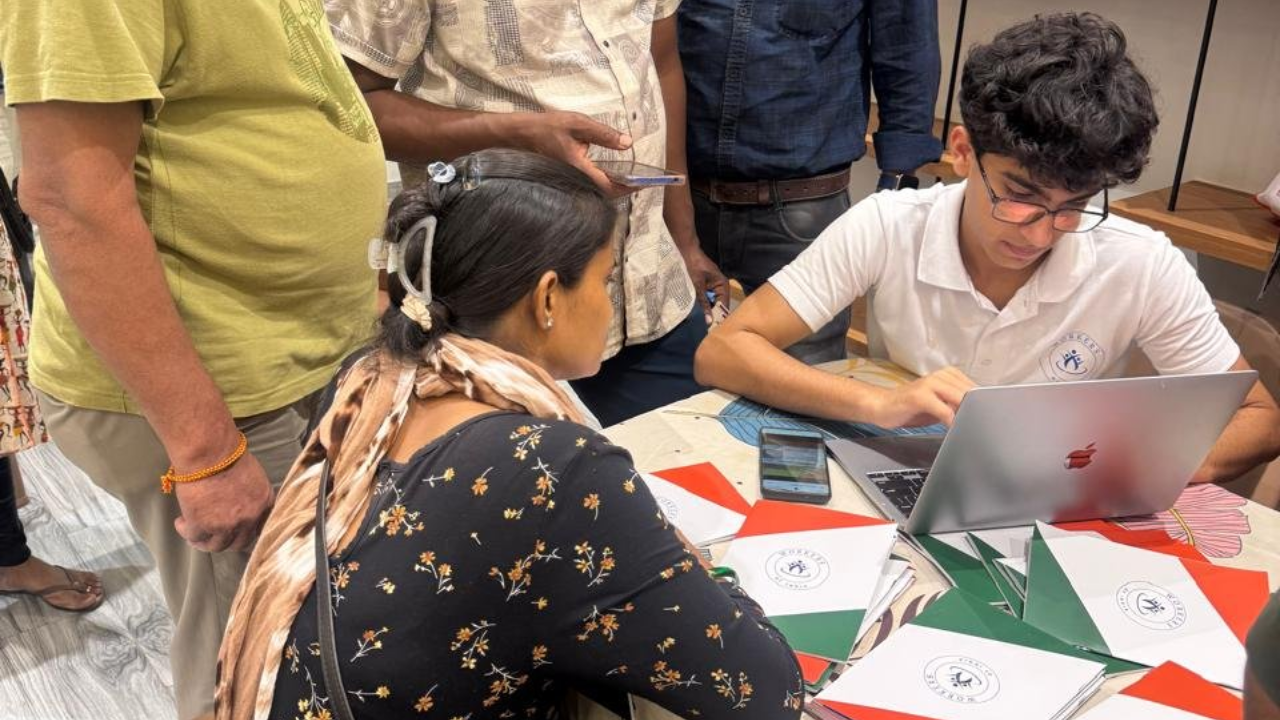
Photo courtesy: Workers of India
From researching schemes to conducting workshops
Ayaan’s mother, Pinky Panjwani, says his decision to take up the issue developed gradually.“It wasn’t a sudden revelation. It was gradual curiosity. He started asking questions, then researching. Then one day, he said he wanted to conduct a workshop. He was 15, so I told him we’d do it,” Pinky says.During the summer of 2025, Ayaan began putting together a booklet explaining the central and state government schemes available to domestic workers. He researched the provisions and simplified the information, translating it into Hindi and Marathi so that workers could understand the benefits and registration processes.He also worked on improving his Hindi so he could communicate with participants during the workshops.His mother helped with the arrangements, including approaching housing society committees, organising venues and getting the booklets printed. However, Ayaan took responsibility for explaining the initiative and convincing building managements to host the sessions.Not everyone was immediately receptive. Some housing societies were sceptical, but he continued approaching them.The first workshop was organised in his own apartment complex. It attracted around 80 to 90 domestic workers.Rather than limiting the session to an explanation of government schemes, Ayaan offered practical assistance. He brought his laptop and helped workers navigate the registration portal individually, guiding them through the process.By the end of the workshop, he had registered nearly half the participants. He also collected the contact numbers of those who needed to return to complete their registrations.The exercise marked the beginning of his effort to take the initiative beyond his own residential complex.
How 750 workers benefited from the initiative
As Ayaan began reaching out to more housing societies, the workshops gradually expanded. His initiative has since conducted five workshops and helped more than 750 unorganised-sector workers register for government welfare schemes across Mumbai.One of the beneficiaries is 32-year-old Manisha Dhekde, who has worked as a domestic worker for nearly a decade.She learnt about one of Ayaan’s camps through word of mouth and decided to attend. There, she received assistance with obtaining her e-Shram card and enrolling in a post office savings scheme.For her, the experience was an introduction to benefits she had previously known little about.“Earlier, I had no idea what an e-Shram card even was,” she says.“The camp taught me everything patiently.”Manisha also says that government benefits have reached her household multiple times since her enrolment. Her experience reflects the practical gap Ayaan is attempting to address: workers may be eligible for government provisions, but without information and assistance with registration, accessing them can remain difficult.
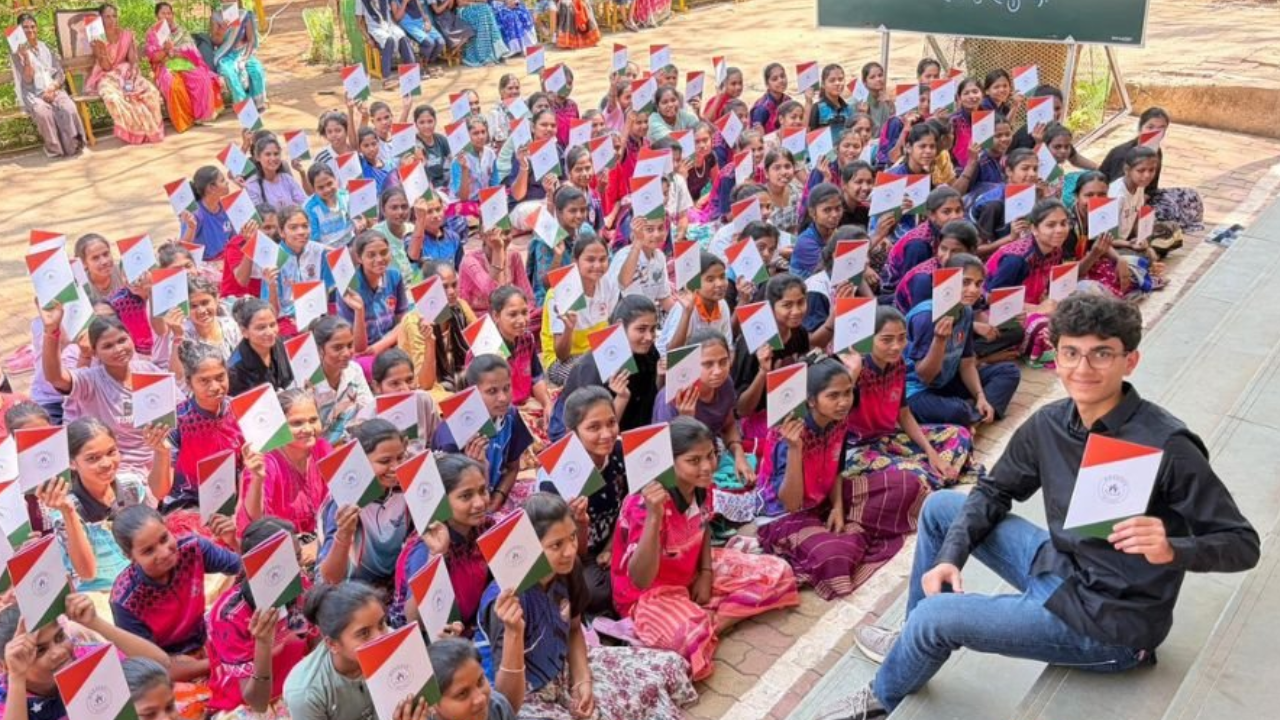
Photo courtesy: Workers of India
Taking the initiative beyond registration
Ayaan’s work is also rooted in the larger challenges faced by India’s unorganised workforce. According to the 2024 India Employment Report, more than 90 per cent of India’s workforce is employed in the unorganised sector.Although the e-Shram portal has registered hundreds of millions of workers nationally, many domestic workers continue to face difficulties accessing welfare provisions.Ayaan’s initiative, Workers of India, seeks to bridge this gap by taking information and registration assistance directly to workers in residential communities.However, he is now looking at another way to make employment-related information more accessible.Alongside his International Baccalaureate coursework and university applications, the teenager has been developing an AI-powered WhatsApp chatbot. The proposed tool is designed to help domestic workers create bilingual employment contracts without having to navigate complicated forms or online portals.The idea is to allow a worker to describe her employment terms through a voice message in Hindi, Marathi or English. The chatbot would then generate an employment contract in two languages that she could share with her employer.The approach is intended to make the process simpler for workers who may not be comfortable with digital forms or formal documentation.
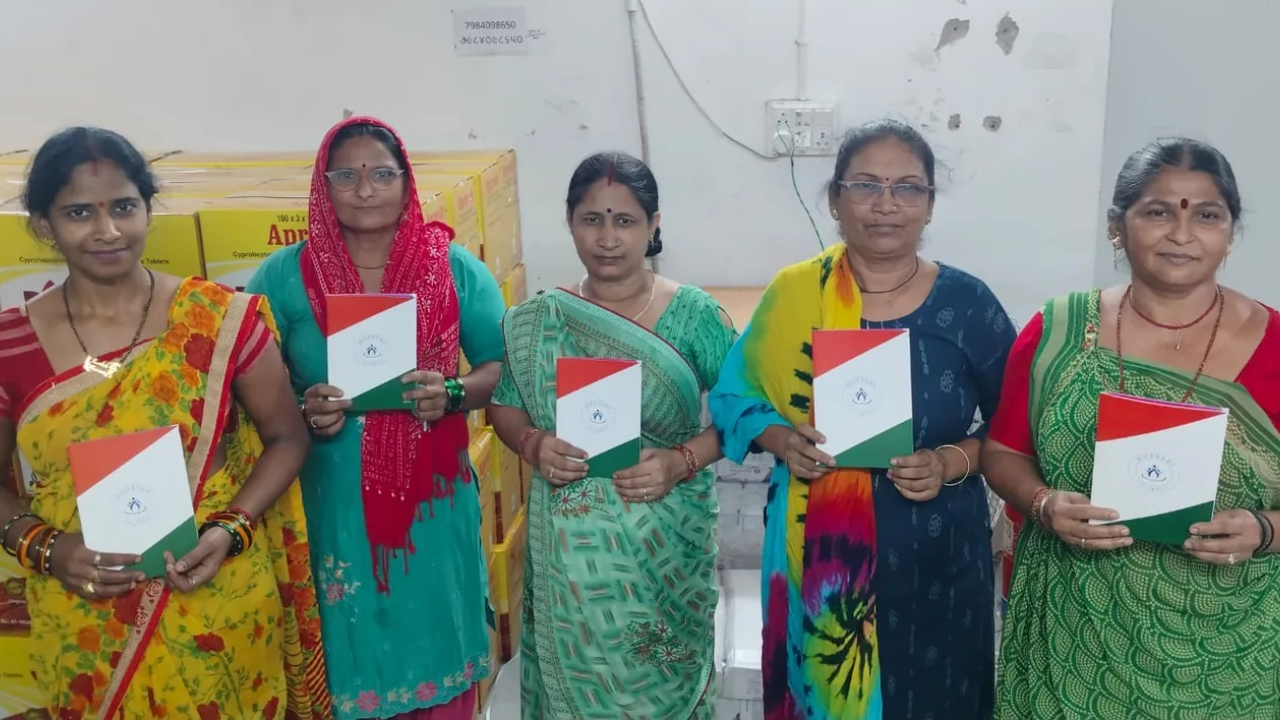
Photo courtesy: Workers of India
An international recognition for the initiative
Ayaan’s efforts have also received recognition beyond the housing societies where he conducts his workshops. In July 2026, his initiative, Workers of India, was selected for the International Baccalaureate Global Youth Action Fund.For a teenager balancing schoolwork, university applications and a social initiative, the recognition marks an important milestone.Yet, the problem that first prompted him to act remains.Domestic workers continue to be an essential part of everyday urban life, but many remain unaware of the welfare provisions available to them. Ayaan’s experience highlights how access to information and hands-on assistance can help bridge the distance between government schemes and their intended beneficiaries.What began with a woman asking for a loan because her mother was ill has grown into an initiative that has reached more than 750 workers.And for Ayaan, the starting point was a question he could not stop thinking about: “If we didn’t give it to her, what would she have done?”