
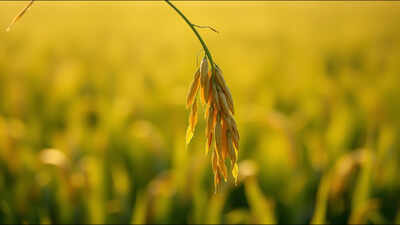
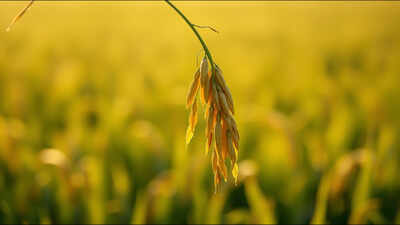
Some evergreen sayings are there in all countries and cultures; only the words are different and local. In the traditional villages of the Malay Archipelago, wealth was historically measured not in gold coins or digital ledger balances, but in the yield of the wet rice paddies. Rice was the lifecycle, the sustenance, and the direct link between human labor and the favor of nature. From this intimate, generations-long relationship with agriculture emerged one of the most culturally significant pieces of Southeast Asian wisdom:Today’s Malay proverb of the day is: “Ikut resmi padi, makin berisi makin tunduk.”Follow the nature of the rice plant; the more grains it bears, the lower it bows.This proverb serves as a foundational ethical guide across Malaysia, Indonesia, Brunei, and Singapore. It addresses a universal human vulnerability: the tendency for pride to inflate alongside personal achievement. Through the elegant mechanics of a simple stalk of rice, the proverb provides a timeless framework for understanding why true stature is always accompanied by humility.
Origin of this Malay proverb
To understand the origin of this proverb, one must look at the physical landscape of traditional Malay agrarian life. Unlike nomadic or hunting cultures, rice farmers were bound to a meticulous, communal cycle. Planting, irrigating, weeding, and harvesting required absolute cooperation among villagers.During the early stages of the rice lifecycle, the stalks stand straight, green, and completely rigid. At this point, the head of the plant is empty. It has no substance, no weight, and no real value to the community. Yet, it sticks straight up into the air, seemingly proud and demanding attention.As the season progresses, the grains fill with starch, turning a rich, heavy golden hue. As the plant reaches its peak value — possessing the very grain that will sustain the village through the coming months—the sheer weight of its own success forces the stalk to bend downward, bowing gracefully toward the mud from which it grew.The ancestral farmers observed this physical reality and recognized it as a flawless mirror for human character. They saw that the upright, rigid stalk was a symbol of the ignorant, the empty, and the boastful. Conversely, the bowing stalk was the physical manifestation of wisdom, capability, and maturity.
Empty vessels make the most noise
What this Malay proverb intends to convey is nothing new. There are many similar sayings in English: like empty vessels make the most noise. The meaning is that an empty person feels a subconscious need to project importance. Because they lack internal depth, knowledge, or genuine achievements, they stand rigid—much like the empty rice stalk. They boast, inflate their credentials, and look down on others to artificially elevate their own status.True success, however, changes a person’s center of gravity. When you genuinely possess knowledge, wealth, or high status, you no longer feel the desperate urge to prove it to the world. The internal substance creates a natural, unforced weight that anchors you, manifesting externally as a quiet, dignified modesty.But the allegory of the rice makes it stand out and is so rooted in Malay culture.The mature rice plant bows directly toward the earth and the water that nourished its roots. In the cultural context of the Malay world, this is a strict warning against forgetting one’s origins.No matter how high an individual climbs in society, their success is built upon a foundation provided by others: parents, teachers, mentors, and the community. Bowing is an act of gratitude, acknowledging that your “grain” is a product of the soil that supported you.Apart from the humility that comes with internal enrichment, there is a message of resilience too in this proverb.When tropical monsoon winds sweep across an open paddy field, the rigid, upright, empty stalks are highly susceptible to snapping under the pressure. The mature, bowing stalks, already low and flexible, present less surface area to the wind, swaying gracefully with the storm and surviving the tempest undamaged. Humility, therefore, is not a weakness; it is a mechanism of psychological and social resilience.Traditional Malay upbringing places an incredibly high premium on how one carries oneself in public. A person who achieves great wealth or academic accolades but becomes loud, arrogant, or dismissive of elders is considered brash. No amount of material success can erase the social stain of bad manners.The proverb acts as a preventative medicine against this societal failure. It reminds the scholar who just earned their doctorate, the entrepreneur who just scaled their business, or the politician who just won an election, that their social license to lead is dependent on their willingness to “bow.”
Why does this proverb ring so true even outside Malay culture?
The lessons are true in all walks of life. In leadership, the best leaders do not demand respect through a rigid display of authority; they earn it by bowing to serve their teams, clearing obstacles, and sharing credit. In education, the truly educated realize how little they actually know. The deeper their pool of knowledge grows, the more they realize the vastness of the universe, forcing a natural intellectual humility.In wealth, true financial security does not need to flash or scream. It is quiet, subtle, and philanthropic, understanding that wealth is a tool for community stability, not a weapon for ego inflation.
Magnificent but humble
The proverb does not ask us to hide our talents, nor does it advocate for a false, self-deprecating modesty that denies our own hard work. The rice plant, after all, is magnificent in its golden maturity; it does not pretend to be empty. It simply allows its value to speak for itself through its posture.When we observe an individual who has climbed to the absolute peak of their field—whether a world-class surgeon, a legendary artist, or a revered community leader—and find them to be gentle, listening, and genuinely humble, we are witnessing the human equivalent of the golden harvest. They have mastered the lesson of the sawah: they have filled their stalks with grain, and they have gracefully bowed.