
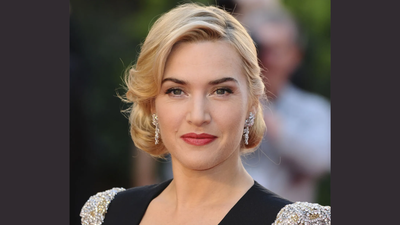
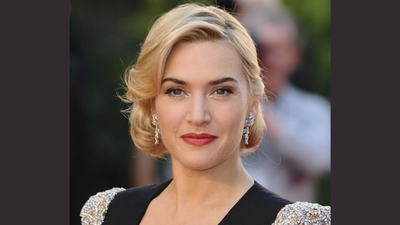
A mother whose daughter depends on life-support equipment around the clock has started a national fundraising campaign to help other families struggling with high energy bills. The move comes a year after Hollywood actress Kate Winslet stepped in to pay off her own rising energy costs. Carolynne Hunter, a 50-year-old project lead for the charity Pamis who lives in Stirlingshire, Scotland, faced annual electricity bills of up to £17,000 to keep her 13-year-old daughter Freya alive. Freya has severe and complex health needs. She is non-verbal and blind, and depends on a constant oxygen supply and nursing care at home around the clock. Local council officials warned that running the medical equipment Freya needs, along with heating their home in Tillicoultry, would cause their energy bills to rise sharply. In response, Ms Hunter launched an online fundraising appeal in late 2022. Oscar-winning actress Kate Winslet donated £17,000 directly to the campaign after following Ms Hunter’s public efforts to highlight the pressures faced by unpaid carers. After receiving the donation, Ms Hunter confirmed that she no longer had to worry about paying her immediate heating and electricity bills. She then joined forces with GoFundMe to launch a new campaign to help other families across Scotland who care for children with life-shortening conditions.
Campaign for social tariffs and charitable support
Money raised through Ms Hunter’s new GoFundMe campaign is being directed to Children’s Hospices Across Scotland. The organisation provides care at home, hospital support teams and hospice services for babies, children and young people up to the age of 21. Speaking to the Press Association news agency, Ms Hunter explained how the original donation came about and why she decided to keep campaigning for other families. “Kate saw me campaigning the governments and wanted to donate to me to help with my energy bills, so GoFundMe contacted me and helped me set up a GoFundMe page so she could,” Ms Hunter told the Press Association. “This then went viral and many more kind people donated too.” Ms Hunter said the celebrity donation gave her family greater financial security, but thousands of other carers still lack reliable support. “I worked with GoFundMe to set up a fundraiser to support families this Christmas who are in a similar situation to me last year to hopefully raise money to help them with their bills, but whilst doing that, it can also give me a platform again to start talking a bit more widely about what the UK Government had promised last year in terms of a social tariff,” she said. Social tariffs are discounted rates for essential household services, such as gas, electricity and broadband. They are designed to help low-income households and people whose medical needs require large amounts of electricity.
Medical challenges and emotional toll on carers
The physical and emotional demands of providing intensive medical care at home became especially difficult shortly after the donation. In December 2022, both Ms Hunter and Freya became ill with winter illnesses. Freya was admitted to hospital with severe flu, while Ms Hunter was treated for pneumonia. Freya remained in hospital until February 2023. Speaking to the Press Association about that period, Ms Hunter explained that keeping the house warm was important for their recovery, but the experience also placed a lasting strain on her. “When you’re looking after a child like Freya, it’s just complete intensive care constantly, you don’t get a break,” Ms Hunter told the Press Association. “As much as I have support to look after Freya, she is ultimately my responsibility and I am on call constantly.” Ms Hunter also revealed that she had recently been diagnosed with complex post-traumatic stress disorder. She believes the condition is common among family carers who provide full-time care and deal with medical emergencies without enough wider support. “I have recently been diagnosed with complex Post-traumatic stress disorder and that will be common among other families, that is just the way it is,” she said.
Government responses and policy debate
Ms Hunter has criticised both the Scottish and UK governments for failing to introduce special electricity rates for households that need to run energy-intensive medical equipment at home. “The Scottish and UK governments have not provided adequate support for families with a high level of medical need,” she told the Press Association. “They have promised social tariffs and health board support at meetings and FMQs. However, it has still not delivered to families.” In response to the campaign, government representatives pointed to financial support schemes already available to vulnerable households. A spokesperson for the UK Department for Energy Security and Net Zero said the government had spent £40 billion helping to cover household energy bills across the UK during periods of sharp price rises in winter. “We’re also continuing to support the most vulnerable, with three million households expected to benefit from the £150 Warm Home Discount, £900 for those on means-tested benefits, and an extra £150 for disabled people,” the Department for Energy Security and Net Zero spokesperson said in an official statement. In Scotland, Energy Minister Gillian Martin expressed sympathy for the Hunter family and highlighted welfare schemes run by the Scottish Government to support disabled children. “No parent should ever have to worry about how they will afford essential care for their children, and I would like to express my sympathies to Carolynne Hunter and her family,” Martin said in a statement released by the Scottish Government. Martin pointed to the Scottish Government’s £30 million Fuel Insecurity Fund, along with targeted payments such as the Child Winter Heating Payment and Child Disability Payment. She said these were among the main measures used to help vulnerable families manage rising living costs.