
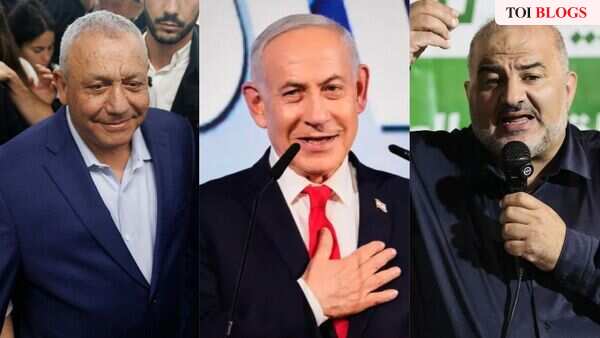
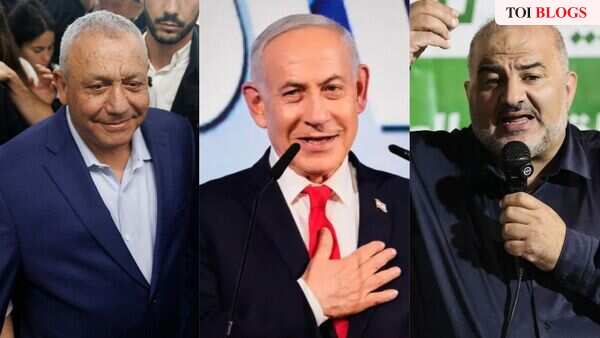
Israel’s parliamentary election has produced a political deadlock, raising questions about Benjamin Netanyahu’s political future and the direction of Israeli foreign and security policy. With nearly 90% of votes counted, Netanyahu’s right-wing bloc was projected to secure 53 seats in the 120-member Knesset, compared with 48 for the opposition led by former military chief Gadi Eisenkot. Arab parties, projected to win 19 seats, could become influential in coalition negotiations. Neither bloc has secured the 61 seats required for a parliamentary majority. Although Netanyahu has lost his governing majority, his political survival remains possible. More importantly, those expecting his departure to herald a fundamental moderation of Israeli policy towards Palestine and Hamas may be seriously mistaken.The election represents more than a contest between two political personalities. It reflects Israel’s continuing struggle over national security, political accountability and its strategic direction following the October 7, 2023 Hamas attacks and subsequent regional conflicts. Netanyahu, Israel’s longest-serving prime minister, has built his political career around military strength, opposition to Iran and close strategic relations with Washington. However, the security failures surrounding October 7, prolonged military operations in Gaza and growing domestic divisions have weakened his political standing. Yet his principal challenger, Gadi Eisenkot, is hardly a moderate alternative on Israel’s fundamental security priorities.Eisenkot, who served as Chief of Staff of the Israel Defense Forces from 2015 to 2019, is a seasoned military strategist associated with the controversial Dahiyeh doctrine, which advocates overwhelming military force against hostile organisations. His security outlook is uncompromising. He has explicitly rejected Palestinian statehood, describing the two-state formula as a mistake, and insists that Israel must retain overriding security responsibility between the Jordan River and the Mediterranean Sea. He has also demanded the destruction or dismantling of Hamas’s military capabilities and an end to its governing authority in Gaza. His position suggests that an Eisenkot government could pursue military objectives against Hamas with considerable determination, potentially adopting an even more forceful operational approach than Netanyahu in certain circumstances.Significantly, Eisenkot’s differences with Netanyahu are primarily over leadership, strategic execution and political accountability rather than Israel’s fundamental security objectives. Eisenkot joined Netanyahu’s emergency war cabinet following the October 2023 attacks but resigned alongside Benny Gantz in June 2024, criticising Netanyahu’s handling of the conflict and failure to achieve clearly defined military objectives. He has questioned Netanyahu’s claims of total victory when Hamas’s military and governing capabilities have not been completely dismantled. His departure was therefore not a rejection of Israel’s military campaign against Hamas but reflected dissatisfaction with its conduct, effectiveness and political management.Nevertheless, differences between the two leaders should not be overlooked. Eisenkot opposes Netanyahu’s far-right coalition partners, criticises settler violence and has questioned certain settlement expansion plans that could undermine Israel’s broader strategic interests. However, he supports Jewish settlements under specified conditions and rejects Palestinian sovereignty. These distinctions may influence Israel’s domestic politics and international diplomatic engagement, but they do not establish Eisenkot as a liberal alternative on the Palestinian question. Indeed, his military credentials and commitment to dismantling Hamas could make him an equally uncompromising, and potentially more operationally decisive, leader.For Palestinians, therefore, Netanyahu’s possible departure offers no guarantee of a fundamental policy transformation. Both leaders oppose Palestinian statehood and insist that Hamas must cease to exist as an effective military and governing organisation. The distinction may lie in how these objectives are pursued rather than the objectives themselves. Eisenkot has pledged to replace Hamas’s administration in Gaza within 18 months of taking office, through a US-backed arrangement or military force. An Eisenkot government might seek different arrangements for Gaza’s administration or coordinate more closely with Washington, but such possibilities should not be confused with an embrace of Palestinian independence. The unresolved challenge remains reconciling Israel’s security concerns with Palestinian political aspirations and the humanitarian consequences of prolonged conflict.The implications extend well beyond Israel and Palestine. The United States remains Israel’s indispensable strategic partner, providing military assistance, intelligence cooperation and diplomatic support. President Donald Trump has maintained strong relations with Netanyahu, particularly over Iran and regional security. Washington’s strategic commitment to Israel, however, transcends individual leaders. An Eisenkot government would almost certainly preserve this partnership, including cooperation against Iran’s nuclear ambitions and regional military networks. Nevertheless, differences could emerge over the timing and scale of military operations, particularly against Tehran, where Eisenkot has also acknowledged the possibility of American-backed diplomatic arrangements. Netanyahu, meanwhile, has consistently emphasised military pressure and the opportunity to eliminate Iran’s strategic threat.For the wider Middle East, Israel’s political uncertainty comes at a critical moment. Saudi Arabia, the United Arab Emirates, Egypt and Jordan remain concerned about regional escalation, Gaza’s future and the consequences of confrontation with Iran. The Abraham Accords demonstrated the potential for Arab–Israeli strategic cooperation, but further normalisation, particularly involving Saudi Arabia, remains constrained by the unresolved Palestinian question. Neither Netanyahu nor Eisenkot presently offers a clear pathway towards Palestinian statehood. Consequently, a change in Israeli leadership alone is unlikely to overcome the political obstacles to wider regional normalisation.For India, the electoral outcome is significant but unlikely to fundamentally alter its strategic partnership with Israel. Over three decades, bilateral relations have expanded across defence, intelligence, counterterrorism, agriculture, cybersecurity and emerging technologies. Prime Minister Narendra Modi has strengthened these ties while maintaining India’s longstanding support for Palestinian aspirations and close relations with Arab states. New Delhi’s strategic interests require continuity in cooperation with Israel alongside strong energy, economic and security partnerships with the Gulf. Regional instability also threatens connectivity initiatives such as the India–Middle East–Europe Economic Corridor. India will therefore favour stability, diplomatic engagement and the avoidance of further escalation, regardless of who eventually forms Israel’s government.The immediate political challenge remains coalition formation. Netanyahu’s bloc has emerged ahead of Eisenkot’s, although neither commands a majority. Eisenkot faces particular difficulties because forming an alternative government could require Arab-party support, which he has resisted. A Netanyahu-led coalition, a broader unity government or another election remain possible outcomes. Netanyahu’s political career has repeatedly demonstrated his capacity to survive apparently decisive setbacks.Ultimately, Israel’s election should not be viewed merely as a contest between two political rivals, but between two leaders committed to an uncompromising national security doctrine. While Netanyahu has pursued an aggressive military strategy against Hamas, Eisenkot, a former IDF chief, represents an equally hawkish and potentially more determined military-security approach. His explicit rejection of Palestinian statehood, commitment to dismantling Hamas’s military and governing capabilities, and criticism of Netanyahu’s failure to achieve decisive military objectives suggest that an Eisenkot government could pursue these objectives with even greater operational resolve. Far from representing a softer alternative, Eisenkot could prove more formidable in implementing Israel’s security priorities. Netanyahu’s departure, therefore, would not necessarily bring relief to Palestinians or a fundamental change in Israeli policy. Indeed, a change in leadership could produce greater military determination rather than moderation, even as the two leaders differ over political governance, strategic execution and regional diplomacy.The larger geopolitical question is therefore not merely who governs Israel, but whether its next government can translate military strength into sustainable security, regional stability and a viable political future. Changing Israel’s leadership may prove easier than changing the strategic realities shaping the Middle East.
Disclaimer: Views expressed above are the author’s own.