
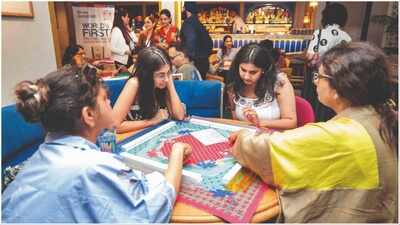
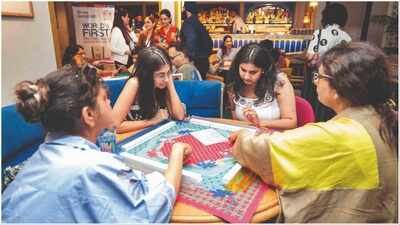
On International Mahjong Day (August 1), the spotlight is on Mahjong as the centuries-old tile game witnesses a surge in popularity in India. Once confined to niche circles, Mahjong has steadily found its way into cafés, clubs and living rooms across cities such as Mumbai, Delhi, Bengaluru, Chennai, Pune and Kolkata. Blending strategy with social interaction, the game is attracting a new generation of players, emerging as one of the country’s fastest-growing tabletop hobbies.More than a game: Mahjong’s social appealMuch of Mahjong’s growing appeal lies in what happens beyond the tiles. Played around a shared table, the game encourages conversation, collaboration and friendly competition, making it a welcome alternative to screen-based entertainment. Players say the experience is as much about spending uninterrupted time with others as it is about winning, reflecting a growing preference for slower, more mindful ways of socialising in a post-pandemic world.The language of MahjongLike any game with a passionate following, Mahjong has its own vocabulary. Understanding a few common terms can make it easier for beginners.Pung: A set of three identical tiles, such as three Bamboo 5s.Chow: A sequence of three consecutive tiles of the same suit, such as 3, 4 and 5 of Dots. (Only the player to your left can claim a discarded tile for a Chow in many rule sets.)Kong: A set of four identical tiles. Declaring a Kong usually allows the player to draw an extra replacement tile.Pair (Eyes): Two identical tiles that complete a winning hand.Discard: The tile a player places face-up after each turn, often providing clues about their strategy.Mahjong: The winning declaration made when a player completes a valid hand according to the game’s rules. A game for all agesIn recent years, Mahjong has evolved into one of Mumbai’s fastest-growing social pursuits, attracting everyone from young professionals and entrepreneurs to homemakers and students. Dedicated Mahjong clubs, community groups and regular tournaments have sprung up across the city, while cafés and private residences increasingly host weekly game nights.Homemaker Kainaz Kasnavia says, “Unlike digital entertainment, Mahjong encourages face-to-face interaction. The game is intellectually stimulating and fun, and I find it more engaging than traditional card games.”The cognitive benefits of Mahjongl Boosts memoryl Improves concentrationl Strengthens strategic thinkingl Enhances pattern recognitionl Builds patiencel Encourages social interactionDid you know?The longest games can last for hours. Casual sessions often stretch well beyond two or three hours, making Mahjong as much a social gathering as a game.