
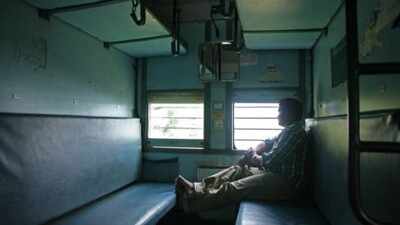
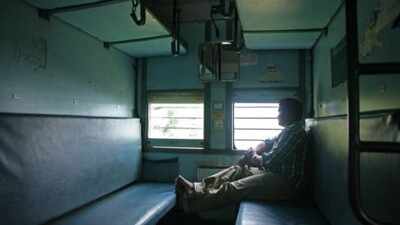
Ask regular train travellers about their favourite berth, and many will say the side lower. It is not the widest or the longest berth, yet it is one of the most requested. Ticketing guides point to the window, the quieter aisle and the freedom to sit upright by day. Psychologists suggest there may be something deeper at work: the wish to decide when to sit, sleep or talk.
What the side lower offers
Travel guides describe the side lower as a berth that faces away from the main bay, with a window and a mostly empty aisle at night. It lets a passenger sit upright during the day without disturbing others, and it is popular with solo travellers who want privacy. These guides also say it has less bay noise, which suits light sleepers and people who read or work. A regular lower berth, by contrast, is wider and better for families and tall passengers.
The psychology of personal space and control
Environmental psychologists have long studied personal space, territoriality, crowding and privacy. According to an EBSCO research overview, personal space is the invisible zone around a person that others cannot enter without causing discomfort, and occupying one’s own territory is linked to perceived control. Privacy, in this field, means the selective control of who has access to you.A classic 1970s paper by psychologist Daniel Stokols draws a useful line between density and crowding. Density is simply a lack of space, while crowding is an experience, felt when privacy falls below the level a person wants. That could explain why two passengers in the same coach can feel very differently about the same crowd.
What a government report says
A report available through the US Department of Justice’s Office of Justice Programs summarises the study of crowding by psychologists and corrections authorities. It describes crowding as a state of high psychological stress that sometimes accompanies high density, and lists the factors involved, including how long and how predictable the exposure is, how much social contact a person wants at the time and their perception of control. It also notes that people who were told about crowding beforehand were more comfortable. The report concerns prisons, not trains, so it supports the idea of control only in a general way.
What this does not prove
No study we found looked at people who choose side lower berths. The link between berth choice and personality is an interpretation, and not every finding is firm. One Iowa State University thesis found that perceived control reduced the feeling of crowding only in limited conditions. Many side lower fans may simply like the window, or find the berth easier to climb into.
The takeaway
For many, the side lower is less about comfort than about choice: when to chat, when to read and when to switch off.Disclaimer: This article is intended for general informational purposes only. It is based on psychology research overviews, a US Department of Justice-hosted report on crowding and travel guides, and it is not a study of train passengers. Berth allocation on Indian Railways depends on availability, and a preference is not guaranteed. Individual reasons for choosing a berth vary widely.