
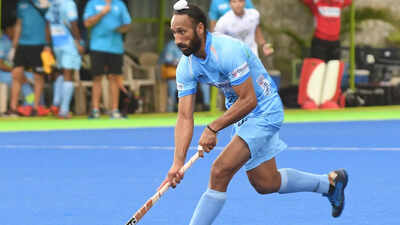
NEW DELHI: Indian men’s hockey has made significant strides over the last few years, with back-to-back Olympic bronze medals followed by consecutive Asian Games gold medals. For former India captain Sardar Singh, however, sustaining that success will require more than technical ability and physical fitness. It will demand discipline, sharper game management and the ability to execute plans without lapses.As India began their campaign at the Asian Champions Trophy on Tuesday beating Bangladesh 13-0, Sardar, who is currently coaching the Indian sub-junior men’s team, believes the country has the talent and infrastructure to remain among the best in the world. The challenge, he says, is to ensure that small mistakes do not undo the hard work put in over 60 minutes.“If we look at the rankings, we are number one in Asia. There is no doubt about that. Technically, we are strong, and we have the strategy. But against the best teams in the world, we have to execute those things 110 per cent,” said SardarIndia entered the Asian Champions Trophy as defending champions and the most successful team in the tournament’s history, having won the title five times. The competition, which begins in Jalandhar and moves to Mohali for the knockout stages, provides another opportunity for the Harmanpreet Singh-led side to build on its recent success.Sardar, however, believes the margins at the highest level are too small to allow even brief lapses in concentration. Having played international hockey at the highest level, the former midfielder understands how quickly a match can turn when a team loses its shape or fails to follow tactical instructions.“In modern hockey, you have to play disciplined hockey for 60 minutes. If you play with 10 players, you cannot survive in modern hockey,” he said, referring to the importance of maintaining discipline and avoiding situations that leave a team numerically disadvantaged.He also stressed the need to understand the finer aspects of match management, particularly when a team is protecting a lead.“How to manage the game, where to hold when you are winning and how to kill time — we need to focus on these things. Individually, we are very strong. You must have seen our physical fitness and the amount of hard work that goes into it,” Sardar said.For him, the next step is translating those strengths into consistent performances against the world’s leading teams. With the next World Cup cycle in focus, he believes India cannot afford to let opportunities slip away through avoidable errors.While the senior team’s immediate challenge is to maintain its winning momentum, Sardar’s responsibilities lie in preparing the players who will eventually follow in their footsteps. His current role with the Indian sub-junior men’s team has given him an opportunity to work on the fundamentals that he believes are essential for long-term success.The former captain feels that young players must develop a strong technical foundation before they can fully adapt to the demands of modern hockey.“In the junior team, I see that the basics of the kids are very poor. I have played modern hockey with the best players and worked with the best coaches. There were many things we wanted to do on the field, but at that time, there was no movement in that direction,” he said.Sardar believes his experience of competing at major international tournaments can help young players understand the details that separate good performances from medal-winning efforts. His approach goes beyond drills and tactics, with an emphasis on preparing players to make better decisions under pressure.“We have won medals at the World Cup and the Olympics through small things. We have to tell them how to take care of themselves on the field and off it. The rest of the training and strategy will be done on the ground,” he said.“Hockey is like an exam. If I do not prepare properly or study well, I will fail. These things do not happen overnight. You have to look at what kind of training you have done throughout the year,” Sardar said.
Lessons from Hockey5s
Sardar also highlighted the value of the five-a-side format, which places a premium on speed, quick decisions and attacking intent. With fewer players on the field and more space to exploit, Hockey5s offers young players a different learning experience from the traditional 11-a-side game.“You get to see more goals, and you cannot miss even a second. You can score a goal at any time, and you always get to learn a lot from this. It helps you in your normal game,” he said.The format, he believes, can help players sharpen their reactions and improve their understanding of space, while learning to respond quickly to changing situations.“Hockey India is providing us with the best equipment and facilities. If we continue with this, I am sure India’s future in hockey will be better,” he said.
Punjab’s enduring hockey legacy
The Asian Champions Trophy also carries special significance for Punjab, a state that has produced generations of Indian hockey players. With the league stage being held in Jalandhar, the tournament brings international hockey to a region closely associated with the sport’s history.Sardar pointed to the contribution of Surjit Hockey Academy, which has helped produce players who have represented India over the years. He believes the opportunity to compete on home ground is particularly meaningful for those who began their journeys at the academy.For Sardar, the bigger picture extends beyond one tournament or one generation of players. India’s recent achievements have established a strong platform, but sustaining that progress will depend on attention to detail at the senior level and sound fundamentals among youngsters.As the Asian Champions Trophy gets underway, his message is clear: talent and fitness can take India far, but discipline across every minute of a match and investment in the players coming through the ranks will determine how consistently the country can compete for the biggest honours.