
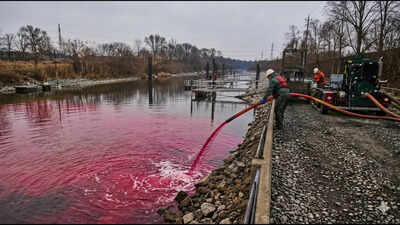
In December 2009, Illinois took an extraordinary step to protect the Great Lakes from an invasive fish that had been moving through the waterways of the Mississippi River basin. During maintenance of an electric fish barrier, officials treated a section of the Chicago Sanitary and Ship Canal with rotenone, a piscicide that kills fish by disrupting their ability to use oxygen. The operation killed enormous numbers of fish, but crews recovered just one bighead carp.A study later published in Environmental DNA analysed the operation and confirmed that the recovered fish supported earlier environmental DNA detections in the treated section. The study also noted that many dead fish were not recovered, so the finding of a single carp could not establish the exact number of Bighead Carp that had been present. At the same time, the absence of additional Bighead Carp among the fish recovered during the operation was consistent with the possibility that their numbers in the treated section had been relatively low.A barrier between two major watershedsThe Chicago Sanitary and Ship Canal is a man-made connection between the Mississippi River and Great Lakes drainage systems. Although the connection was deliberately engineered, it created an unintended ecological pathway through which invasive aquatic species could move between two historically separate ecosystems. Asian carp, particularly bighead carp and silver carp, had become a major concern because of their ability to consume large quantities of food and reproduce rapidly. Silver carp were also known for their jumping behaviour when disturbed by boats, while bighead carp could grow to large sizes. If established in the Great Lakes, the fish were feared to compete with native species and disrupt food webs.To slow that movement, an electric barrier system was installed in the canal. The system generated an electrical field in the water designed to deter fish from swimming upstream. Later research showed that the barrier could incapacitate fish under experimental conditions, with its effectiveness depending on factors such as fish size and operating conditions. The immediate problem arose when one of the barriers needed scheduled maintenance. Barrier IIA had to be taken out of service, creating a temporary gap in the system’s protection. Officials decided that leaving the canal untreated during the shutdown posed too much risk, particularly after Asian carp DNA had been detected in the area.Rotenone turned the canal into a temporary dead zoneAccording to the US Geological Survey, the treatment began on December 2, 2009, along a roughly six-mile stretch of the Chicago Sanitary and Ship Canal. More than 1,800 gallons of rotenone were injected at multiple stations across the treatment area, while contemporary reports put the amount at about 2,200 gallons. The difference appears to reflect variations in how the treatment area and chemical quantities were reported, so the safest description is that more than 1,800 gallons were applied across roughly six miles of canal.The rotenone was mixed with Rhodamine WT, a red dye that allowed crews to track the chemical as it moved through the canal. This was critical because the treatment had to remain within the designated area before the rotenone was neutralised, preventing it from reaching receiving waterways. USGS researchers later documented the operation as an unusually complex example of real-time piscicide tracking. As the chemical moved through the canal, dead fish began appearing in large numbers. More than 200,000 pounds of fish were eventually recovered during the operation, according to contemporary reporting, with common carp accounting for much of the catch. However, the recovered fish represented only a portion of the total mortality. Because the treatment took place in cold December water, many dead fish sank rather than reaching the surface, making them difficult for crews to recover.
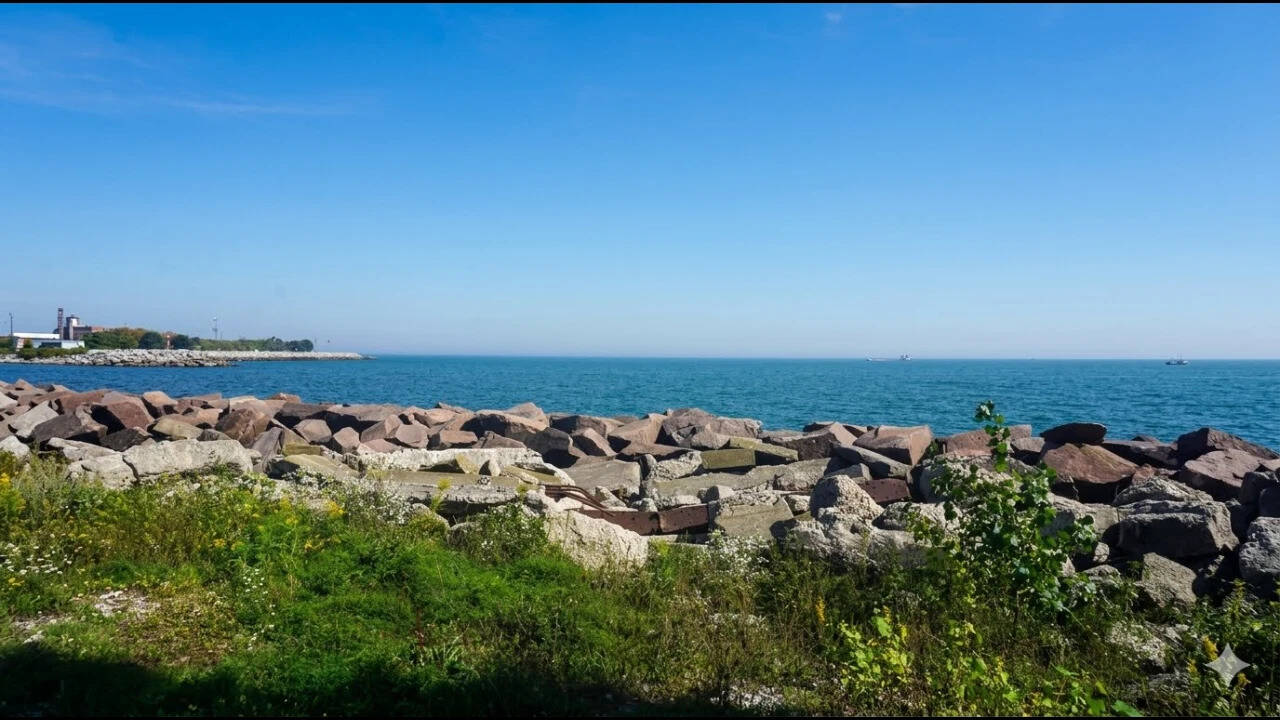
A view of Lake Michigan from Pershing Park in Racine, Wisconsin (United States). Image Credits: Wikimedia Commons.
One fish changed the significance of the operationAt the same time, the absence of additional carp among the thousands of fish recovered suggested that their numbers in the treated section were probably low. That distinction mattered because it showed the difference between detecting carp DNA and finding live fish. Environmental DNA could indicate that Asian carp genetic material was present, but at the time officials were still developing ways to interpret how frequently positive samples corresponded to living fish and how far those fish had moved. Intensive netting and electrofishing therefore continued after the rotenone operation.In the weeks that followed, crews searched other sections of the Chicago Area Waterway System. Fishing operations in the Cal-Sag Channel recovered hundreds of fish but did not find additional Asian carp. Officials continued to use eDNA, netting and electrofishing to determine where the carp had spread and whether a reproducing population had become established. The 2009 operation also showed the limits of relying on one barrier alone. The electric barrier remained central to the strategy, but maintenance requirements meant that it could not simply operate indefinitely without interruption.For Illinois, the episode was a difficult conservation trade-off. A fish toxicant was deliberately released into a canal, killing large numbers of fish that were not the intended target, because officials feared that even a small number of Asian carp could establish a pathway into the Great Lakes. The recovery of just one bighead carp made the result seem modest, but that single fish confirmed that the threat officials were responding to was real. The incident also prompted a broader reassessment of how invasive species should be managed in interconnected waterways. Rather than treating the Chicago canal system as an isolated site, officials increasingly had to consider the entire network as a potential route for species movement. The experience underscored the need for layered safeguards, combining physical barriers, surveillance and rapid-response measures, so that future interventions could be targeted before an invasive population became harder to contain.