
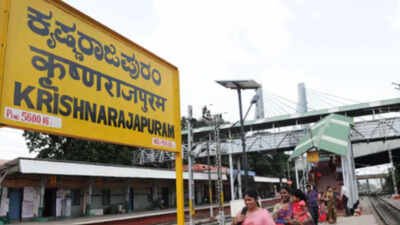
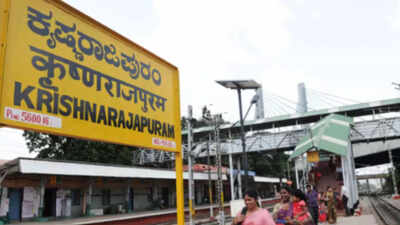
By- Chetan KrishnaBENGALURU: A few decades ago, for anyone driving towards Bengaluru on Old Madras Road, Krishnarajapuram, or KR Puram, is where the city began. The two-lane highway with hardly any vehicles would suddenly have denser traffic. Yet traffic was so smooth that you would still be able to maintain speed and reach Majestic or Chickpet in just over 30 minutes.Contrary to how it may seem today, KR Puram’s story did not begin with traffic snarls or railway tracks.Hidden behind its modern identity are centuries-old temples, hero stones and market traditions that predate Bengaluru’s expansion timeline. Historical records show KR Puram was first known as Hosa Uru (new village in Kannada). It was later given its current name in honour of Mysuru king Mummadi Krishnaraja Wadiyar. But this area’s story goes back several centuries.The Mahabaleshwara Temple here is said to have been built during the reign of the Gangas while the Kashi Vishwanatha Temple was built in the 15th century when Hosa Uru was under the rule of the Vijayanagara kings.Till the early 19th century, KR Puram was a village that was known for its weekly santhes (markets) and annual temple fairs, drawing traders from Tamil Nadu and Andhra Pradesh.Farmers from Kolar, Mulbagal and Hoskote used to bring their produce to the weekly market here, bringing a vibrancy that is rarely seen anywhere else. It’s still alive in KR Puram’s wholesale vegetable and flower markets.The setting up of the railway station as part of the Bangalore-Madras line turned it into a commercial hub. The railway station is arguably the busiest non-terminal junction in Bengaluru, acting as the first or last stop for trains heading toward Chennai, Hyderabad, Visakhapatnam, and Kerala. KR Puram took on the role of a factory hub after Indian Telephone Industries (ITI), NGEF and India Tin Industries set up their units in the 1950s. Tin Factory remains the area’s most notable bus stop and landmark.Another landmark of this area is the 230-metre cable-stayed bridge that was opened in 2003. This bridge was built to ease traffic in east Bengaluru and it was evidently successful only for a few years. As Whitefield and Mahadevapura rode the IT boom, traffic volumes on the bridge multiplied just as rapidly.Perhaps due to its proximity to both Andhra Pradesh and Tamil Nadu, KR Puram always had a mix of Kannada, Telugu and Tamil-speaking people.In recent years, the IT industry has attracted people from across the country.The place is also a multi-cuisine hub, offering everything from ragi mudde with naati koli (country chicken) to TN-style parotta to Andhra meals.Few places illustrate Bengaluru’s rapid evolution as vividly as KR Puram, where a once-quiet industrial township has been absorbed into the restless sprawl of the modern metropolis. The completion of Namma Metro’s purple line in 2023 further transformed KR Puram, and perhaps made traversing the stretch even more daunting.In the mid-1990s, KR Puram felt like a self-contained town along the two-lane Old Madras Road, shaded by rain trees and tamarind groves. Its daily rhythm was set by factory sirens. Today, the same stretch unfolds beneath layers of infrastructure, with streams of commuters moving through the area from dawn till night, balancing their gait through narrow footpaths, parked two-wheelers and street hawkers.