
In times of crisis, it is the creative sector that leads the way forward and heals the collective mind. We saw this during the darkest days of COVID-19, and we are seeing it again now amid the conflict in West Asia. At summits across different countries and cultures, I often speak about the power of the orange economy—and in Abu Dhabi, I am seeing it firsthand once more.A region that briefly suffered a decline in travellers, leaving tourist sites largely empty, has suddenly come alive through the power of art. The city that already boasts the Louvre will soon have a new neighbour to celebrate: the Guggenheim. The buildup to this cultural milestone has already begun with the launch of the Public Art Abu Dhabi (PAAD) Biennial. More than 20 artists from a dozen countries stood firm to meet every deadline and launch target without delay.Deep, insightful, fun, and interactive, these artworks lift the spirit and draw people back into the joy of the outdoors—away from the memory of a volatile year that kept so many huddled indoors. PAAD Biennial Artistic Director Elvira Dyangani Ose faced this as a challenge to overcome. As a result, the biennial’s theme, ‘Home: A Glossary for a Communal Sense of Space’, took on an immediate urgency under the current circumstances.
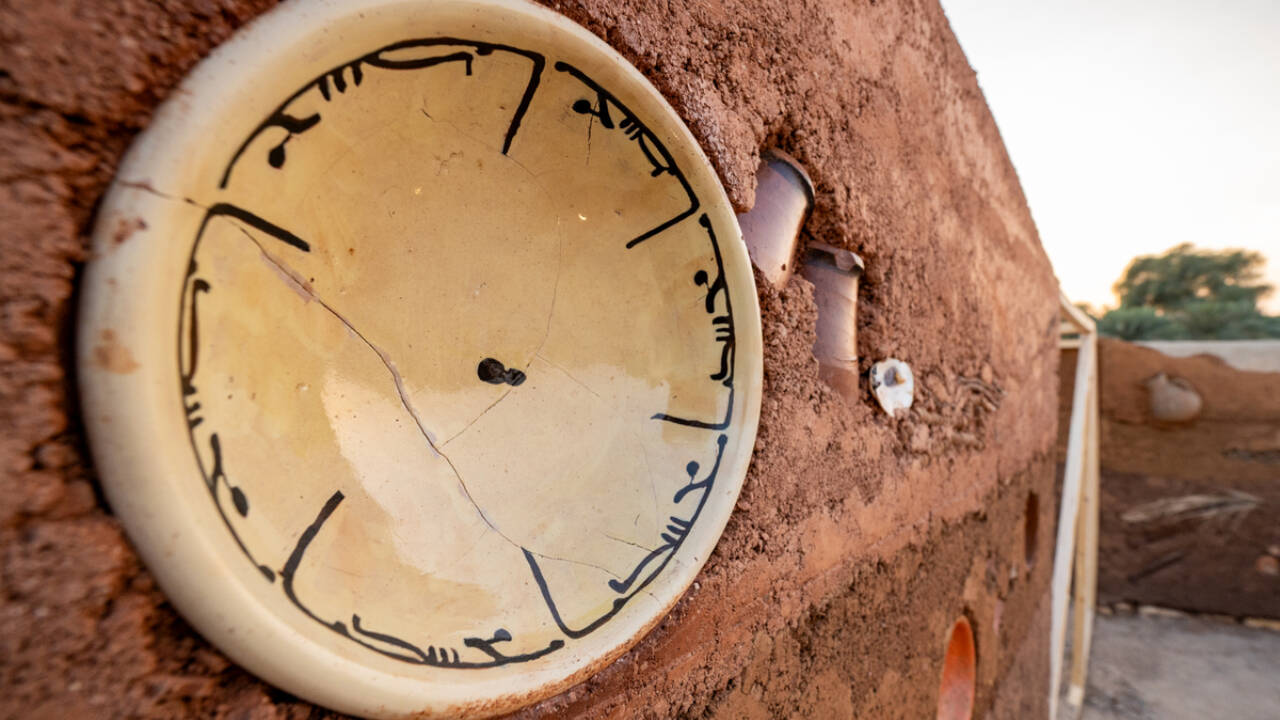
Installation by artist Asuncion Molinos Gordo
“We have created a space which is more about the experience of living together, not as much as the physicality (of home)…Artists are better to tell the history not the way it happened but the way it felt. That experience is felt through the way in which people lived them more than the material experience.”Glistening under the golden sunset of the Persian Gulf, Ghanaian artist Serge Clottey watches with delight as visitors marvel at his striking, fluid drape made from yellow cutouts of reused plastic water canisters tied together with wire. Spanning thousands of meters, the installation—previously exhibited along the coastline of his native Ghana—now rests along the rocky shores of Abu Dhabi. Titled “Wole Worhe (We Know Each Other),” the work reflects deep personal and cultural ties. “These are objects we use daily to survive in Ghana, and we are connected with water. I feel at home wherever I see the sea,” Clottey adds.Artist Khalid Al Banna draws on the imagery of traditional fish traps to build a climbing dome reminiscent of those found in children’s parks around the world. Surrounded by old ships recovered from the Abu Dhabi dockyard, this playful juxtaposition creates a lighthearted mood. At another site, an ancient sarcophagus lies entangled within the roots of a 600-year-old olive tree. Crafted in resin and metal by artist Akram Zaatari, this dramatic work evokes empathy for both the living and the dead.
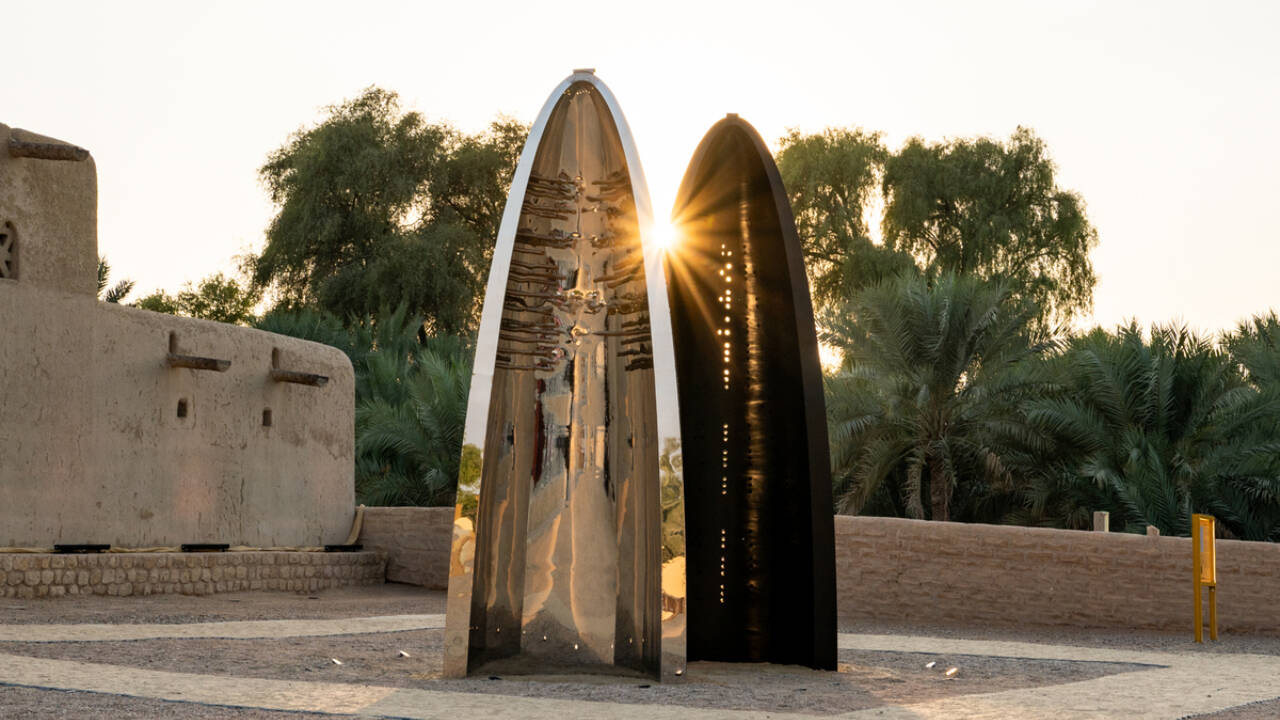
Installation by artist M’barek Bouchichi
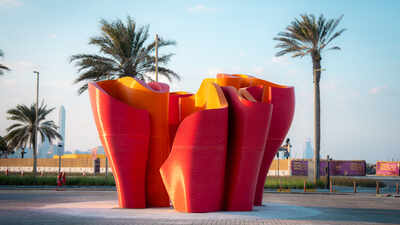
What happens when you reimagine vernacular architecture as a contemporary art installation? You get a striking juxtaposition of North Africa’s traditional pigeon towers rising from the sands of Abu Dhabi. Artist M’barek Bouhchichi crafts his pigeon tower from polished stainless steel, translating the oral histories of sailors into Braille along its towering length. Nearby, artist Mercedes Azpilicueta reimagines marine life and coral reefs through a vibrant, 4-meter-tall orange installation. Created using 4D printing, the structure invites visitors to step inside and explore its warm niches and organic curves.Imagine an art installation that cuts a transverse section through time, revealing layers of knowledge gathered by the farming community in the oasis town of Al Ain, Abu Dhabi. As Spanish artist Asunción Molinos Gordo explains, “There is a material culture that has been sustained by this irrigation system. For example, even these sun shades of mine would not exist without it. Modern architecture brought in tubes and pipes, while fishing communities arrived with their trade—textiles, pearls, and spices.”
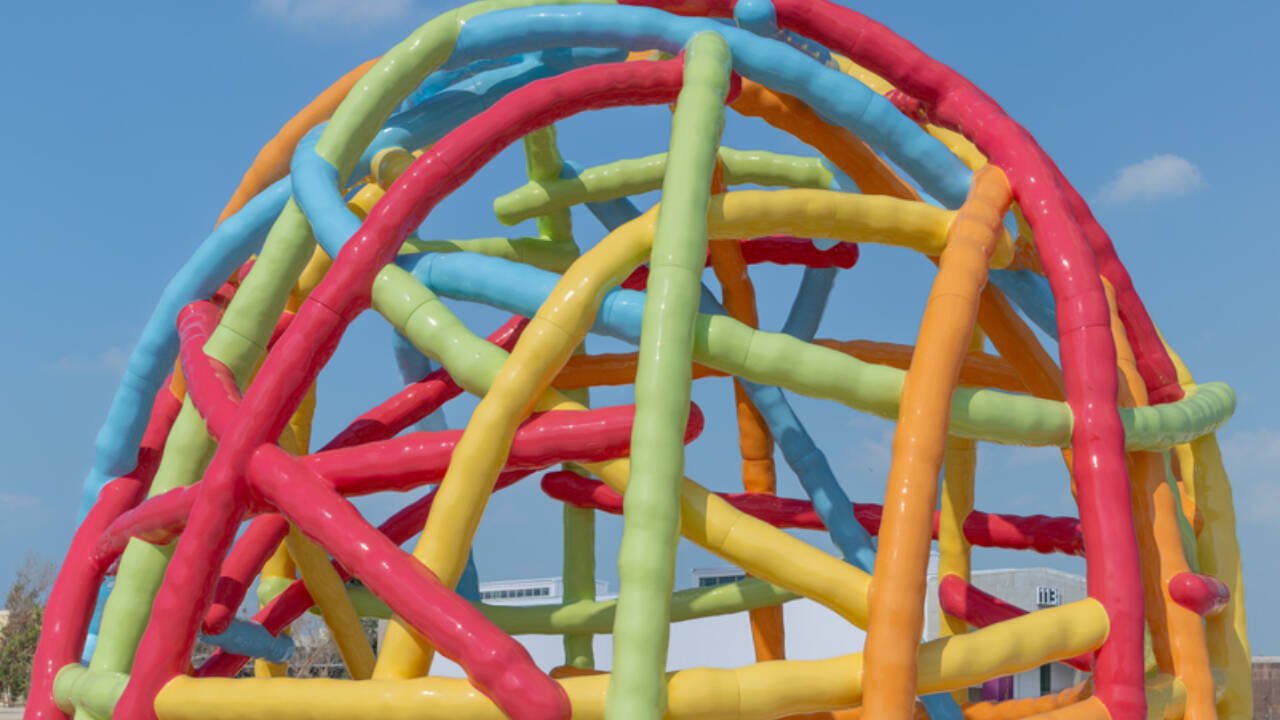
Installation by artist Khalid Al Banna
The biennial creates a space that dissolves the boundaries of geopolitics and time. Paris-based artist Jean-Marie Appriou captures this time-traveling spirit best with his reinterpretation of the solar boats built by the ancient Egyptians—vessels believed to carry pharaohs into the afterlife. Perched on the sands of the Abu Dhabi beach, Appriou’s aluminum solar boat carries astronauts instead, symbolizing humanity’s ongoing quest for knowledge and new horizons.Contributed by: Sahar Zaman, an award-winning author, multimedia journalist, cultural curator, and advocate of the Orange Economy. She is the founder of Asia’s first web channel dedicated to the arts, Hunar TV, and the author of the bestselling book ‘Talat Mahmood: The Definitive Biography’, credited with introducing Golden Era cinema to a new generation.Images Courtesy: Dept of Culture & Tourism, Abu Dhabi