
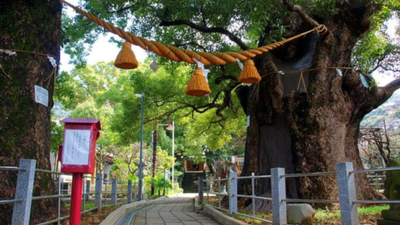
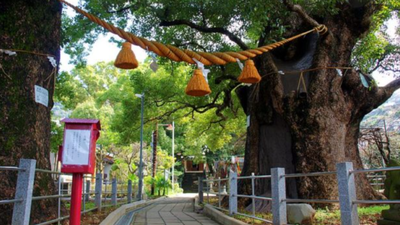
In August 1945, when the United States dropped an atomic bomb on Hiroshima, the blast destroyed nearly the entire city. Buildings collapsed, and an estimated 140,000 people were dead by the end of that year. What survived that morning, against every expectation, were a small number of trees standing within walking distance of the point where the bomb detonated.Eighty-one years later, on Hiroshima Day 2026, those trees are still standing. They are known in Japan as hibaku jumoku, and their survival offers one of the more direct lessons in botany, resilience, and memory that students can study through a single historical event.
What Hibaku Jumoku actually means
The term comes from two Japanese words. Hibaku means “A-bombed” or “exposed to a bomb,” and jumoku means “trees and shrubs.” Put together, hibaku jumoku translates roughly to “A-bombed trees,” though in English they are more commonly called survivor trees.Almost 200 trees are recorded to have experienced and survived the direct effects of the Hiroshima blast, and today around 170 of them, representing 32 different species, remain officially recognised within a two kilometre radius of the hypocenter, the point on the ground directly below where the bomb exploded. Each surviving tree carries a small name plate identifying it as a hibakujumoku.
The science behind their survival
Understanding why these trees lived through an explosion that flattened the city around them requires looking at where the actual damage occurred. According to research compiled in Hiroshima and Nagasaki: The Physical, Medical, and Social Effects of the Atomic Bombings, plants suffered damage only in the portions exposed above ground, while their root systems underground remained largely undamaged.This is the central scientific explanation. The blast’s heat and shockwave scorched bark, stripped branches, and burned leaves, but could not reach far enough beneath the soil to destroy the roots. In many cases, a tree’s visible structure above ground was effectively killed, while the living tissue below the surface survived intact.The following spring, that hidden survival became visible across the ruined city. New shoots began appearing among the debris, growing from roots that had quietly stayed alive through the winter. For a population that had lost most of its homes and a large share of its residents, those small green shoots became an early, tangible sign that the city could recover.Regeneration rates differed between species. Broad-leaved trees showed the most active regrowth. The closest known survivor to the blast is a weeping willow, standing 370 metres from the hypocenter. The tree fell when the bomb hit, but its roots held, and new buds sprouted from it soon after.
A living record of the closest survivors
Some of the specific trees that survived offer useful case studies for students researching the bombing’s physical effects. A eucalyptus tree at the site of Hiroshima Castle survived the blast even as the castle itself, a much larger and sturdier structure, was destroyed. It stood 740 metres from the hypocenter.A similar pattern of survival exists in Nagasaki, the second Japanese city struck by an atomic bomb, three days after Hiroshima. A separate initiative called the Nagasaki Kusunoki Project has identified at least 50 hibakujumoku within a four kilometre radius of that city’s hypocenter, according to IFLScience.
From local memorial to global peace symbol
What makes this topic relevant beyond history and biology classrooms is what has happened to these trees since. An organisation called Green Legacy Hiroshima has spent recent years collecting seeds from the surviving trees and distributing them to schools, universities, and botanical gardens around the world, so that genetic descendants of the original survivor trees can grow far from Japan.To date, seeds and seedlings from eight species of hibaku trees, including ginkgo, camphor, and persimmon, have been sent to 88 cities outside Japan, according to Oxford Botanic Garden and Arboretum, which received ginkgo seeds as part of the project. Oxford noted that in August 1945, Hiroshima’s ginkgo trees had been in full leaf when the bomb hit, leaving their leaves burned, their branches stripped, and their bark scorched. Despite that damage, the trees survived underneath, and new green shoots pushed up through the site within less than a year.American institutions have taken part as well. Bates College in Maine planted ginkgo seeds gifted from Hiroshima in 2024, in partnership with Green Legacy Hiroshima. “We are looking at a piece of something that survived the bomb, and that’s what’s really magical,” said Alan Wang, the Bates graduate who coordinated the project, in comments reported by the college.In May 2025, two saplings grown from a persimmon tree that survived the Hiroshima bombing were planted in the United Nations Food Garden in New York, marking the 80th anniversary of both the bombings and the founding of the United Nations. At the planting ceremony, Izumi Nakamitsu, the United Nations High Representative for Disarmament Affairs, said she hoped people would “be able to enjoy the fruit of these trees, which have now become a symbol of peace and resilience,” according to the United Nations.
Why this matters for students today
For students studying the atomic bombings, the hibaku jumoku offer a way to understand the event through a lens other than casualty figures and political history. They show how a single environmental detail, the fact that roots sit underground while trunks and branches stand exposed, determined which parts of Hiroshima’s ecosystem could recover and which could not.They also demonstrate how a scientific fact about plant biology became a cultural and diplomatic symbol. What started as an observation about root systems surviving heat and shockwaves has, over eight decades, grown into an international network of trees planted specifically to carry a message about survival and peace to new generations who never experienced the war firsthand.As the number of human survivors of the bombing, known as hibakusha, continues to decline each year, with survivors’ average age now over 86, according to the Associated Press, the trees have taken on a role that outlasts individual memory. They are living evidence, still standing in the same soil, of what happened on August 6, 1945, and of what managed to survive it.