
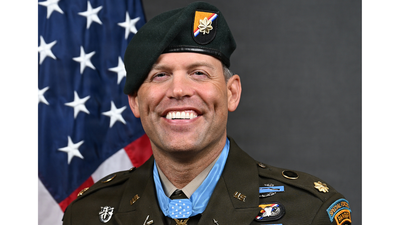
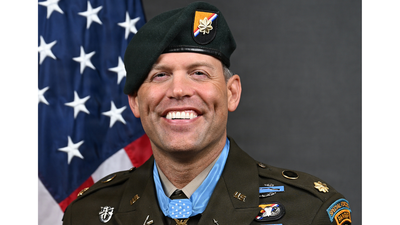
More than a decade after risking his life to save fellow soldiers during a fierce battle in Afghanistan, US Army officer Nicholas Dockery has received the Medal of Honor, America’s highest military award for bravery. Dockery was honoured at a White House ceremony in June 2026 for his actions during a Taliban ambush in Kapisa Province in 2012, when he repeatedly exposed himself to enemy fire, shielded a wounded soldier from a grenade blast, performed life-saving CPR and helped guide air support to safety. Every soldier in his unit was wounded during the battle, but all of them survived.Nicholas Dockery is a US Army officer who served as a lieutenant during the war in Afghanistan. Following his military service, he attended Yale University, where he earned a Master of Public Policy degree. His studies were funded through the General Wayne A. Downing Scholarship, a prestigious programme that enables selected Army officers to pursue graduate education at leading universities around the world. Dockery graduated from Yale in 2023.
The battle that earned Nicholas Dockery the Medal of Honor
The actions that earned Dockery the Medal of Honor took place on October 2, 2012, in Afghanistan’s Kapisa Province.Dockery’s platoon came under attack from an estimated 150 Taliban fighters while defending a compound. The ambush quickly escalated into one of the most intense engagements of the deployment, with American soldiers taking fire from multiple directions.Despite the danger, Dockery repeatedly moved across exposed terrain to reach wounded soldiers and coordinate the defence.According to his Medal of Honor citation, Dockery carried a wounded soldier to safety under heavy fire before spotting two Taliban fighters approaching another injured American.He engaged and killed both attackers, preventing them from reaching the wounded soldier. Upon reaching the casualty, Dockery discovered that the soldier was unconscious and not breathing. He immediately began CPR and successfully revived him.Later in the battle, Dockery used his own body to shield a fellow soldier from the impact of a grenade blast and nearby explosions. Even after being wounded himself, he continued directing the fight and assisting injured comrades.
Why he climbed onto a rooftop under fire
As the battle intensified, Dockery realised that air support was needed to prevent further casualties.He deliberately exposed himself on a rooftop and deployed smoke grenades to mark enemy positions for US gunships overhead. The move made him an obvious target, but it allowed aircraft to accurately identify hostile fighters and support the trapped soldiers below.Military officials said his actions helped stabilise the situation and contributed significantly to the survival of his unit.
Every soldier was wounded, but all survived
One of the most remarkable aspects of the battle was that every member of Dockery’s group was wounded.Despite the severity of the ambush, no American soldiers were killed. Dockery refused evacuation and remained in the fight until all wounded personnel had been rescued and accounted for.His leadership and willingness to repeatedly risk his own life were later cited as key reasons why the entire unit survived the engagement.
Receiving America’s highest military honour
On June 18, 2026, President Donald Trump presented Dockery with the Medal of Honor during a ceremony at the White House.The Medal of Honor is awarded for acts of conspicuous gallantry and intrepidity above and beyond the call of duty. It is the highest military decoration awarded by the United States and is reserved for extraordinary acts of bravery in combat.Dockery received the honour more than 14 years after the battle, reflecting the extensive review process required for the award.Military leaders have described Dockery’s actions as an example of exceptional courage, selflessness and leadership under fire. His willingness to place himself in danger to protect others ultimately helped save multiple lives during one of the most dangerous moments of the Afghanistan War.