
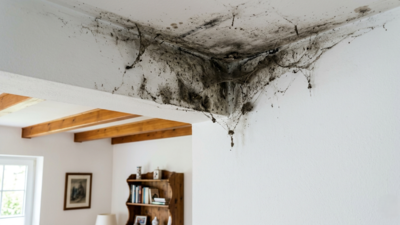
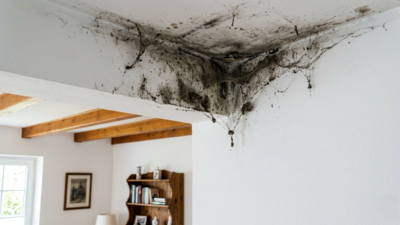
You’ve vacuumed the floors, wiped down the counters, and even cleaned behind the fridge, but the ceiling corners? Those dusty little triangles of shame stuffed between the walls and the ceiling? They have been secretly judging you for months. That’s why they deserve your attention, and here’s how to deal with them without turning your whole apartment into a dust cloud.Why dust loves ceiling cornersCeiling corners are not just dusty because you forgot to dust them. It’s science. Airflow through your home, from vents, open windows, and even foot traffic, sends lightweight particles airborne. When that air reaches a corner, it slows down and drops all the dirt it was carrying. The dust that builds up on the ceiling often contains fine particulate matter, allergens and skin cell debris. It is just what you want to drift back down onto your couch or into your lungs.According to research published in the Journal of Hazardous Materials, air velocity decreases near walls and corners, forming what scientists call boundary layers, areas of near-zero airflow where particles settle out by Brownian diffusion and gravity rather than being carried elsewhere. Your corner is not merely a corner. It is a particle trap by design.Why your first instinct will make it worseWhen you see a speck of dust in your corners, your first thought is to grab the nearest broom and give it a try, but that will only make it worse. Aggressive dry sweeping can increase airborne dust levels by 30-50% in an enclosed space. It is really bad for people who have allergies or asthma.Soaking the place is no good either. Moisture on ceilings can ruin paint, foster mildew and even hide water leaks underneath. When it comes to texturised ceilings, less is always more.The trick professional cleaners actually useHere’s the pro way: a telescoping pole and microfiber duster, or the soft-brush attachment of a vacuum. That’s all. No gymnastics with ladders, no rough scrubbing. Just a slow, careful pass around the corner.
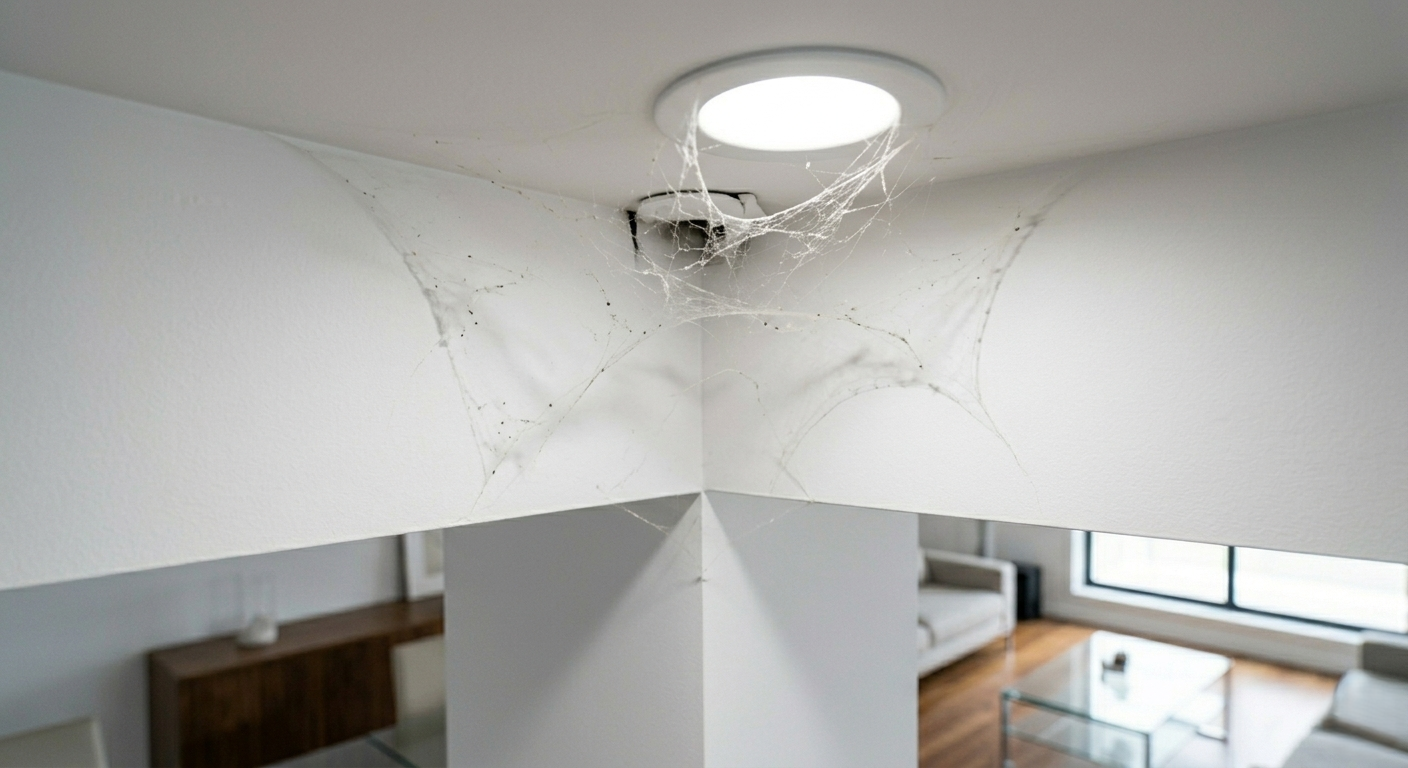
Corners trap what the rest of your room circulates: dust, allergens, and skin debris.Image Credits: Google Gemini
The microfiber part is more important than you think. Traditional cloths are made from large fibres, but microfibre is made by splitting the fibres into thousands of fine strands, which dramatically increases the surface area. According to the study, An evaluation of the cleaning properties of a microfibre cloth, sharp-edged microfibre strands physically snag and trap particles rather than just move them around. The same research also shows that microfiber cloths have strong electrostatic properties for dust removal, which means that they pull particles in two directions simultaneously, mechanically and electrostatically.One more thing to know: if clothes are overloaded or used incorrectly, they can transfer dirt back onto a surface, causing recontamination. Always use a clean attachment and work in one direction. You want to actually remove the dust, not just move it around.Here’s a little shopping tip for you: choose a microfiber duster with a looped or high-pile texture. The terry-style loop structure is especially good at trapping particles because the physical loops trap and hold debris rather than just sweeping past it.How to actually do this without making a messStart by restricting the air flow. Dust will blow to the other corner the moment you move it if you turn on the ceiling fans or leave doors open. Then go in dry first. Slowly and steadily, go down the corner with your microfiber duster or vacuum attachment. For persistent stains, use a slightly damp microfiber cloth, then dry the spot immediately to prevent moisture damage.Run an air purifier with a HEPA filter to cut resettled dust by 70 to 80 per cent when finished. Your future self and your allergies will thank you.Clean smarter, not harderIt’s not about being perfect, it’s about being smarter than dirt. Using a telescoping pole, the right attachment and a little patience, you’re done in minutes. No ladder, no sneezing fit, no second round of cleaning everything now covered in fallout; just a clean house with cleaner corners.