
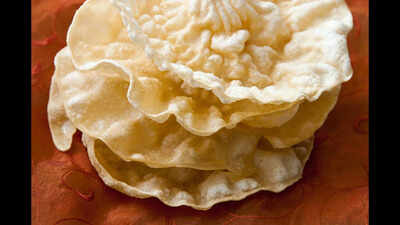
There are some things you simply don’t mess with in a Kerala meal. Pappadam is one of them.That thin, crisp, golden disc that puffs up the moment it hits hot oil is almost a given on a Malayali dining table. It sits next to a sadya, turns up with biryani and, for many people, a meal just doesn’t feel quite complete without it.Now, a new food safety rule has left pappadam makers worried that the familiar Kerala version could change.The issue is moisture.The Food Safety and Standards Authority of India (FSSAI) has set a maximum moisture limit of 15% for papads, including pappadams. And manufacturers in Kerala say that could be a problem because the slightly higher moisture in their pappadams is part of what gives them that characteristic puffed-up shape and texture.In other words, the concern isn’t just about how the pappadam looks. Makers fear that changing the moisture level could change the eating experience too.
So, what exactly has FSSAI said?
Under the new food safety standard, papads, including pappadams, should contain no more than 15% moisture.That might sound like a fairly minor technical detail. But pappadam manufacturers in Kerala say it matters.According to the Kerala Pappadam Manufacturers Association, the traditional Kerala pappadam generally has around 15% to 16% moisture. Bringing that down could affect the way it behaves when it is fried, particularly its ability to puff up properly.And that puff is a big part of what makes Kerala pappadam different.A report published in 2023 estimated that around 70 lakh pappadams are sold in Kerala every day, showing just how big a part the food has in the state’s everyday meals.
Why does moisture matter so much?
The reason becomes clearer once you watch a pappadam being fried.Drop it into hot oil and it initially sinks. Then, almost immediately, you see bubbles forming across its surface. The moisture inside the thin pappadam turns into steam and escapes rapidly.That quick evaporation is what helps create the familiar uneven, bubbly surface.The pappadam then rises through the oil, starts crisping up and takes on that golden colour.Kerala pappadam is said to have a little more moisture than some other varieties. North Indian masala papad and the appalam commonly made in Tamil Nadu and Karnataka, for instance, generally have around 10% to 12% moisture. Their lower moisture level also helps give them a longer shelf life.The Kerala version, on the other hand, is generally around 15% to 16%.For manufacturers, that difference is important. They argue that reducing the moisture could mean losing some of the puffiness and texture people expect from a Kerala pappadam.
Pappadam makers want the regional difference considered
The Kerala Pappadam Manufacturers Association is now seeking the intervention of the state food minister, according to Manorama.com.Association state president Vineeth Prarath said the group wants authorities to look at the specific characteristics of Kerala pappadam while applying food safety standards.Their concern is that one moisture limit may not work equally well for every regional variety of papad.And pappadam lovers have, unsurprisingly, had plenty to say about the matter.Social media reactions ranged from disbelief to outright panic.One X user wrote, “They’re coming after our pappadams bro what is the hell.”Another simply said, “Ayyo. They’ve come for pappadam.”One particularly dramatic post read, “First FSSAI cancelled the rum. Then Kanthapuram said keep women like gold in a treasure chest. Then KSEB cut the lights. Now they want Kerala pappadam to stop puffing because 15% moisture is too much personality. Don’t. Touch. My. Pappadam.”Another user appealed directly to FSSAI, writing, “Don’t do this, @fssaiindia. Don’t bring in Lijjat type pappad into our Sadya-leaves.”
A small food item with a long history
For something so thin and light, pappadam has a surprisingly big place in Kerala food culture.It’s been part of Malayali meals for generations and remains a regular feature at everything from everyday lunches to elaborate sadya spreads.The word itself is believed to have come from the Sanskrit word ‘parpata’, referring to a flattened disc. The English word “poppadom” came later through Malayalam, entering British English in the 1860s as the dish became familiar during the colonial period.So, yes, this may sound like a debate over a small piece of fried food.But for Kerala, the pappadam is hardly just that.It’s the crunch beside the rice, the little golden thing people instinctively reach for during a sadya and, for many Malayalis, one of those familiar foods that has been part of the table for as long as they can remember.Which is probably why the thought of a less puffy pappadam has caused quite so much alarm.