
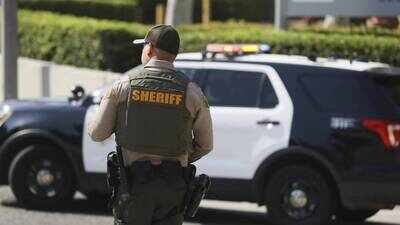
A former Los Angeles County Sheriff’s deputy has been sentenced to more than five years in federal prison for attempting to smuggle approximately 1.1 pounds of heroin, worth an estimated $226,000, into a California jail concealed inside two Pringles potato chip cans.According to the US Department of Justice (DOJ), Michael Meiser, 40, was sentenced to 67 months in federal prison by US District Judge Fernando M. Olguin on November 5. Meiser had pleaded guilty in July 2025 to one count of possession with intent to distribute heroin at the North County Correctional Facility in Castaic, California.Federal prosecutors said Meiser was working as a Sheriff’s deputy at the facility, where he was assigned to an intelligence and investigative unit monitoring gang activity. According to the DOJ, he had agreed with inmates to smuggle narcotics into the jail in exchange for cash and payments through the Cash App digital wallet.
Deputy allegedly received $16,500 for smuggling heroin
According to the DOJ’s account of the case, one of Meiser’s relatives received $1,500 through Cash App on April 24, 2024, from an individual connected to an inmate. The relative subsequently informed Meiser about the payment.Six days later, on April 30, Meiser drove his BMW to a Chevron petrol station in Valencia, where he collected a plastic grocery bag from two women in a Chevrolet SUV. One of the women was associated with a jail inmate.The bag contained two Pringles cans stuffed with approximately 511 grams (1.1 pounds) of heroin. It also contained two white envelopes carrying a total of $15,000 in cash, which prosecutors identified as the remaining payment for bringing the drugs into the jail.The heroin was reportedly worth approximately $226,000 inside the correctional facility, where inmates sold the narcotic in tiny quantities known as ‘papers’, according to Sheriff’s officials.
How investigators caught the deputy
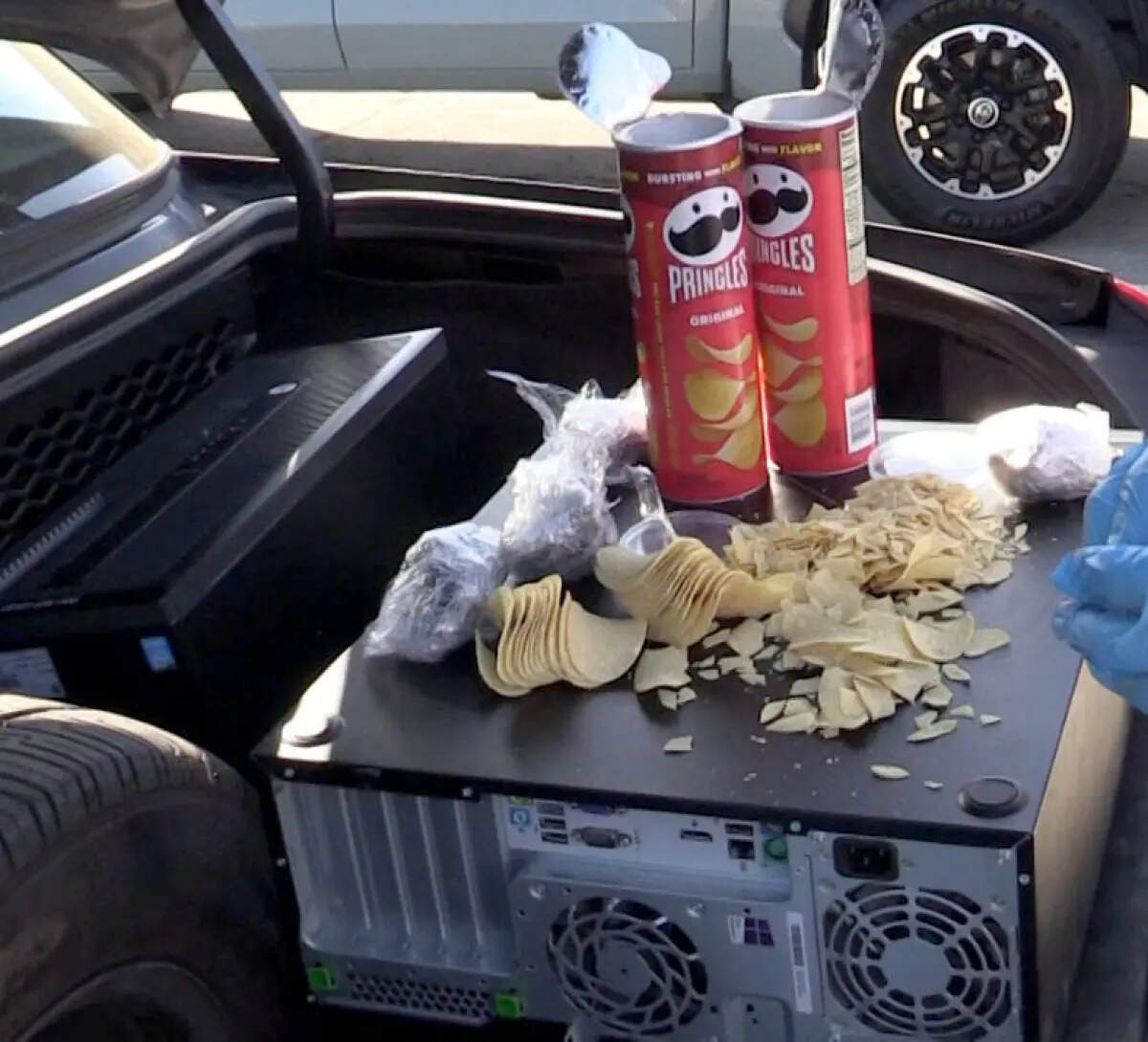
Prosecutors said Meiser received $16,500 in cash and digital payments in exchange for smuggling narcotics for inmates. (Photo: DOJ)
After collecting the consignment, Meiser allegedly placed the grocery bag inside his green backpack, which also contained his loaded handgun. He then drove to a fellow Sheriff’s deputy’s apartment complex and joined the colleague in his truck for the journey to the correctional facility.According to the DOJ, the other deputy drove the vehicle through the jail’s initial security checkpoint and parked inside the complex. Meiser then got out, took his backpack and transferred the heroin-filled Pringles cans into the trunk of a Sheriff’s radio car, hiding them beneath computer towers.He subsequently removed the $15,000 in cash from the grocery bag and placed it back inside his backpack. Later that day, Meiser also met with an inmate involved in the smuggling arrangement and spoke to him for several minutes.However, as Meiser and the other deputy were leaving the facility, Sheriff’s investigators stopped their vehicle.Investigators arrested Meiser and searched the deputy’s truck, where they recovered the green backpack containing $15,000 in cash, Meiser’s loaded handgun, badge and Sheriff’s Department identification. They also searched the radio car and discovered the two Pringles cans containing heroin.The FBI investigated the case with assistance from the Los Angeles County Sheriff’s Department’s Internal Criminal Investigations Bureau. Assistant US Attorney Kathy Yu prosecuted the case, according to the DOJ.
Investigation raised questions about deputy’s relationship with inmates
Beyond the drug-smuggling operation, the case also brought scrutiny to Meiser’s unit and its relationship with influential inmates who allegedly exercised considerable control within the correctional facility.According to an investigative report by the Sheriff’s Department’s Internal Criminal Investigations Bureau, which worked alongside FBI agents, the unit appeared to acknowledge that gang leaders held considerable influence over inmates, sometimes more than the jail authorities themselves.In an internal affairs review, Meiser’s partner, Deputy Jose Mungui, described being ‘on the same page’ with inmate ‘shot callers’ when dealing with issues such as overdoses and violence. He reportedly told investigators that deputies felt powerless to prevent certain incidents and would sometimes approach gang leaders to request that they refrain from killing inmates or harming officers.Mungui maintained that the approach was intended to minimise chaos inside the jail. He also described Meiser as someone who had developed a rapport with several inmates.
Coded phone conversations helped expose the alleged operation
The Los Angeles Times, in its report on the case, detailed how investigators began uncovering the extent of Meiser’s connections with inmates in February 2024 after examining a series of suspicious jail telephone conversations.The calls involved Jose Rodriguez, a reputed gang member and alleged shot caller at the facility, and his purported right-hand man, Jackie Triplett.During one conversation, Triplett spoke to a woman who mentioned purchasing ‘white Jordans’ and ‘black Jordans’. Investigators interpreted the phrases as coded references to methamphetamine and heroin.The following day, jail surveillance footage reportedly showed Meiser handing Triplett a bag and a bedroll. Later that night, Triplett called the woman to thank her, and she reportedly told him it was his ‘time to shine’, according to the investigative report cited by the newspaper.Two months later, investigators recorded another conversation in which an inmate from Rodriguez’s housing unit read out a sequence of numbers. The numbers were subsequently decoded as a request for Pringles, investigators said.The following day, internal affairs detectives obtained a warrant to install a tracking device on Meiser’s BMW. Investigators subsequently followed him to the Chevron petrol station in Valencia, where he collected the grocery bag containing the heroin.
No other deputies implicated in the smuggling scheme
Although the case brought considerable scrutiny to Meiser’s unit and its dealings with inmates, no other deputies have been implicated in the drug-smuggling operation.The investigation exposed how Meiser allegedly exploited his position as a law enforcement officer and his access to a correctional facility to facilitate the attempted distribution of a substantial quantity of heroin.Meiser has now been sentenced to 67 months in federal prison following his guilty plea, bringing the federal prosecution to a significant conclusion.