
Epsom salt has become a popular gardening staple, especially among people looking for simple ways to care for plants at home. It is a naturally occurring compound of magnesium and sulphate, and gardeners use it as a source of these two nutrients. Magnesium is involved in chlorophyll production, seed germination, and nutrient uptake, while sulphur also supports plant growth. But Epsom salt is not a universal cure for yellow leaves or weak plants. Its usefulness depends on the soil, the plant, and how much of it is applied. Gardening guidance from the Epsom Salt Council covers several ways to use it, from preparing soil before planting to making a diluted spray or watering solution. Tomatoes, peppers, houseplants, and roses all have different recommendations. Knowing the basic uses, the right method, and when to leave it out can help gardeners avoid turning a useful supplement into an unnecessary treatment.
What is Epsom salt and why do gardeners use it
Epsom salt is magnesium sulphate, so its main gardening value comes from the two nutrients it supplies. Magnesium supports chlorophyll and nutrient uptake, while sulphur contributes to plant growth. It can be useful when these nutrients are needed, but it should not replace healthy soil or balanced fertiliser.
Magnesium and plant growth
Magnesium plays an important role in chlorophyll production and helps plants make use of nutrients such as nitrogen and phosphorus. When the soil lacks magnesium, supplying it can support normal plant growth. This is one of the reasons Epsom salt is sometimes used as a garden treatment.
The role of sulphur
Sulphur is another nutrient present in Epsom salt. The Epsom Salt Council notes that sulphur is important for plant growth and helps plants produce vitamins. However, plants need only appropriate amounts, so adding more does not automatically mean better growth.
What Epsom salt can and cannot do
It links magnesium and sulphur with healthier, greener foliage. Magnesium is closely connected with chlorophyll, the pigment responsible for the green colour of leaves. Still, yellowing leaves can have many causes, so Epsom salt should not be the automatic result for every colour change.
Soil testing before use
Magnesium is involved in the uptake of phosphorus and nitrogen. Epsom salt helps support nutrient availability and plant growth. This does not mean it should replace regular fertiliser, particularly when a plant needs several different nutrients.
It is not a plant food for every garden
Epsom salt should be viewed as a supplement rather than an all-purpose fertiliser. Different plants and soils have different requirements. It is recommended to test soil before planting, while also advised to check magnesium levels before using Epsom salt regularly.
How to use Epsom salt in garden soil and around plants
There is more than one way to apply Epsom salt. The method depends on whether you are preparing a planting bed, treating individual plants, or making a diluted solution. The simplest options include mixing it into soil, spraying diluted solution on leaves, and adding it to water. The amount should always match the intended use.
Mix it into garden soil
For a garden bed, it is recommended to use about 1 cup of Epsom salt for every 100 square feet of soil. Mix it into the soil before planting. For individual plants, it suggests 1 to 2 tablespoons around the base, followed by thorough watering.
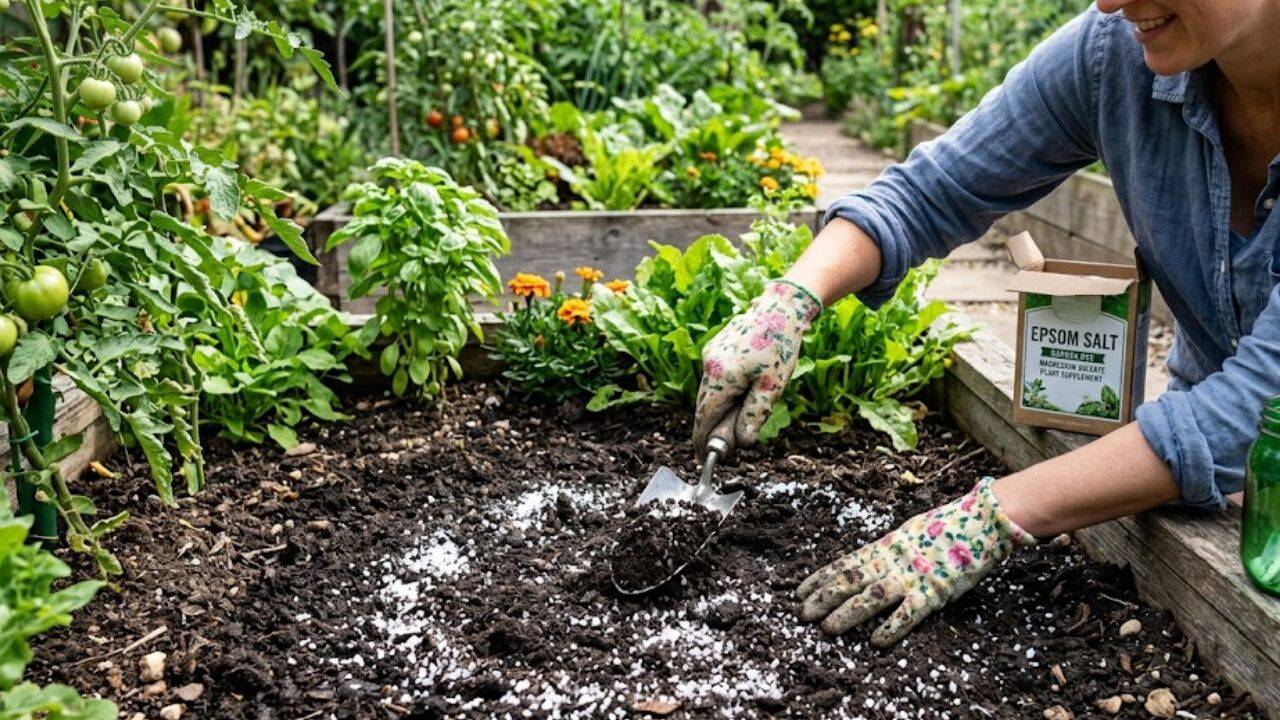
Mix it into garden soil (PC: AI Generated)
Make a foliar spray
It is recommended to dissolve 1 tablespoon of Epsom salt in 1 gallon of water for a foliar spray. The solution is sprayed directly on leaves. This method is intended to provide magnesium and sulphur through the foliage rather than placing the crystals directly into the soil.
Use it with vegetables
For heavy-feeding vegetables such as tomatoes, peppers, and beans, use 1 tablespoon per foot of plant height every two weeks during the growing season. The material can be added around the plant or used as part of soil treatment.
Feed houseplants
For houseplants, use 2 tablespoons in 1 gallon of water. This is a much more diluted approach than simply scattering dry crystals into a pot. The limited amount of soil in containers makes measured application especially important.
Prepare soil before planting
The Epsom Salt Council recommends testing soil before adding Epsom salt and repeating testing every one to three years. If an application is appropriate, it advises 1 cup per 100 square feet, mixed into the soil before planting. Soil testing can help prevent unnecessary additions.
How to use Epsom salt for tomatoes , peppers, and roses
Some plants have specific Epsom salt recommendations, which is why a single recipe should not be applied across the whole garden. Tomatoes and peppers can be treated during active growth, while roses have different instructions depending on whether they are being planted, recovering, or producing new growth. These examples show how application should be tailored.
Tomatoes
The Epsom Salt Council recommends diluting 1 tablespoon of Epsom salt in water for every foot of plant height per plant and applying it every two weeks. It also gives a rate of 1 tablespoon per foot of plant height for vegetables during the growing season.
Peppers
For peppers, the council recommends 1 tablespoon in 1 gallon of water. Spray the plants at bloom time and repeat the application 10 days later. The timing is different from the general vegetable recommendation, so follow the plant-specific directions.
Roses
For roses, the council recommends 1 tablespoon in each planting hole. For unplanted bushes, dissolve ½ cup in 1 gallon of water and soak the plants. For flowering canes and basal growth, put ½ cup into the soil around the base.
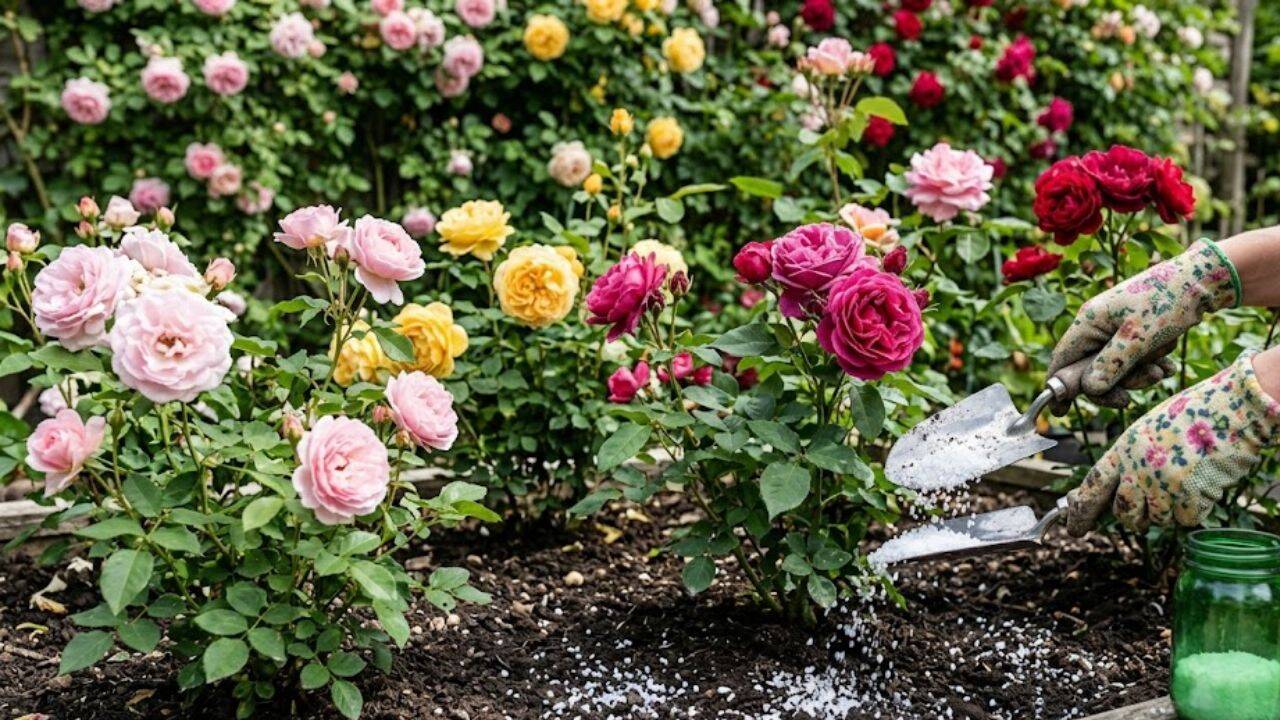
Roses (PC: AI Generated)
When should you avoid using Epsom salt
Epsom salt is not something every plant automatically needs. Applying it when soil already contains sufficient magnesium can be unnecessary and may create an imbalance.
When the soil already has enough magnesium
It is advised to test magnesium levels before regular use. If the soil already contains adequate magnesium, adding more Epsom salt may provide little benefit. Testing gives gardeners a better basis for deciding whether the treatment is needed.
Applying it too frequently
Excessive application can cause magnesium to build up in soil. High magnesium levels can interfere with the uptake of other nutrients, including calcium and potassium. Using the recommended amount is therefore more important than applying it frequently.