
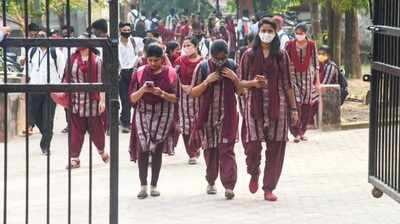
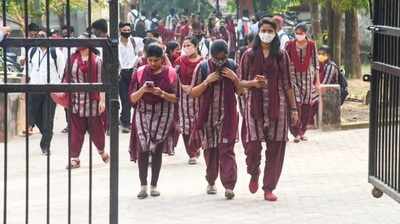
Bhubaneswar: Economic hardship and the pressure to enter the workforce early are pushing many tribal students out of the education system, with their participation dropping sharply after school and access to higher education lagging behind other social groups, a state govt committee has observed.The Committee on Administrative and Governance Reforms, in its report submitted to govt recently, found that the gross enrolment ratio (GER) in higher education among Scheduled Tribes (STs) in Odisha was only 17.7%, against 25.1% for Scheduled Castes (SCs) and 24.9% for other communities. The figures are based on All India Survey on Higher Education (AISHE), 2023-24.The gap is less pronounced at the school level. UDISE+ 2025-26 data cited by the panel showed elementary GER at 95.3% for STs, 92.5% for SCs and 89.4% for other communities. At the secondary level, the figures were 101.8%, 93.3% and 89.2%, respectively.While enrolment remains relatively high at these stages, ST and SC students drop out at much higher rates than other groups thereafter. The low higher-education participation of tribal students is primarily linked to financial constraints and early entry into the workforce, said the panel, set up by the govt last year under the Viksit Odisha-Vision 2036 and 2047 framework. It was set up to review administrative structures and processes, and improve governance and service delivery.Distance from schools is another barrier in remote tribal areas. Children enrolled in residential Sevashram schools may leave education after Class V if an upper-primary school and hostel are not available nearby. Right to Education norms prescribe an upper-primary school within 3km of a habitation.The committee has proposed upgrading Sevashram schools in remote areas to Class VIII wherever such facilities are unavailable within the prescribed distance. It has also called for additional teacher posts, recruitment of teachers proficient in tribal languages and temporary guest teachers to address vacancies.To improve learning outcomes, it suggested piloting volunteer-led after-school remedial classes in selected tribal blocks and providing specialised coaching in physics, chemistry, mathematics and biology from Class VIII to prepare students for Class X examinations and competitive entrance tests. It also recommended an integrated school and hostel admission system to track academic performance, career counselling and students’ transition to the next level, helping identify and prevent dropouts.