
NEW DELHI: India is poised to break into the top five markets globally for Nestlé over the next five years, driven by scale, favourable demographics and long-term growth drivers. Already among its fastest-growing markets globally, with over 14% growth last year, India receives “a strong global focus alongside sustained investments in R&D, manufacturing and brands”, Nestle India’s CMD Manish Tiwary tells TOI. Excerpts:You’ve delivered a strong fourth quarter. What has driven this performance?
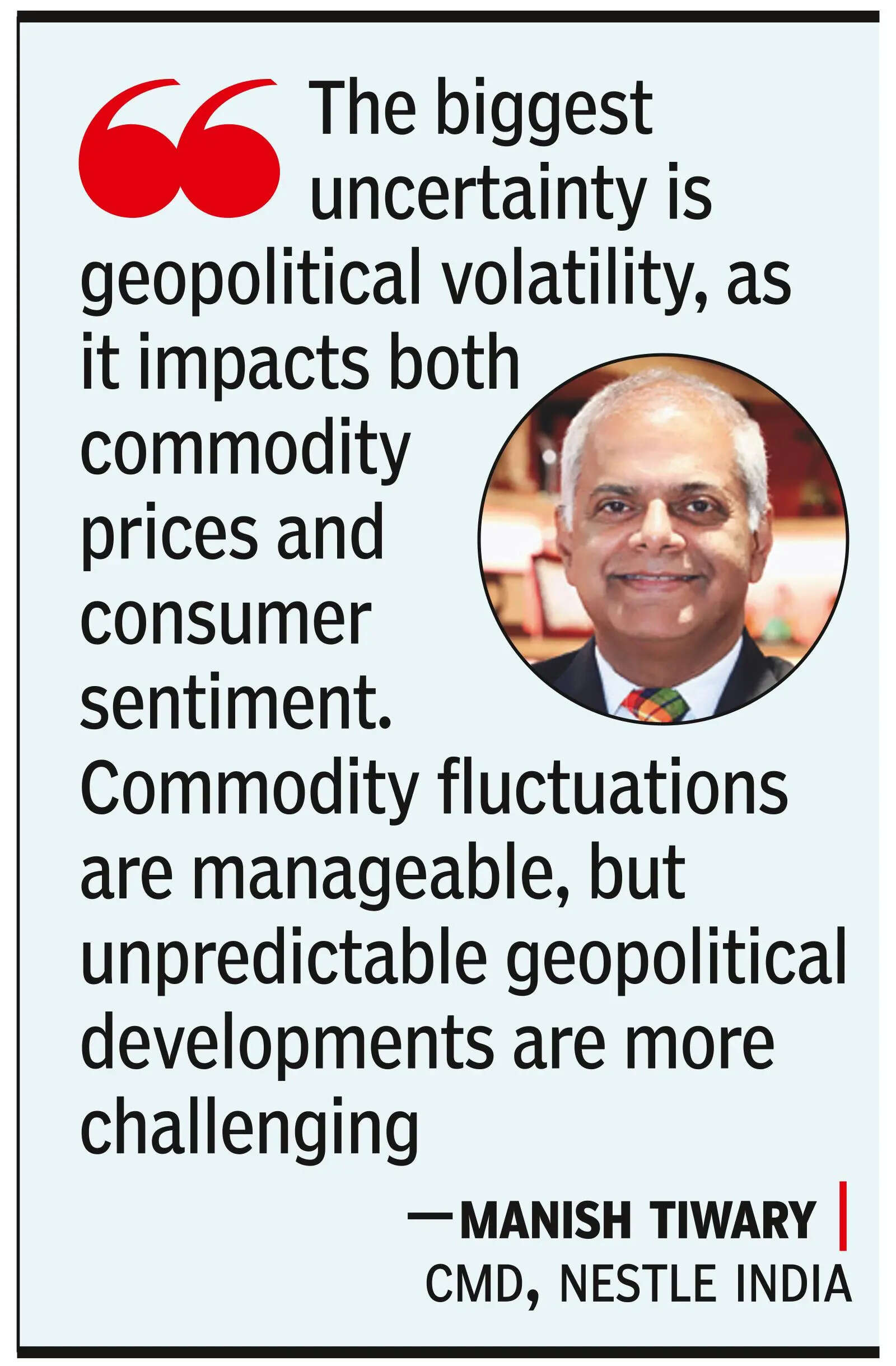
The results are strong for two primary reasons — first, GST changes improved overall market uptake. Importantly, we did not face transitional challenges. Second, we have a portfolio of very strong brands in Maggi and Nescafé that are category-defining. We also significantly increased our investments, particularly in media. This increased brand support combined with favourable market conditions has driven consistent outperformance over the past few quarters. Rural remains underpenetrated, contributing about 22% of sales versus 45-50% for peers, pointing to significant headroom as distribution expands.With the rise in input costs in the wake of the West Asia war and a forecast of a weak monsoon, how do you see margins and consumer demand this year? Have you taken any pricing action yet?Commodity cycles are inherent to our business. Last year, coffee and cocoa prices were at irrational highs, which created margin pressure. This year, those have softened. However, milk prices are up around 6-7% year-on-year, wheat is showing some upward movement and packaging and logistics costs have increased. Palm kernel oil is also rising due to supply chain disruptions in southeast Asia.That said, over the past five years, we have built resilience through multiple disruptions, including Covid. While volatility exists, we are balancing tailwinds and headwinds. Pricing increases remain a last resort because ours is fundamentally a volume-driven business. So far, we haven’t taken any significant price hikes or grammage reductions. There are early signs of demand moderation, as reflected in Nielsen data up to March. If fuel and food prices rise, it could weigh on consumption and squeeze the shopper’s wallet. However, unless the situation becomes prolonged and severe, we believe we can manage through it.How vulnerable is your portfolio to a potential discretionary slowdown?While overall discretionary demand may be impacted, our exposure is relatively buffered. Many of our categories Maggi and KitKat have low 16-17% penetration. Consumers tend to cut back on frequently consumed items first, whereas our categories still have significant headroom. That said, some impact is inevitable.Will growth this year remain volume-led, or will input cost pressures force a shift towards pricing?At the beginning of the year, we expected growth to be largely volume-led, but with the current uncertainties, pricing may play a slightly bigger role if cost pressures persist. That said, volume growth remains our priority. Backed by savings from procurement and technology-led efficiencies, we will continue investing in innovation and brand support even during slowdowns to drive long-term, sustainable growth.What is the biggest risk to growth and margins this year?The biggest uncertainty is geopolitical volatility, as it impacts both commodity prices and consumer sentiment. Commodity fluctuations are manageable, but unpredictable geopolitical developments are more challenging.