
Two dates are circulating for the same festival, and both come from real panchang calculations. As per the Hindu Panchang for New Delhi, Dussehra (Vijayadashami) 2026 falls on Tuesday, 20 October. Bengal, Odisha and parts of the East will mark Bijoya Dashami a day later, on Wednesday, 21 October. The gap comes from the way each region counts the tithi, not from an error in either calendar.
Why the Date Splits
Dashami Tithi begins at 12:50 pm on 20 October and ends at 2:11 pm on 21 October. That is a long stretch, and it touches two calendar days. Navami ends at 12:50 pm on 20 October, so at sunrise that morning the tithi is still Navami. At sunrise on 21 October, Dashami is active.Regions that count the festival by the sunrise tithi therefore choose 21 October.Most of North, West and Central India follow a different rule, which looks at the afternoon. Vijayadashami worship belongs to the Aparahna, the afternoon part of the day, and Dashami must be present in it. On 20 October, Dashami covers the whole of that window. On 21 October, it ends at 2:11 pm, partway through. So most Panchangs fix the main observance on 20 October.
Puja Timings for 20 October (New Delhi)
Vijay Muhurat is the shortest and most favoured slot. It runs from 1:59 pm to 2:45 pm, a window of 46 minutes.The wider Aparahna puja time runs from about 1:14 pm to 3:30 pm.Shravana Nakshatra is also active through the afternoon, ending in the evening of 20 October. Many priests treat that as an added support for the day. Verify the exact end time with a local panchang.Ravan Dahan is traditionally held after sunset on the same evening, so the effigy burning in most cities will take place on 20 October. Organisers announce local timings, and they can differ from the puja window.
What Changes in Other Cities
Timings move by several minutes with location.A family in Mumbai, Pune or Bengaluru will have a different Aparahna start than a family in Delhi, and the date can shift in a few places where the tithi covers the afternoon differently.The simplest method is to enter the city on a trusted panchang site, then confirm with the family priest.Karnataka and Kerala follow their own calendars, and some temple programs run on the 21st. The Mysuru Dasara procession, for example, follows the temple and state schedule. Check that schedule if travelling.
What Is Done on Vijayadashami
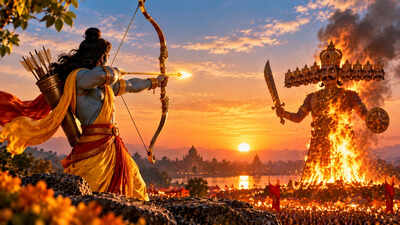
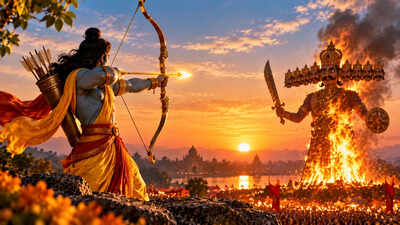
The day marks two victories. Lord Rama’s win over Ravana is remembered across much of the country, and Goddess Durga’s win over Mahishasura is the focus in Bengal and the East. Both stories carry the same lesson: courage defeats arrogance.Common rituals include Shastra Puja, where tools, books and instruments are cleaned and worshipped, and Aparajita Puja, which honours the Goddess as the undefeated one. In some regions, people exchange leaves of the Shami or Apta tree as a sign of goodwill. Children in many homes begin learning something new, such as music or writing, because the day is considered auspicious for fresh starts.In Bengal, Dashami is the day of farewell. Idols of Durga are immersed, married women take part in Sindoor Khela, and neighbours visit one another to share sweets and greetings.
Practical Steps for Families
Decide the date by region first. If the household follows the North or West Indian calendar, plan for 20 October. If it follows the Bengali Durga Puja calendar, plan for 21 October. Then pick a start time within the local Vijay Muhurat and keep the puja items ready the night before.A clean cloth, flowers, sweets, a lamp, and any tools or books to be worshipped are enough for a simple puja. Those traveling on 20 October can do a short puja before leaving or at the destination, as long as the Aparahna window is respected.Navratri closes with this day, and many families also break the fast or complete the vrat. Parana timings vary, so follow the family tradition.