


“Flirting is a woman’s trade, one must keep in practice.”– Charlotte Brontë, Jane EyreOnce upon a time, flirting was wonderfully inefficient. It happened in stolen glances across a café, awkward conversations in a bookstore, lingering eye contact at a party or the shared laughter between two strangers waiting for a delayed train. There was no script, no algorithm and certainly no guarantee that the other person would flirt back. That uncertainty was what made flirting exciting.Something has changed over the years. These days, flirting most often begins with a right swipe, continues through carefully curated messages and, increasingly, is polished by artificial intelligence before it ever reaches another human being. Open any dating app and you’ll find AI-generated opening lines, conversation starters, “rizz” coaches and even bots that can tell you exactly when and how to reply. Meanwhile, social anxiety, fear of rejection and the pressure to perform online have made spontaneous interactions feel almost old-fashioned.The result is a curious paradox. We are communicating more than ever, yet many people say they have forgotten how to flirt. Not because they don’t want to. Because they rarely get the chance to practise.Flirting has always been one of humanity’s most subtle social skills. It isn’t simply about attraction. It is the playful dance of curiosity, humour, vulnerability and ambiguity. It lives in body language, pauses, teasing, shared jokes and the confidence to leave a sentence unfinished. Unlike conversation, flirting isn’t about exchanging information. It is about creating possibility.
Flirting is now measurable and optimized
That possibility thrives on unpredictability. Dating apps have undoubtedly expanded opportunities to meet people. They have connected millions who may never have crossed paths otherwise. But they have also transformed flirting into something measurable and optimised. Instead of wondering whether someone across the room finds you interesting, people now evaluate profile photos, prompts and response times. Instead of chemistry, attraction today begins with filtering.The first impression is not your smile. It is your bio. This shift has changed what flirting ought to feel like. These days, before meeting someone we may like, we often know their favourite films, where they holiday, what they do for work and even their political opinions. Much of the mystery has already disappeared. The conversation becomes less about discovery and more about confirming what we’ve already read.Then comes artificial intelligence. From suggesting opening messages to rewriting texts that sound “more confident” or “more charming,” AI is becoming an invisible participant in modern romance. Instead of asking ourselves, What do I genuinely want to say?, we increasingly ask, What is the perfect thing to say?The irony is hard to miss. The more polished our conversations become, the less personal they feel. Traditionally, flirting has never been about perfection. It has always depended on tiny imperfections: the awkward joke that unexpectedly lands, the nervous laugh, the slightly clumsy compliment or the conversation that wanders somewhere unexpected. These moments reveal personality because they cannot be manufactured.
AI can improve wording. It cannot manufacture chemistry.
Social anxiety has compounded the problem. Younger generations report higher levels of anxiety than previous ones. Blame the Pandemic. Years of digital communication have reduced opportunities to practise face-to-face social interactions. Many people now find it easier to express affection through text than in person. What if s/he says no? What if I go all the way to meet someone and don’t like the person, or they s/he doesn’t like us? All these anxiety-ridden questions are done away with by sending a text.It’s come to a point where even eye contact feels risky. Why not just send an emoji? A witty text feels safer than approaching someone at a café. This has also happened because rejection has become more public. In physical spaces, an unsuccessful interaction usually disappears into memory. Online, conversations remain visible. Unanswered messages, left-on-read notifications and disappearing matches create permanent reminders of rejection.
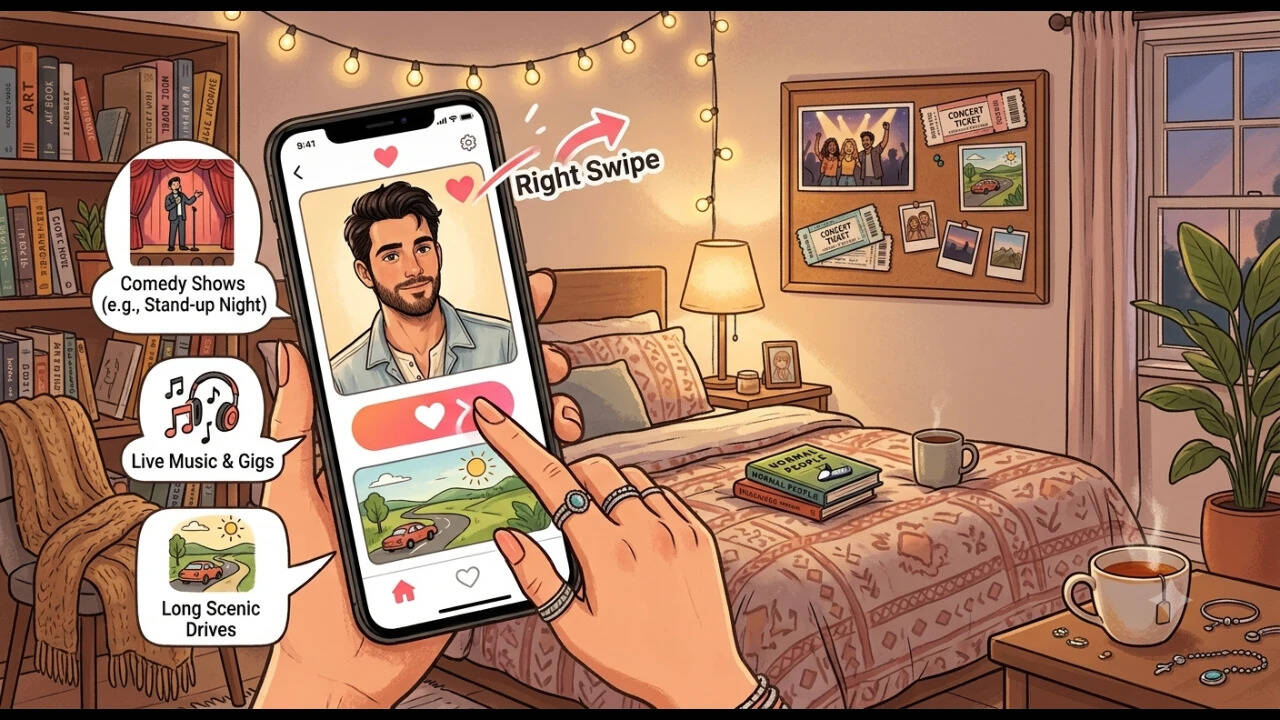
It’s come to a point where even eye contact feels risky. Why not just right swipe and text?
Unsurprisingly, many people begin to optimise every interaction, hoping to minimise risk. But the thing is flirting has always required risk. Without uncertainty, there is no anticipation. Without anticipation, there is hardly any excitement.Perhaps this explains why so many singles describe dating as exhausting rather than exhilarating. They are not short of conversations; they are short of moments that feel genuinely alive.Ironically, flirting itself has also become overanalysed. Social media offers endless advice on what messages to send, how long to wait before replying, whether to appear interested or detached and which emojis supposedly signal attraction. Entire industries now exist to decode behaviour that once unfolded naturally.The consequence is that many people are no longer flirting. This is tragic.The challenge isn’t technology itself. It’s our growing dependence on mediated interaction. Psychologists often describe flirting as a form of social play. Like humour, it depends on reading subtle cues, adapting in real time and responding emotionally rather than strategically. These are skills that improve through experience, not optimisation.That is why the most memorable flirting still happens spontaneously. In One True Loves, a contemporary romance novel by bestselling American author Taylor Jenkins Reid, she writes: “Flirting is probably just as much about falling in love with yourself as it is with someone else. It’s about seeing yourself through someone’s eyes and realizing there is plenty to like about yourself, plenty of reasons someone might hang on your every word.”That’s the other part – possibly the most important. In our pursuit of efficiency, we have removed many of the beautiful inefficiencies that made human connection exciting. And in doing so, we have stopped falling in love with ourselves; by discovering sides or quirks or traits that we didn’t even know were attractive. Quirks that make us who we are. To lose the art of flirting, ultimately, is to lose an understanding of ourselves.When we pre-screen people before meeting them, edit our personalities before sending them, we seek certainty before allowing ourselves to feel curious. The thing is attraction has never been entirely logical, is it?That’s why we don’t flirt anymore.