


Darrell Waltrip, one of NASCAR’s greatest and most charismatic icons, spent nearly 30 years trading paint at 200 mph. Three Cup championships. Eighty-four wins. A Daytona 500 in 1989 that made him cry on live television. Then, 19 more years in the Fox broadcast booth, giving the sport a voice it never quite had before. Now, at 79, the man behind one of racing’s most beloved catchphrases has been diagnosed with Frontotemporal Degeneration — a progressive brain disease his family believes is connected to the punishment his body took across decades behind the wheel.
What did Darrell Waltrip’s family say about his diagnosis?
The news came through a statement Wednesday, signed by Waltrip, his wife Stevie, and their family. They confirmed that he has been diagnosed with Frontotemporal Degeneration, complicated by possible Chronic Traumatic Encephalopathy — more commonly known as CTE. The family suspects his racing career is the root cause, though a definitive CTE diagnosis can only be confirmed after death. For now, the symptoms are described as minor but noticeable, enough to change his personality in ways the people closest to him can see.
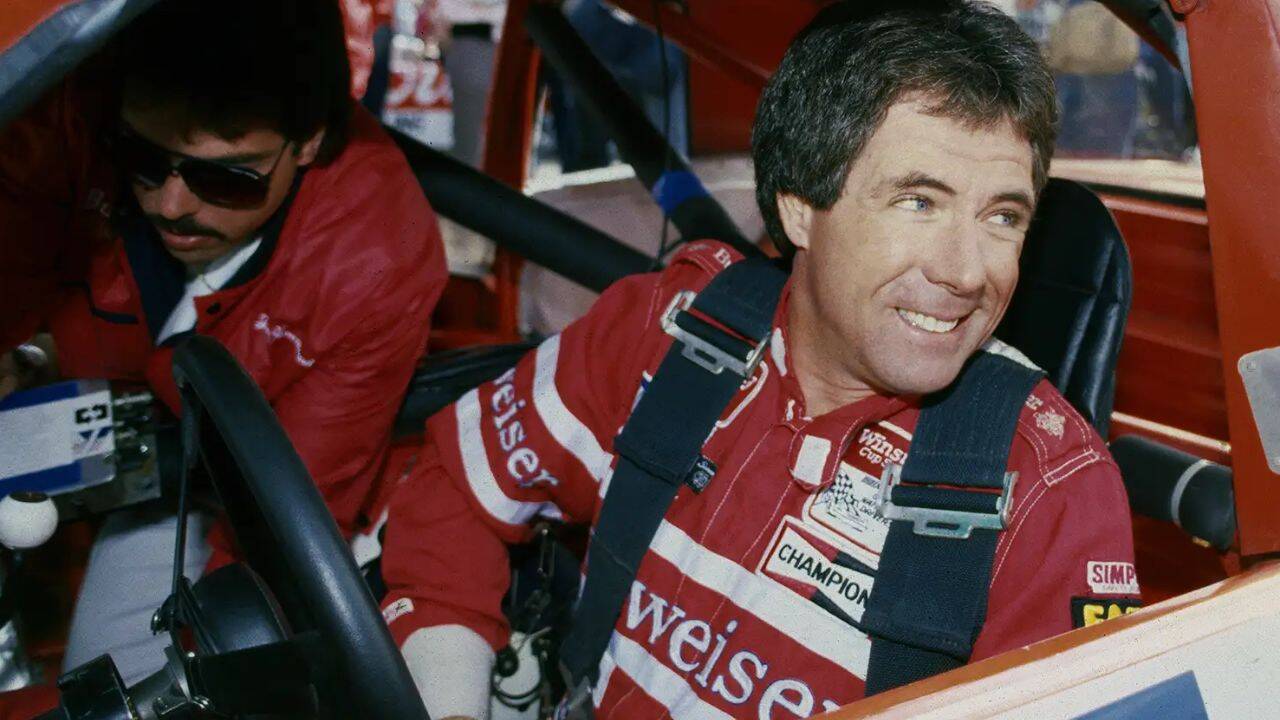
Darrell Waltrip steps away from public life after brain disease diagnosis (Getty Images)
He is stepping away from public life. No more appearances, no more limelight. The statement was careful to say he is happy, spending his days with Stevie, their two daughters, and three grandchildren. It ended, as everything Waltrip has ever done ended, with: “Boogity! Boogity! Boogity!” Even now, he found a way to sign off with a smile.FTD is not a quiet disease. The Mayo Clinic describes it as a condition that causes the brain’s frontal and temporal lobes to shrink — the regions that govern personality, behavior, and language. It does not simply take away memory the way Alzheimer’s does. It changes who a person is. Friends and family often describe watching someone become a stranger, even while they appear physically fine.
Is CTE common among NASCAR drivers, and what does Waltrip’s case mean for the sport?
For years, the CTE conversation has been centered almost entirely on football. The NFL spent a decade fighting the science before finally acknowledging the link between repeated head trauma and brain disease. But NASCAR has largely avoided that reckoning, even though its drivers have absorbed brutal crashes at speeds the average person cannot fully comprehend. Waltrip alone raced for 28 years. The cumulative impact of those years, even without a single catastrophic injury, is now looking like it left a mark that no trophy could account for.The connection between CTE and contact sports is not new. In November 2025, Dallas Cowboys defensive end Marshawn Kneeland died by suicide at 24. A posthumous examination found he had stage 1 CTE. Dr. Ann McKee of the Boston University CTE Center noted that the disease had been found in nearly half of athletes studied who died before 30. CTE prevention expert Chris Nowinski has been direct: concussion protocols do not stop CTE because the disease is caused by repeated head impacts, not just diagnosed concussions. The hits that never make the injury report are often the ones that add up the most.Waltrip’s family has not framed this as an indictment of NASCAR. They are asking for prayers. But the diagnosis, quiet as the statement tried to be, lands loudly in a sport that has not yet had its full reckoning with what decades of racing does to the human brain.