
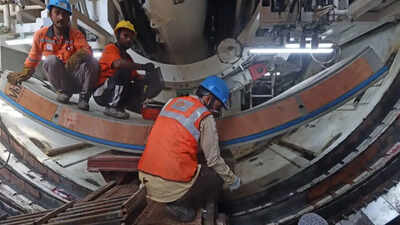
The Union Cabinet has approved an Rs 11,000-crore scheme to strengthen India’s construction and infrastructure equipment (CIE) manufacturing ecosystem, with a focus on increasing domestic production, supporting component makers and setting up a dedicated testing facility.The decisions were announced by Union minister Ashwini Vaishnaw at a press briefing following the Cabinet meeting chaired by Prime Minister Narendra Modi.The Scheme for Enhancement of Construction and Infrastructure Equipment Manufacturing Ecosystem will be implemented by the Ministry of Heavy Industries over eight years, starting from the 2026-27 financial year.It is intended to incentivise manufacturers to expand production of technologically advanced equipment and reduce dependence on external supply chains.The government has identified equipment such as ship-to-shore cranes, tunnel boring machines, hydraulic excavators and off-highway trucks as areas the scheme aims to support.The approval comes as the government is also clearing major infrastructure projects, including a second container terminal at Kamarajar Port in Tamil Nadu and a greenfield airport at Doloo in Assam.The port project has been approved at an estimated cost of Rs 4,288.26 crore, while the airport project has an outlay of Rs 2,014 crore.
Why has the government introduced the scheme?
India’s construction and infrastructure equipment industry is currently the world’s third largest, behind China and the United States. Its market size stood at around Rs 97,500 crore in 2024-25, according to the ministry of heavy industries.The sector is expected to expand significantly as investment in infrastructure, including roads and ports, and housing increases. The government projects that the domestic market will more than double to around Rs 2.28 lakh crore by 2029-30.Construction and infrastructure projects require a range of specialised equipment, from machinery used in excavation and tunnelling to cranes deployed at ports and equipment used in large-scale industrial and road construction.The scheme seeks to encourage domestic manufacturers to produce more of this equipment and its components. It also aims to strengthen India’s position in the global CIE market by developing indigenous manufacturing capabilities and improving supply chain security.The government has linked the initiative to the Atmanirbhar Bharat programme and its broader objective of building a self-reliant industrial base.
How will the Rs 11,000-crore scheme work?
The scheme has two main components: a sales-linked incentive programme for manufacturers and financial support for setting up a dedicated testing facility.1. Sales-linked incentives for manufacturersThe first component will provide incentives based on the incremental sales value of eligible construction and infrastructure equipment and components.The benefits will be available to approved applicants in two categories:
- Original equipment manufacturers (OEMs)
- Component manufacturers
The incentive rates will be graded, ranging from 13% to 8% of incremental sales value over a five-year period.This component is intended to encourage manufacturers to expand domestic production and increase sales of eligible equipment and components.2. Grant for a dedicated testing facilityThe second component provides a grant of up to Rs 375 crore, in the form of viability gap funding, for establishing a dedicated CIE testing facility in India.The facility is intended to support testing of construction and infrastructure equipment within the country. The provision forms part of the government’s effort to develop the domestic ecosystem alongside manufacturing capacity.
What is the implementation timeline?
The scheme will run for eight years, from 2026-27 to 2033-34, with implementation divided into three stages.
| Period | What happens |
| FY2026-27 to FY2027-28 | Two-year gestation period for setting up manufacturing facilities |
| FY2028-29 to FY2032-33 | Five-year period for disbursing incentives |
| FY2033-34 | Settlement of incentives linked to incremental sales in FY2032-33 |
The initial two years will allow approved applicants to establish manufacturing facilities. Incentives will then be disbursed over the following five years, based on incremental sales of eligible equipment and components. The final year will be used to settle incentives for the last year of the disbursement period.
Which equipment will benefit?
The scheme is aimed at technologically advanced construction and infrastructure equipment used across major infrastructure and industrial projects.The government has specifically identified:
- Ship-to-shore cranes: Equipment used to load and unload containers between ships and port terminals.
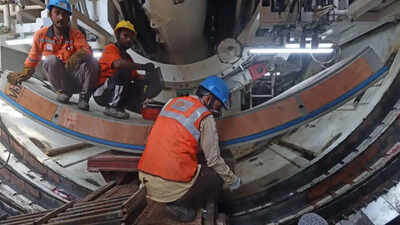
- Tunnel boring machines: Specialised machinery used to excavate tunnels for infrastructure projects.
- Hydraulic excavators: Machines used for digging, earthmoving and other construction activities.
- Off-highway trucks: Heavy-duty vehicles used to transport materials at construction, mining and industrial sites.
The scheme also covers eligible components manufactured by approved applicants, rather than focusing only on finished equipment.
What does the government expect from the scheme?
The government expects the incentives to expand domestic manufacturing capacity, improve the availability of equipment and components, strengthen supply chains and create employment opportunities.The proposed testing facility is another part of the effort to develop the domestic manufacturing ecosystem.With the CIE market projected to grow from around Rs 97,500 crore in 2024-25 to Rs 2.28 lakh crore by 2029-30, the scheme is intended to support manufacturers as demand for construction and infrastructure equipment rises.The government has positioned the initiative as part of its Atmanirbhar Bharat agenda, with the stated objective of making India more self-reliant in technologically advanced equipment manufacturing and more competitive in global markets.