
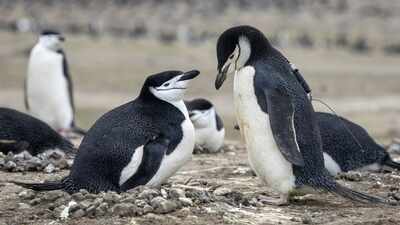
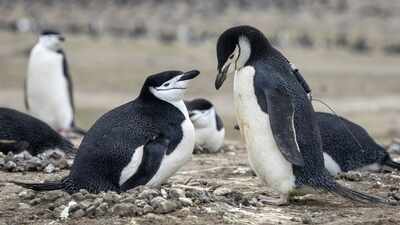
For years, Zavodovski Island seemed untouchable: a wild patch of volcanic rock, battered by ocean winds, standing as a stronghold for chinstrap penguins while colonies elsewhere dwindled. It looked almost immune to what was happening across Antarctica. But then scientists got closer, took a fresh count, and realized things were far from stable. The refuge was slipping away, right underneath the birds’ feet.
What does the study say?
The latest study paints a pretty stark picture: between 2011 and 2025, Zavodovski’s chinstrap penguins dropped by a staggering 63%. That’s from around 1.09 million breeding birds down to roughly 402,000. So, in just 14 years, more than 680,000 breeding penguins vanished, and the island lost its title as the planet’s largest penguin colony. Now, Cape Adare in the Ross Sea takes the lead.Published in Current Biology, the research, mainly by British Antarctic Survey scientists, shows Zavodovski’s chinstrap population isn’t just declining; it’s doing so faster than anywhere else. The main culprit looks like climate change, hooking into the food web of the Southern Ocean and hitting Antarctic krill, which is the chinstraps’ favorite meal.
Where is Zavodovski Island?
Now, not everybody knows where Zavodovski even is. It’s the northernmost island in the South Sandwich group, a British Overseas Territory way down in the South Atlantic. Nobody lives there; Mount Curry, an active volcano, dominates much of the landscape. The place is about twice as big as Gibraltar, but getting there for scientific work is rough. In 2023, researchers spent days at sea before camping out with drones, satellite imagery, aerial photos, and bird trackers to piece together what’s really going on.That remoteness makes the discovery even more unsettling. You can have an island with virtually zero human influence, but you still see the global climate crisis unfolding in its wildlife.
What happened to the chinstrap penguins?
In 2011, researchers estimated that about 1.09 million breeding chinstraps lived on Zavodovski. By 2025, just 402,000 remained, which speaks to a decline that isn’t subtle. The population shrank by about 7% every year. But chinstraps aren’t the only ones on the island. Macaroni penguins, another species, actually increased from 338,000 to 433,000 in that same period. Suddenly, Zavodovski is home to more macaronis than chinstraps, which is a dramatic shift in the penguin neighborhood.Switching from one dominant penguin species to another at a single location is rare and tells scientists that something fundamental in the ecosystem has changed.
Is climate change the main culprit?
While researchers can’t pinpoint one single event, the evidence is strong: warming oceans are reshaping where Antarctic krill live and breed. Chinstraps need cold water and loads of krill. Tracking shows birds from Zavodovski heading northwest to find chilly, krill-rich waters, but as the Southern Ocean warms, krill start moving too, sometimes southwards and sometimes out of reach.A recent review in Nature Reviews Earth & Environment highlights two things: warmer water and shrinking sea ice are shifting krill habitats. The chain reaction is pretty clear: warmer ocean, fewer krill, hungrier chinstraps. Climate change isn’t just a vague threat; it’s hitting the core of what chinstrap penguins depend on. Lead researcher Norman Ratcliffe calls it “climate change operating through food webs.” It’s not a catchy phrase, but it’s accurate.
What about Mount Curry’s volcano?
In 2016, the volcano erupted, dumping ash across parts of the island. Initially, people feared the eruption had wiped out the penguin colony. But the data says otherwise: the decline started before 2016 and kept going at the same pace afterward. The main nesting areas didn’t get buried in ash, and the fact that macaronis are thriving while chinstraps are not shows this is about more than a single natural disaster.Macaroni penguins have broader diets: they’ll eat a wider variety of food, unlike the chinstraps, who stick to krill. That flexibility is a possible advantage as the ecosystem shifts.
Why does the collapse matter outside Zavodovski?
Because the South Sandwich Islands host a huge portion of the world’s chinstrap population. Losing so many penguins here affects the species overall. Past global surveys showed many chinstrap colonies were already shrinking, but we never had long-term data for most spots. Now we do, and the numbers are grim.Scientists now think chinstrap penguins should be moved to a stricter conservation status. They’re still “Least Concern” officially, but the evidence stacks up for reconsidering their protection.There’s another concern: krill are commercially fished in the Southern Ocean. Studies show that warm years plus heavy krill fishing make it even harder for chinstrap penguins to find enough to eat near breeding grounds. Climate change and commercial harvesting aren’t separate problems; rather, they overlap, raising the stakes.
The bottom line
Zavodovski’s message is pretty clear. A place that’s remote, wild, and free from human interference, and looked perfect for penguins, can still buckle under environmental change. The loss isn’t just a matter of losing an island’s title; it’s proof of how quickly ecosystems turn when their food sources shift.Even though chinstrap penguins haven’t vanished from Zavodovski, losing almost two-thirds of the colony in a decade should sound alarms. The island might be one of Earth’s most isolated places, but climate change finds its way in, no matter how far from human activity.