
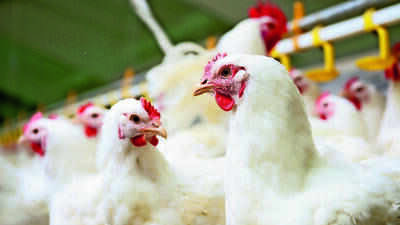
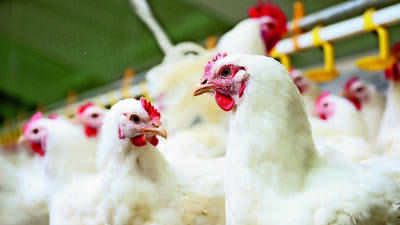
Vijayawada: Prolonged heat stress, lower poultry production and a widening gap between supply and demand have pushed chicken prices to nearly ₹300 per kg in retail markets across Andhra Pradesh.Traditionally, chicken prices witness a decline during the 10-day Dasara Navaratri festival, when many Hindus abstain from consuming meat. However, this year, prices have remained firm as poultry farmers struggle to maintain adequate supplies amid adverse weather conditions and rising input costs.According to AP State Poultry Federation vice-president Tummala Kutumba Rao, poultry production has declined by nearly 15% due to persistent heat stress affecting farms across the state. “The intense heat is impacting bird growth, reducing average weight gain by 300 to 500 grams per bird. This has significantly affected overall production and market supply,” he said.Kutumba Rao also pointed to a steep rise in feed costs. Fine-quality maize is currently priced at around ₹28,000 per tonne, compared to about ₹20,000 per tonne last year. Similarly, quality soybean feed is costing nearly ₹60 per kg, further increasing production expenses for poultry farmers.Industry stakeholders say the combination of higher feed costs, reduced production, prolonged heat stress and strong consumer demand has contributed to the prevailing high prices. Demand for chicken has increased as mutton prices continue to hover above ₹1,000 per kg, prompting many middle-class households to switch to the more affordable option.Officials from the animal husbandry department said prolonged heat stress remains a major concern for the poultry sector as high temperatures affect feed intake, weight gain, bird growth and overall farm productivity. The resulting decline in growth rates has made it difficult for farmers to replenish supplies quickly enough to match demand.Officials added that, after successive setbacks caused by bird flu outbreaks last year, large poultry farms have begun investing in improved farm management practices and stronger biosecurity measures. These initiatives are expected to help the sector gradually recover and improve productivity in the coming months.