
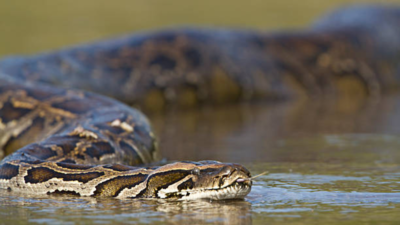
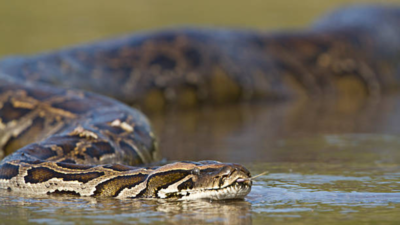
TLDR: A 2026 study found PFAS, or “forever chemicals,” in the livers of invasive Burmese pythons from Florida’s Everglades. Researchers detected nine PFAS compounds in 67 snakes, suggesting these destructive predators could help scientists track invisible pollution moving through the ecosystem’s food web.Imagine a Burmese python slipping through the shallow waters of Florida’s Everglades, its muscular body moving almost silently between reeds. It catches a mammal, swallows it whole and disappears into the wetland. Yet inside its body, there may be traces of chemicals that have travelled through water, soil, plants and animals before reaching this predator. Scientists cannot see these contaminants moving through the ecosystem with the naked eye. But they can look for their chemical fingerprints in the python’s tissues.A study published in Science of the Total Environment in 2026 has put this unusual idea to the test. Researchers examined the livers of 67 invasive Burmese pythons from within or near Florida’s Greater Everglades Ecosystem, searching for per- and polyfluoroalkyl substances, better known as PFAS. The findings suggest that a snake notorious for damaging native wildlife could also help scientists understand the reach of persistent chemical pollution.
The chemicals that can outlast the products they came from
PFAS are a large group of manufactured chemicals used in a range of products and industrial applications because of their resistance to heat, water, oil and stains. Certain PFAS have been used in products such as non-stick coatings, water-resistant fabrics and some firefighting foams.Their durability is also what makes them an environmental concern. Some PFAS break down extremely slowly. This is why they are often called forever chemicals.
What the 2026 Burmese python study actually found
The research team analysed liver samples from 67 Burmese pythons collected in the Greater Everglades region. Using high-performance liquid chromatography coupled with tandem mass spectrometry, the researchers tested for 30 PFAS compounds.Nine PFAS were quantified in the python livers.The most prominent compound was linear perfluorooctanesulfonic acid, or L-PFOS, a form of perfluorooctanesulfonic acid (PFOS). It was detected in 93% of the samples, with a median concentration of 89 nanograms per gram of dry liver tissue.
Why a snake can tell scientists more than a water sample
The answer lies partly in what Burmese pythons eat.These are long-lived, semi-aquatic predators with a broad diet. They consume a variety of prey, swallowing animals whole rather than stripping away selected tissues. That feeding behaviour can expose them to contaminants carried in different parts of their prey.When a chemical persists in the environment and accumulates in organisms, it can move through the food web. A predator that consumes multiple prey species may therefore provide clues about contamination across more than one ecological pathway.The python’s longevity adds another dimension.The 2026 researchers describe Burmese pythons as environmental sentinels.The Burmese python remains a destructive invasive predator, but the same characteristics that make it an effective hunter may also make it a valuable witness to the chemicals circulating through the Everglades.A snake that has become a symbol of ecological disruption could help scientists uncover a threat that is far harder to see.